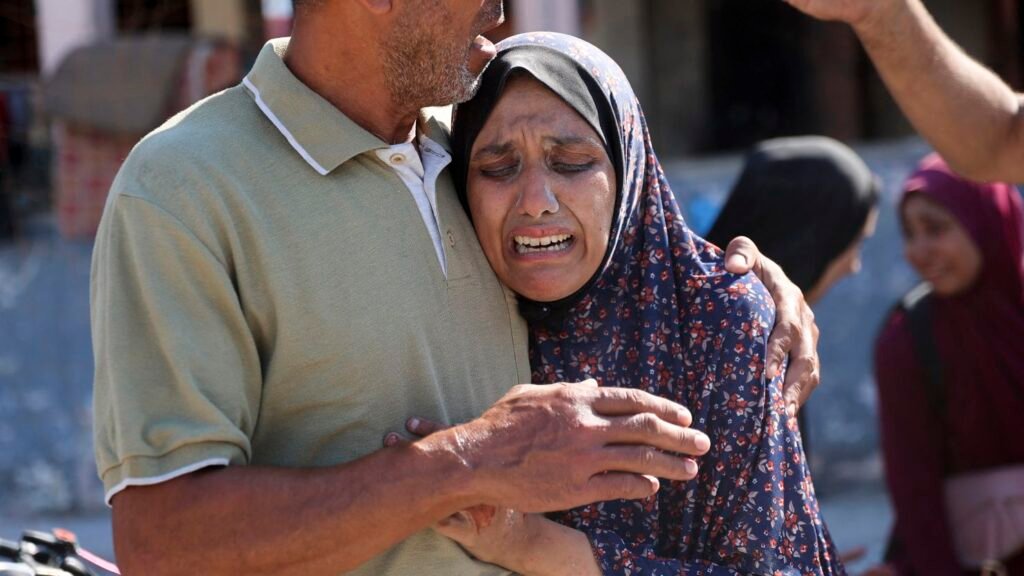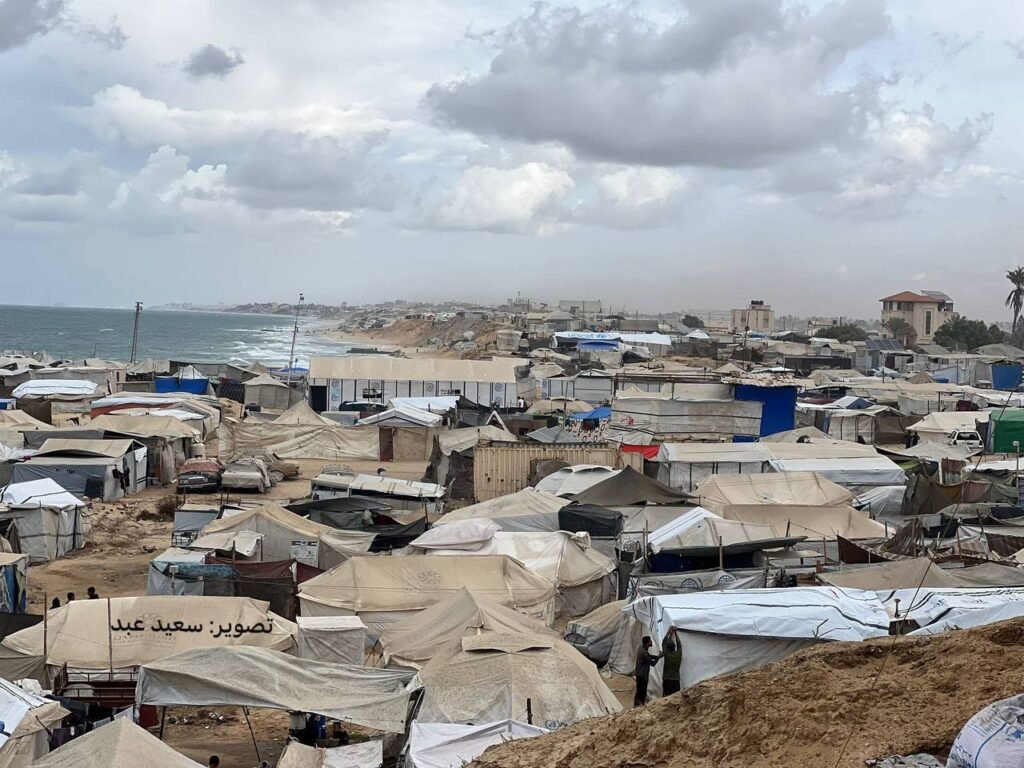
Gaza Herald — Citing figures released by the Palestinian Government Media Office, reports that the polar depression “Biron” has exposed the extreme vulnerability of the Gaza Strip, turning an already dire humanitarian situation into a full-scale disaster. The storm struck amid Israel’s ongoing war and blockade, compounding the suffering of civilians who have been forcibly displaced and left without adequate shelter or protection.
Death, Displacement, and Immediate Human Losses
According to the Palestinian Government Media Office, civil defense teams recovered the bodies of eleven Palestinians after several buildings previously damaged by Israeli airstrikes collapsed under severe weather conditions, while search efforts continue for one missing person. At least thirteen homes across multiple governorates collapsed after being weakened by earlier bombardment, underscoring how years of destruction have left Gaza’s structures dangerously unstable.
The storm also devastated displacement sites, sweeping away and flooding more than 27,000 tents, while over 53,000 tents suffered partial or total damage. More than a quarter of a million displaced Palestinians were directly affected, out of roughly 1.5 million people currently living in tents and makeshift shelters that offer little to no protection from extreme weather. These developments confirmed long-standing warnings about the fragility of displacement conditions imposed by Israel’s bombardment and sustained by the closure of crossings and the obstruction of shelter materials.
Infrastructure, Water, and Essential Services Collapse
The Palestinian Government Media Office reported widespread damage to Gaza’s already shattered infrastructure. Heavy rains eroded hundreds of dirt roads and temporary pathways, severely disrupting transportation and limiting access for ambulances and civil defense teams. Makeshift sewage networks collapsed in multiple areas, while floodwaters inundated school buildings and public facilities being used as shelters, damaging essential service equipment inside them.
Water and sanitation systems were also hit hard, with temporary water lines severed and clean water mixing with rainwater, mud, and sewage. The collapse of absorption pits in densely populated displacement zones significantly increased the risk of contamination and disease outbreaks, particularly among children, the elderly, and those with compromised health.
Food Security, Livelihoods, and Health Services Under Strain
Flooding destroyed food supplies stored by thousands of families, while recently distributed humanitarian aid was damaged in areas overtaken by water. Emergency food reserves in several shelters were lost entirely, deepening food insecurity for families already facing hunger due to the blockade.
Agricultural lands in low-lying areas were inundated, damaging crops and dozens of makeshift greenhouses that displaced families rely on for survival. The loss of these livelihoods has pushed hundreds of families further into economic despair, with no viable alternatives available. At the same time, dozens of mobile medical points were damaged, medicines and first-aid supplies were lost, and medical teams struggled to reach affected areas amid flooding and impassable roads.
Energy Losses and Nighttime Insecurity
The storm also knocked out basic energy and lighting sources in displacement centers. Batteries, alternative lighting tools, and small solar panels used by displaced families were damaged or swept away, leaving thousands without light at night and increasing safety risks inside overcrowded camps.
Legal Responsibility and International Accountability
The Palestinian Government Media Office stressed that the scale of these losses cannot be separated from Israeli policies that continue to block the entry of tents, mobile homes, caravans, and emergency shelter supplies. The prevention of more than 300,000 shelter units from entering Gaza has left civilians deliberately exposed to foreseeable and preventable harm, a practice that constitutes a serious violation of international humanitarian law.
Officials emphasized that Israel bears full responsibility for the humanitarian catastrophe facing Gaza’s displaced population, particularly the more than 1.5 million people forced to live in unsafe shelters after their homes were destroyed or damaged during the ongoing war.
Urgent Calls for International Action
The Palestinian Government Media Office called on the international community, the United Nations and its agencies, humanitarian organizations, ceasefire mediators, and donor states to take immediate and decisive action. This includes pressuring Israel to fully and unconditionally open border crossings, allow the entry of shelter materials and emergency supplies as stipulated under ceasefire agreements, and provide genuine humanitarian protection for displaced civilians.
Without urgent intervention, officials warned, future storms will inevitably reproduce the same scenes of flooding, collapse, and loss of life. Gaza’s reality, they stressed, is catastrophic by every measure, and the continued failure to act risks irreversible human consequences.