Gaza Herald_Realistic diplomacy is based on the belief that practical solutions those achievable on the ground and capable of creating new realities are far more effective than ideal solutions that cannot be implemented, as the latter simply perpetuate the previous status quo. In Gaza’s case, over 24 months of one of the most brutal and bloody wars in modern history failed to achieve Israel’s objectives. In its final stages, Israel was unable to do more than inflict mass destruction on people and property.
Meanwhile, the Palestinian resistance, constrained by a weak Arab regional environment and an ongoing blockade, was unable to achieve liberation of the territory or end the occupation. The resilience of the Palestinian people and their ability to endure enormous sacrifices became a critical balancing factor that allowed the resistance to continue confronting the occupying forces.
The Sharm El-Sheikh Moment and Trump’s Diplomatic Initiative
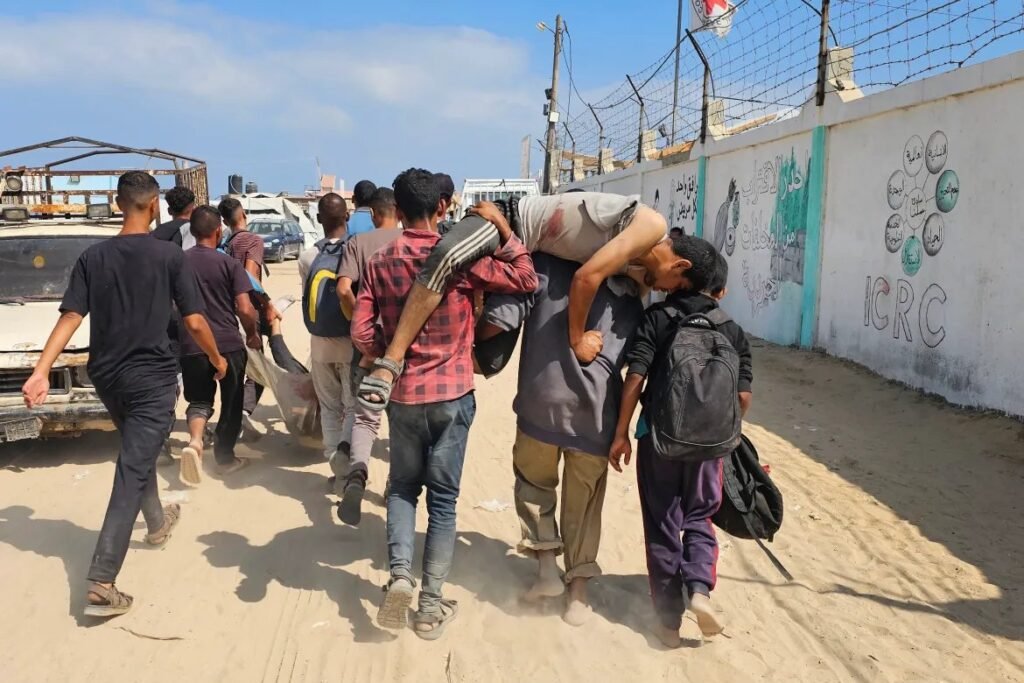
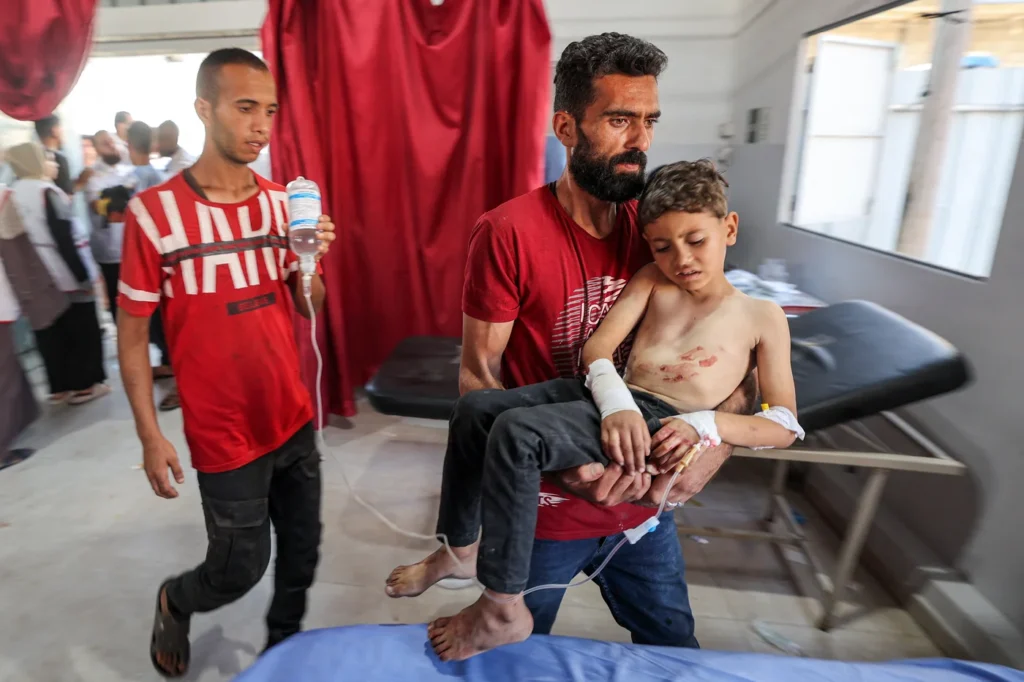
Last month’s Sharm El-Sheikh agreement represented a historic opening, offering a potential settlement driven by favorable factors for both sides. Former U.S. President Donald Trump seized this moment to launch a diplomatic initiative aimed at addressing the urgent needs of both parties: Israel’s attempt to recover detainees after failing to achieve this goal through its genocidal war, and the Palestinian side’s severe losses, with over 3% of the population killed more than one-third of them children and up to 9% of Gaza’s population injured.
The Palestinian resistance also sought to secure the release of as many prisoners as possible from Israeli jails, a goal partially achieved through Egyptian-Qatari mediation and U.S. pressure on Netanyahu. This resulted in a ceasefire initiative and a successful prisoner exchange. With the completion of the first phase, attention now shifts to the second stage—a diplomatic minefield requiring caution and skill.
UN Security Council Resolution: A Gateway to the Next Phase
The adoption of the U.S.-sponsored Security Council resolution represents a major step toward this next phase. Approved on Monday the 17th, the resolution is based on Trump’s plan endorsed at the Sharm El-Sheikh conference and supported by nearly all parties, including Hamas.
One of the resolution’s most significant outcomes is ending uncertainty surrounding the ceasefire, allowing life to regain a degree of stability. It also authorized the creation of a temporary administration, including a “Peace Council” and an International Stabilization Force, under U.N. supervision rather than a multilateral arrangement shaped by external powers, as Israel had sought.
Though its mandate is initially two years, international precedents suggest it may be extended potentially multiple times—depending on conditions for transferring authority to Palestinians and the complexities of Israel’s position. This framework could allow Israel to continue occupying nearly half of Gaza, maintaining the blockade and controlling border crossings for both movement and goods.
Official Palestinian Positions: A Divided Landscape
Historically, Arab diplomacy has relied on public condemnations rather than actionable strategies. To this day, Arab states have been unable to compel Israel to implement policies they support, including the full application of U.N. Resolution 242 of 1967. Likewise, Israel has largely discarded the Oslo Accords, leaving them hollow.
The Palestinian response to the recent Security Council resolution is divided.
The Palestinian Authority (PA) endorsed its implementation, stressing the need to restore normal life, protect Gaza’s residents, prevent forced displacement, ensure full Israeli withdrawal, allow reconstruction, and safeguard the two-state solution.
Yet the PA’s participation depends on significant structural and policy reforms—changes that may require more than two years, especially amid ongoing internal division.
Hamas, however, rejected the resolution, arguing that it imposes international guardianship over Gaza and ignores the suffering Palestinians endured through more than two years of genocide and unprecedented crimes. Hamas contends that the resolution seeks to detach Gaza from its political and geographical context, imposing a new reality that contradicts Palestinian principles and the right to self-determination.
Hamas emphasized that any international involvement concerning the resistance must occur exclusively under U.N. supervision. According to The Guardian, Saudi Arabia attempted unsuccessfully to revise the role of international forces so they report directly to the U.N. and the “Peace Council.” Hamas warned that any mandate to disarm the resistance would turn international forces into a party to the conflict, insisting their role should be limited to border monitoring and maintaining the ceasefire.
The movement called on the international community to uphold justice, end the occupation, immediately open humanitarian crossings, deliver aid without politicization, and ensure Palestinians can freely exercise self-determination. One possible means to reconcile internal Palestinian divisions may be a public referendum under U.N. supervision, helping unify political positions based on the people’s will.
Risks and Challenges: Legitimizing Occupation Under a Ceasefire
The resolution ends uncertainty and reaffirms the ceasefire in its second phase—though isolated violations may occur, unless new developments trigger a return to war. However, the resolution simultaneously provides Israel with legal cover to continue occupying nearly half of Gaza, while confining nearly two million Palestinians who refuse to live under occupation to the other half of the Strip.
Most dangerously, it legalizes Israel’s control over the movement of goods, food, reconstruction materials, and people entering or leaving Gaza. It also fails to clearly delineate boundaries that would prevent Israeli incursions into the so-called “red zone.”
Despite its flaws, the resolution still marks a significant diplomatic defeat for Israel concerning U.N. oversight in Gaza. Throughout the conflict, Israel has accused Palestinians of “terrorism” and refused responsibility for managing or distributing humanitarian aid.
The coming weeks will test Israel’s attempts to neutralize the resolution’s impact, particularly given its military and civil coordination with the United States. If fully enforced, the resolution could weaken Netanyahu’s authority and the current coalition government—potentially accelerating political shifts that began with opposition to judicial reforms in 2023.
Implications for Arab States and the Future of Gaza
For Arab nations, the resolution poses serious risks that require intelligent, coordinated diplomacy from both Palestinian and Arab actors. These risks include legitimizing Israel’s continued occupation of nearly half of Gaza, perpetuating the blockade through international endorsement, restricting reconstruction efforts, and deepening the separation of Gaza from the West Bank while isolating Jerusalem.
Ultimately, the resolution strengthens the U.S.-Israeli partnership in dominating the region and presents new, complex challenges for Palestinians and the broader Arab world.