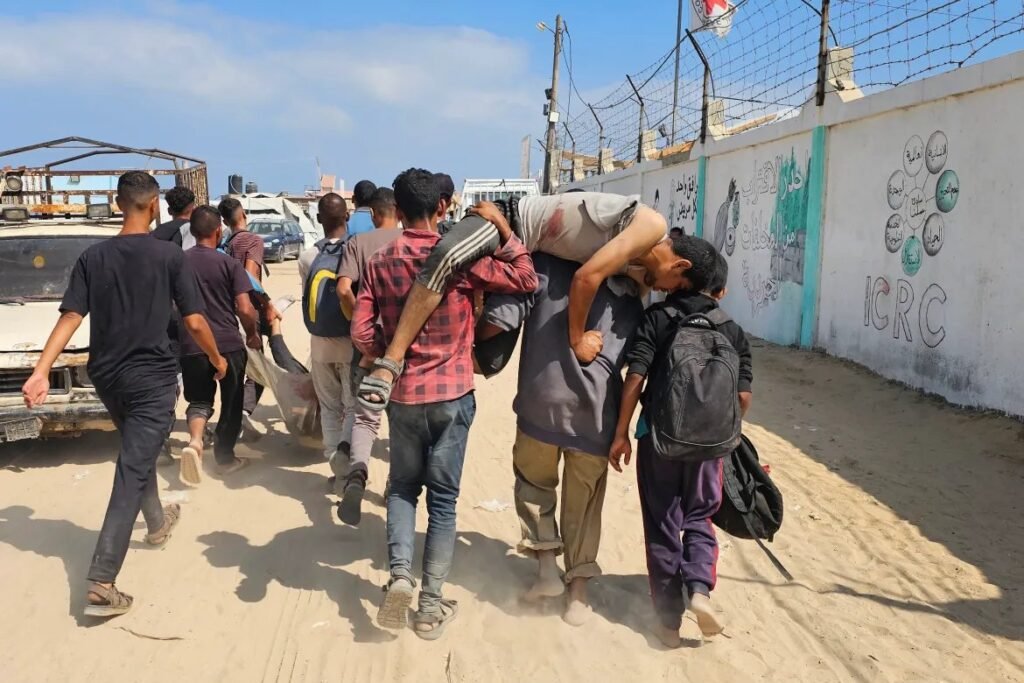
Gaza Herald_ As Gaza struggles to recover from over two years of relentless Israeli bombardment, the enclave faces a new threat: the exploitation of humanitarian aid and reconstruction efforts by armed groups backed by Israel. Instead of rebuilding lives and infrastructure for Palestinians devastated by the ongoing siege, these militias have been allowed to seize resources, deepen divisions, and assert control over the city of Rafah, leaving civilians trapped between war, occupation, and systemic looting.
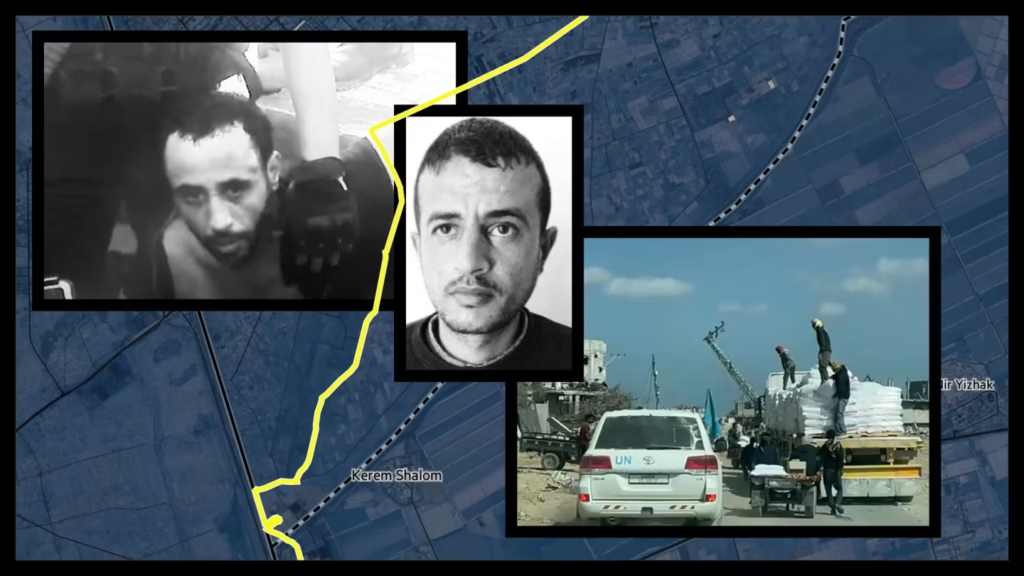
Israeli media reports that an armed group accused of looting humanitarian aid in Gaza is set to take charge of the “rehabilitation” of Rafah city. According to Kan News, the Popular Forces, a militia led by former smuggler Yasser Abu Shabab, have received approval from Israel to manage reconstruction efforts in areas under their control.
Two Israeli sources confirmed the plan but noted that the Israeli government does not have a comprehensive strategy for the growing number of anti-Hamas militias in Gaza following its long-discussed withdrawal. Abu Shabab describes the Popular Forces as a faction of Palestinians opposed to Hamas’s governance, but multiple reports indicate the group has engaged in extortion, looting of aid supplies, and coordination with the US-backed Gaza Humanitarian Fund (GHF) an organization criticized for failing to prevent deaths at aid sites.
Links to Extremism and External Backing
Some members of the Popular Forces reportedly maintain connections to the Islamic State (ISIS). Israel has actively supported the group, alongside other militias that have proliferated across Gaza, in an effort to undermine Hamas’s authority. A Palestinian source familiar with the matter told Kan that Abu Shabab’s associates also participated in meetings with senior US officials, demonstrating the international dimension of this militia’s influence.
Territories under the Popular Forces’ control have seen access to aid and resources that remain largely blocked from the rest of Gaza, a situation largely fueled by systematic theft of humanitarian supplies. An internal 2024 UN report identified the group as “the most influential stakeholders behind the systematic and massive looting of convoys.”
Ongoing Violence and Civilian Toll
Despite the October ceasefire, Israel has continued its assaults on Gaza, killing at least 242 people in repeated attacks, according to the Palestinian Health Ministry. Since October 2023, over 69,179 Palestinians, including more than 20,000 children, have been killed in what has been widely described as a genocidal military campaign.
The Israeli-backed Popular Forces now stand to consolidate control over parts of Rafah, effectively enabling the manipulation of aid flows and deepening the humanitarian crisis. At the same time, Gaza’s civilian population continues to bear the brunt of ongoing occupation and violence.
For the residents of Rafah and wider Gaza, reconstruction is no longer simply about rebuilding homes and infrastructure is a struggle to reclaim sovereignty, dignity, and basic human rights in the face of foreign-backed militias and an occupying force that profits from chaos. Until humanitarian aid is delivered without interference, and Gaza’s recovery is returned to its rightful owners, the people of the enclave will continue to suffer the compounded horrors of war, occupation, and exploitation.