Gaza Herald — What began as an international effort to bring stability and peace to Gaza has been quietly transformed into a political weapon, one crafted in Washington and designed to serve Israel’s long-term objectives. Behind the language of “peacekeeping” and “stabilization,” Donald Trump’s proposed framework for Gaza has revealed itself as a coercive plan for control and disarmament, not reconstruction or reconciliation.
From Peacekeeping to Pacification
The original idea of an international stabilization force, once envisioned as a neutral, UN-backed mission to protect civilians and rebuild Gaza, has been systematically distorted. Under Trump’s blueprint, that force is now described as an entity tasked with “demilitarizing the Gaza Strip”, a euphemism for forcibly disarming resistance movements and enforcing Israeli security interests under the cover of international legitimacy.
Sources familiar with the draft UN resolution say the text’s language bears Trump’s imprint: it converts a peace mission into a mechanism for military containment. The plan’s core objective is no longer stabilizing Gaza, but ensuring that no armed Palestinian group ever rises again, even if that means turning Arab and Muslim nations into enforcers of Israeli policy.
Egypt and Turkey Sound the Alarm
Both Egypt and Turkey, which initially supported the concept of an international force, are now alarmed by how far the proposal has drifted from its original intent.
Egyptian officials insist they were led to believe the force would facilitate reconstruction and humanitarian coordination, not disarm Palestinians by force. “Egypt will not do the job that Israel failed to accomplish,” one senior official said, emphasizing that Cairo supports gradual decommissioning through negotiation, not confrontation.
Ankara shares similar concerns. A Turkish official warned that the plan “assigns Arab and Muslim nations the role of implementing Israel’s security agenda,” turning what should have been a peacekeeping mission into a policing mandate over Palestinians. Turkey now argues that the mission must focus on border protection and post-war governance training — not forced demilitarization.
A Plan Conceived in Secrecy
Trump’s team, according to regional sources, drafted the resolution largely behind closed doors — with minimal consultation from regional partners. Egyptian and Turkish diplomats have complained that Washington is “concealing key details” while pretending to coordinate multilaterally.
The plan’s structure, they say, echoes Trump’s earlier regional policies: unilateral, coercive, and aimed at reshaping the Middle East around Israeli priorities.
Adding to the controversy, the proposed “stabilization board” would reportedly be chaired by Donald Trump himself, operating through a U.S.-run coordination center based in Israel. This setup sidelines the United Nations from genuine oversight, making the mission look UN-backed on paper, while in reality placing it under U.S. and Israeli command.
Disarming Gaza Under the Banner of Peace
By framing disarmament as a condition for aid and stability, the Trump plan effectively weaponizes humanitarian assistance. Arab and Muslim states are being pressured to enforce this disarmament, even as Israel continues to occupy large parts of Gaza and block reconstruction materials.
The underlying logic mirrors earlier U.S. experiments in Iraq and Afghanistan, where “stabilization” became synonymous with control.
For Palestinians, the plan represents a dangerous precedent: a foreign-led security regime that strips them of sovereignty under the pretext of “peace.” Polls show that most Palestinians still view resistance groups as necessary for deterrence and defense, especially after Israel’s devastating campaign and ongoing violations of the ceasefire.
Legitimacy Without Justice
The irony is profound. The United States, long skeptical of the United Nations, now seeks to lend its banner credibility to an agenda that undermines the UN’s founding principles. Former UN peacekeeping chief Jean-Marie Guéhenno cautioned that any such force “must not appear to operate on Israel’s behalf” if it hopes to gain legitimacy among Palestinians. Yet, under Trump’s structure, it does exactly that.
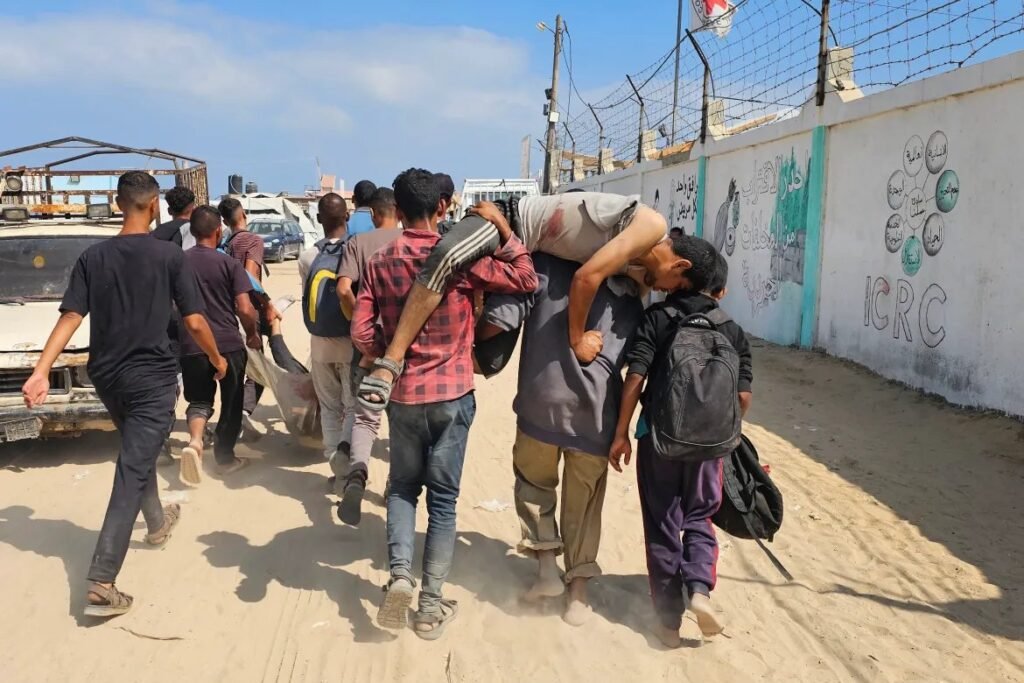
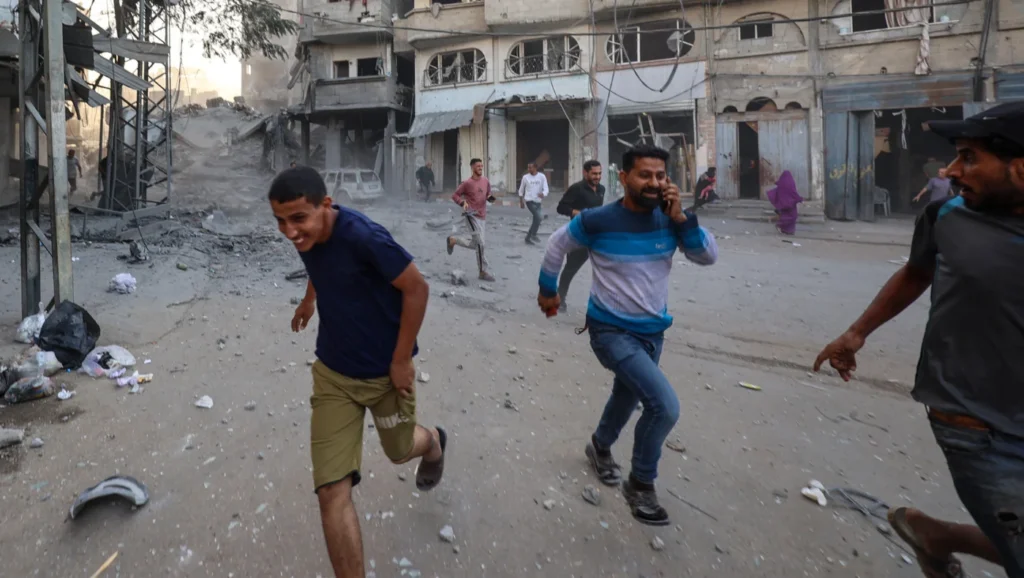
As Gaza lies in ruins, with tens of thousands displaced and essential goods still barred by Israel, the notion of an international force once carried hope, the promise of global responsibility and protection. But in Trump’s hands, it has become a tool of coercion, one that risks turning international law into another instrument of domination.
A False Peace for a Broken Land
The tragedy of Gaza’s post-war planning lies not only in the rubble, but in how the language of peace has been hijacked.
Instead of a collaborative framework to rebuild and protect, the world is being asked to endorse an occupation by other means, a peace enforced by power, not justice.
For Egypt, Turkey, and much of the Arab world, the message is clear: they refuse to be drawn into a project that disguises military control as humanitarian intervention.
And for Gaza’s people, still enduring siege and hunger, the question remains , will the world rebuild their freedom, or merely reshape their prison walls?