Gaza Herald _Two years into Israel’s devastating war on Gaza, the world stands before the wreckage of two entities: the shattered landscape of the Gaza Strip and the moral image of Israel itself. What began as a campaign justified under the banner of “self-defense” has devolved into the most sustained and systematic act of destruction in the history of this conflict. Entire neighborhoods have been erased, hospitals razed, and generations of Palestinians annihilated, and yet, what has emerged most clearly from the ruins is the collapse of Israel’s long-cultivated identity as a moral state.
The war that Israel waged with U.S. and European backing has become not only a humanitarian disaster but a geopolitical and moral turning point. As the dust settles and ceasefire terms are debated, the balance of global opinion has shifted dramatically. Israel’s two-year campaign has exposed the hollowness of its self-image as a democratic and ethical nation, replacing it with the undeniable reality of a state sustained by brute force, impunity, and Western complicity.
The End of the Myth of Moral Superiority
Since its founding, Israel’s narrative has rested on moral exceptionalism: the notion that a “Jewish state” born from the ashes of the Holocaust carried an ethical mission to ensure safety for the Jewish people. This narrative, reinforced by Western guilt over centuries of antisemitism, allowed Israel to frame its colonial expansion and occupation as acts of survival rather than domination. Every assault on Palestinians from Lebanon to Jenin to Gaza was thus justified under the sacred phrase “the right to self-defense.”
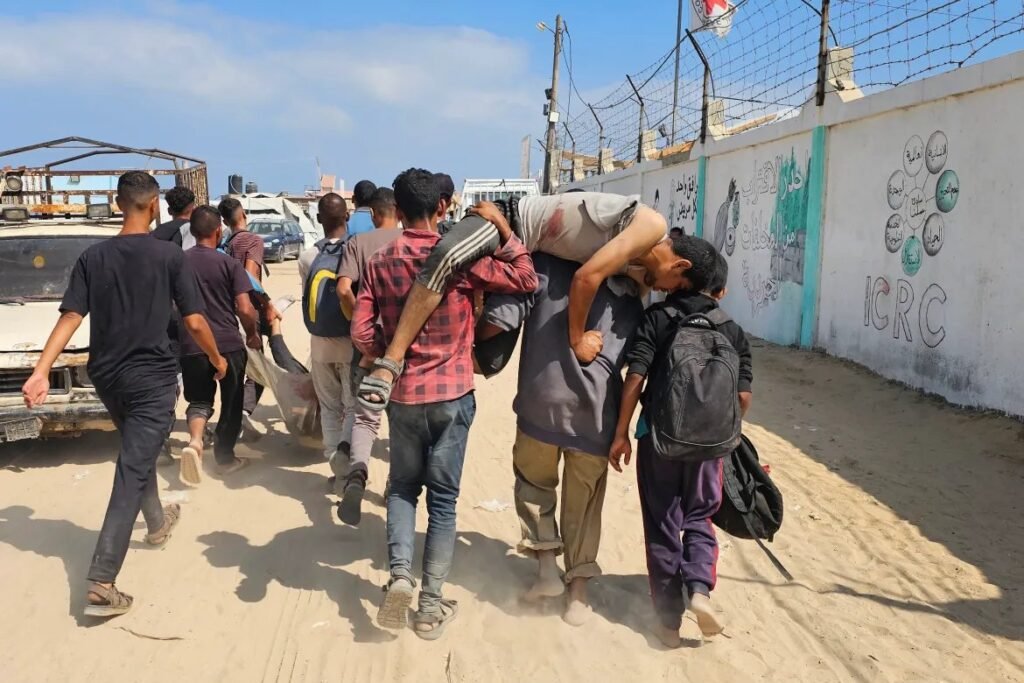
But Gaza has obliterated this narrative. The sheer scale of destruction, broadcast live to millions through independent journalists, humanitarian agencies, and Palestinian survivors themselves, has left no room for illusions. Israel’s bombardment killing over 67,000 Palestinians, most of them civilians, has been classified by legal scholars and UN experts as genocide. It was not a war between two equal sides; it was the systematic crushing of an occupied, besieged population.
No moral enterprise survives after the deliberate bombing of hospitals, churches, schools, and refugee camps. No democratic state can claim legitimacy after starving a population of 2.3 million people and cutting off their access to water, food, and electricity. What remains is the naked face of power: an apartheid state wielding advanced Western weaponry against an unarmed civilian population.
Trump’s Ceasefire and Netanyahu’s Political Survival
The ceasefire agreement announced under U.S. mediation, largely orchestrated by Donald Trump, represents not the dawn of peace but the rearrangement of a political theater. Trump, eager to claim a diplomatic victory ahead of his election year, has framed the deal as a breakthrough in “ending the Gaza conflict.” Netanyahu, for his part, has little to celebrate beyond temporary relief from domestic and international pressure.
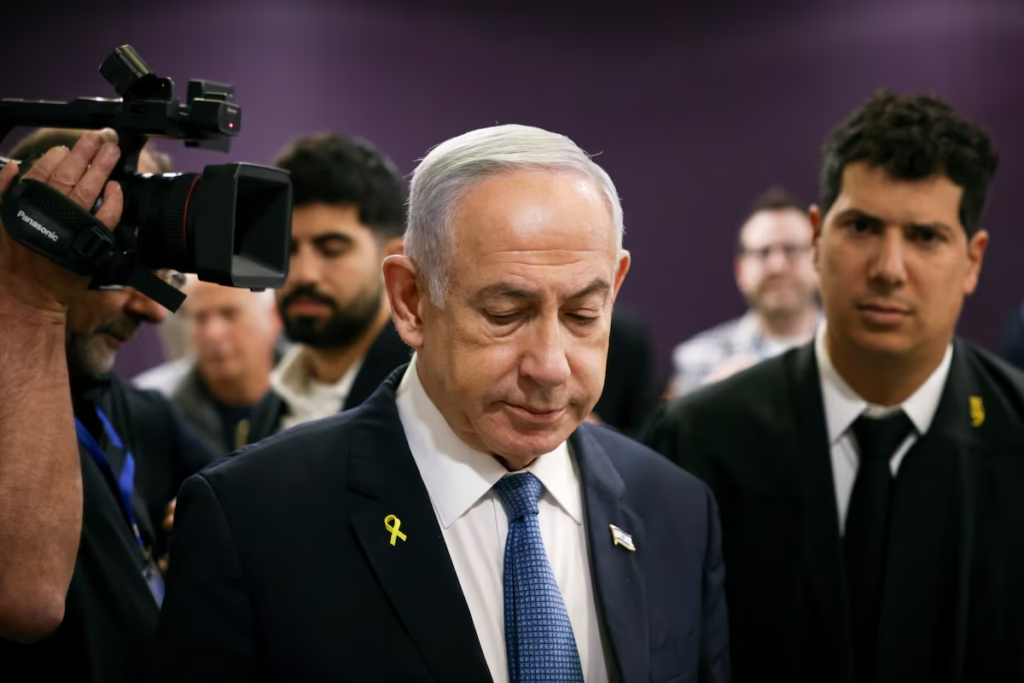
For Netanyahu, the ceasefire is a lifeline. He faces a fractured coalition, growing public dissent, and looming corruption trials. His political survival now depends on projecting victory, securing the release of hostages, declaring Hamas defeated, and convincing Israelis that the war achieved its objectives. Yet, beneath the rhetoric, Israel’s strategic failure is evident.
Despite the immense destruction, Hamas remains intact as an organization. Its political and military infrastructure, though battered, has endured. Its leadership continues to communicate, command, and adapt. For many Palestinians, Hamas’s survival represents not military success but a moral one, proof that even under genocide, resistance and national identity persist.
The first phase of the ceasefire may bring temporary calm, but Netanyahu knows that any attempt to resume fighting would be politically catastrophic. The Israeli public is weary, divided, and disillusioned. Internationally, the tide has turned; Israel’s actions have alienated much of the Global South, strained relations with Europe, and ignited unprecedented opposition within the United States itself.
The Collapse of Israel’s Global Image
For decades, Israel’s strength lay not only in its military might but in its moral narrative, one that found resonance in Western capitals. It was the “only democracy in the Middle East,” a bulwark of civilization against barbarism. But Gaza has shattered this illusion.
Public opinion in the U.S. and Europe has shifted dramatically. Polls show that sympathy for Palestinians now surpasses that for Israel among Americans under 30, and even among Democrats as a whole. The New York Times and The Guardian, once cautious in their coverage, now acknowledge a moral and political rupture. Social media has further eroded Israel’s monopoly on narrative control; the voices from Gaza doctors, journalists, and ordinary citizens documenting their suffering have reached audiences unfiltered by state propaganda.
This shift is not temporary. It reflects a generational awakening. Young people across the West see the Palestinian struggle not as a distant conflict but as a moral and political cause, intertwined with movements for racial justice, decolonization, and human rights. For the first time, criticizing Israel is no longer political suicide in many Western societies; it is a position of conscience.
International Law and Western Hypocrisy
Perhaps nowhere has Israel’s moral collapse been more visible than in the realm of international law. The International Criminal Court’s investigation into alleged war crimes and the ongoing genocide case at the International Court of Justice have placed Israel in the same category as regimes it once condemned.
The West’s efforts to shield Israel from accountability by pressuring ICC prosecutors, cutting UNRWA funding, and vetoing UN resolutions have backfired spectacularly. These actions have exposed the deep hypocrisy of the liberal order that claims to uphold human rights. To protect Israel, the U.S. and its allies have undermined the very institutions they created to prevent atrocities.
Netanyahu’s government now stands accused of the same crimes it denounces in others. The double standard has not gone unnoticed. From Latin America to South Africa, governments have broken diplomatic ties with Israel or pursued legal action. The global majority no longer sees Israel as a victim but as a colonial aggressor.
A Turning Point in Global Public Opinion
Across Europe, hundreds of thousands have filled the streets in protest. From London to Madrid, from Rome to Amsterdam, people are marching not only against Israel’s actions but against their own governments’ complicity. This wave of mobilization has crossed ideological and religious lines. It is no longer confined to the left; it is a moral movement that cuts across generations and nationalities.
Even within the Jewish diaspora, the shift is profound. Many Jewish voices, scholars, rabbis, and activists have condemned Israel’s genocide in Gaza, reclaiming Judaism from the state that claims to represent it. “Not in our name” has become a rallying cry, signaling a new era where moral clarity takes precedence over political loyalty.
This change is irreversible. Israel’s violence has created not silence, but solidarity. The Palestinian cause, once marginalized, now stands at the center of global conscience.
The Price of Resistance and the Burden of Survival
For Palestinians in Gaza, survival has come at an unfathomable cost. More than 67,000 lives have been lost. Entire families have been erased. The physical destruction is nearly total: homes, hospitals, universities, mosques, and churches reduced to rubble. The psychological scars will last generations.
And yet, amidst the devastation, a collective will endures. The people of Gaza, doctors operating by candlelight, teachers running makeshift classrooms in tents, children writing the names of their martyrs in the sand, have defied Israel’s attempt to erase them.
This endurance itself is political. It represents the failure of Israel’s strategy of destruction. For even if every building in Gaza were destroyed, the idea of Palestine remains indestructible.
The West’s Dilemma and the Future of the Conflict
For Western governments, Gaza has created an impossible dilemma. To continue supporting Israel is to defend genocide in real time. To withdraw support is to admit decades of complicity. The longer this moral paralysis continues, the more credibility the West loses on every global issue from Ukraine to human rights in China or Africa.
The U.S., in particular, faces a reckoning. Its military, diplomatic, and financial backing for Israel’s war has alienated much of the Global South, weakened alliances, and exposed the emptiness of its human rights rhetoric. As Washington lectures others about democracy and justice, images from Gaza stand as a permanent indictment.
Meanwhile, the so-called “peace process” promoted by Trump is nothing more than a political spectacle. It offers neither justice nor sovereignty for Palestinians. Any plan that ignores the occupation, the right of return, and the demand for accountability is destined to fail.
The Unraveling of Zionism’s Political Logic
The war in Gaza has also revealed a deeper crisis within Zionism itself. Israel’s founding ideology that Jewish safety requires exclusive sovereignty and control has reached its logical and moral dead end. Instead of security, it has produced perpetual war. Instead of moral legitimacy, it has generated global condemnation.
In the pursuit of domination, Israel has sacrificed the very values it once claimed to embody. The result is not a safer state but a besieged one, morally isolated, politically fragile, and spiritually bankrupt.
From Gaza’s Ruins, a New Moral Order Emerges
When the last bombs fall silent and the ceasefire becomes permanent, Gaza will remain a graveyard not only for its martyrs but for the myth of Israel’s moral exceptionalism. The world has witnessed, in real time, the transformation of a state that once claimed to be a beacon of democracy into one synonymous with ethnic cleansing and collective punishment.
The shift in public consciousness from sympathy to scrutiny, from silence to solidarity, is irreversible. The Palestinian struggle has once again become the moral compass of our age, a measure by which justice and hypocrisy are weighed.
Israel may claim temporary military victories, but it has suffered an irreparable moral defeat. In destroying Gaza, it destroyed its own image as a moral enterprise. The rubble of Gaza now mirrors the rubble of that illusion, and from both, something new is being born: a global movement that sees in Palestine not just a tragedy, but a test of humanity itself.