Gaza Herald _ Two years into Israel’s genocidal war on Gaza, the enclave stands on the edge of mass starvation. The United Nations and leading rights experts now confirm what Palestinians and humanitarian observers have long warned: Israel has deliberately engineered famine in Gaza as a weapon of war.
The UN officially declared famine in parts of Gaza in late August, with all three famine thresholds, extreme food deprivation, acute malnutrition, and starvation-related deaths, breached. A month later, the UN Independent International Commission of Inquiry concluded that Israel had committed genocide in Gaza, citing deliberate acts intended to destroy the Palestinian people.
“Under international humanitarian law, starvation as a weapon against civilians is a war crime, yet in Gaza, this crime is being carried out explicitly and in plain sight,” said Ramy Abdu, chair of the Geneva-based Euro-Med Human Rights Monitor.
According to him, Israel’s starvation policy proves intent: “Gaza’s famine is not a natural disaster, it is the outcome of a systematic campaign of deprivation, destruction, and obstruction.”
From Siege to Starvation
The roots of Gaza’s humanitarian collapse trace back years before the current war. Since 2006, Israel’s blockade has controlled every border crossing and severely restricted imports, even calculating the calories allowed per person. By 2023, 80% of Gazans relied on aid, while youth unemployment and anemia rates soared.
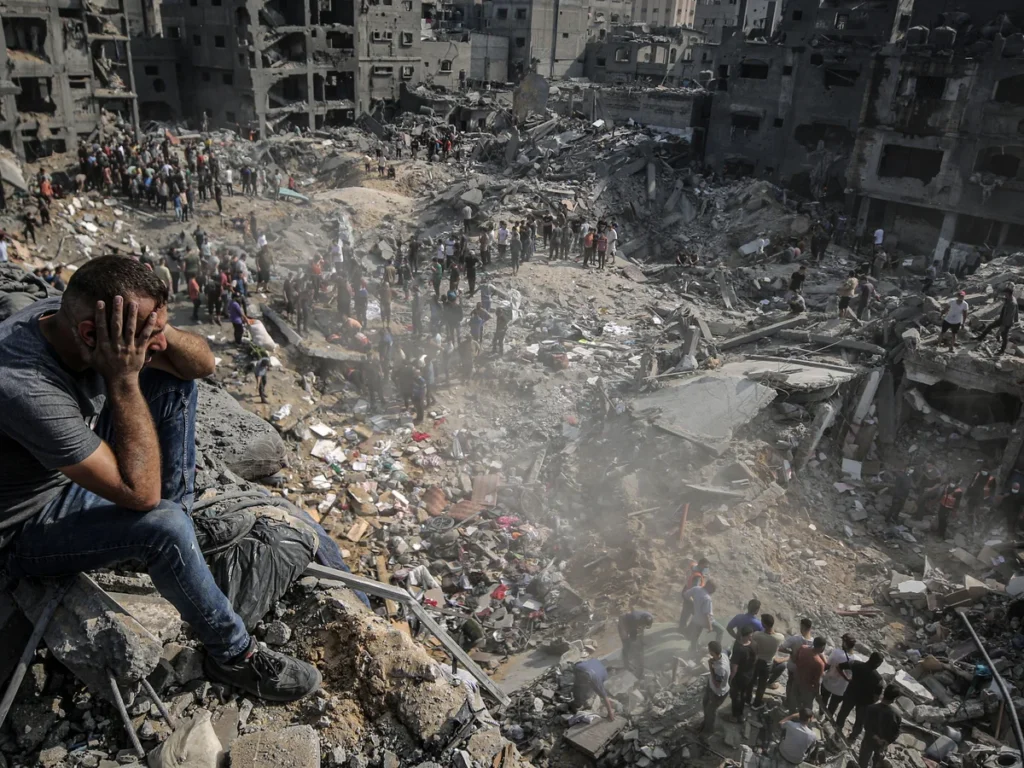
The decisive moment came on October 9, 2023, when Israel announced a “complete siege,” cutting off food, fuel, and water. Within days, bakeries stopped, farms were flattened, and aid convoys were bombed or turned back. Fuel shortages crippled hospitals and halted food distribution.
“Israel turned the fragility it had engineered over the years into a weapon of slow annihilation,” Abdu told Gaza Herald.
Repeated mass displacements, overcrowded shelters, and relentless bombardments worsened the crisis. Nearly 2 million Palestinians remain displaced today, with no safe zones left in the enclave.
The War on UNRWA
Israel’s campaign against the UN Relief and Works Agency (UNRWA)—the main humanitarian lifeline for Gaza’s 2.3 million people—further deepened the famine.
UNRWA warehouses were bombed, staff targeted, convoys blocked, and funding suspended under Israeli pressure. In May 2025, Israel and the US launched the Gaza Humanitarian Foundation (GHF), which the UN condemned as an “aid militarisation scheme” designed to replace and undermine UNRWA.
The so-called “safe aid zones” under GHF became death traps. According to the UN human rights office, 1,760 Palestinians have been killed while trying to reach food, nearly 1,000 near GHF sites.
“These actions, closure of crossings, attacks on convoys, destruction of farmland, and targeting of civilians seeking food, are not random chaos,” said Abdu. “They are a carefully designed policy of starvation.”
The Children of Gaza: Wasting Away
A devastating new study by UNRWA, published in The Lancet, has revealed the human face of Gaza’s famine: its children.
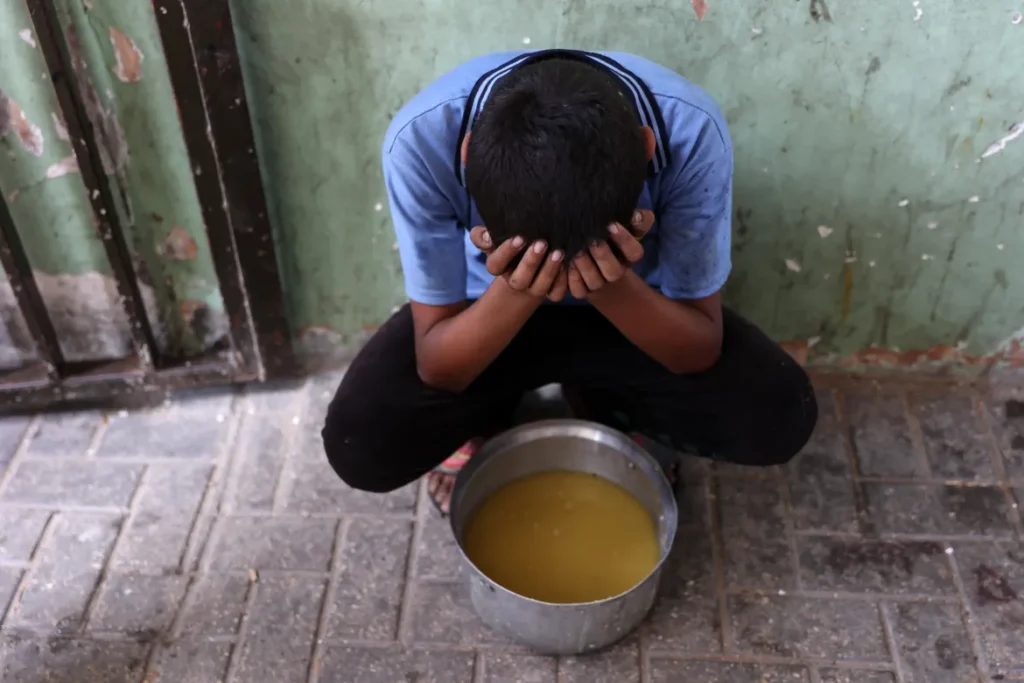
Over 54,600 children under the age of five are now acutely or severely malnourished, many too weak to stand, play, or cry.
UNRWA epidemiologist Dr. Masako Horino, who led the study, said:
“Before October 2023, Gaza’s children were already food insecure, but regular access to food aid kept them marginally nourished. Two years into war and blockade, tens of thousands now suffer preventable acute malnutrition, a direct result of deliberate deprivation.”
The UNRWA team screened more than 219,000 children across health centers and displacement camps between January 2024 and August 2025, measuring mid-upper arm circumference to detect wasting. The findings were staggering.
During a brief six-week ceasefire in early 2025, when aid temporarily entered Gaza, malnutrition rates dropped only to surge again once Israel resumed its blockade.
By mid-August 2025, the UN confirmed famine in Gaza City, warning that the rest of the Strip was only “weeks away” from a similar catastrophe.
UNRWA’s Director of Health, Dr. Akihiro Seita, issued a stark warning:
“Unless there is a lasting ceasefire and unrestricted humanitarian access, early childhood nutrition and survival in Gaza will continue to deteriorate. We are witnessing the slow death of a generation.”
Experts caution that the consequences will extend beyond the immediate famine.
Dr. Zulfiqar Bhutta, Dr. Jessica Fanzo, and Dr. Paul Wise warned of “intergenerational impacts,” including reduced life expectancy and increased risk of chronic diseases among Gaza’s surviving children.
Recognition Without Action
Despite overwhelming evidence, the global response remains muted. On September 16, the UN Commission reaffirmed that Israel’s actions in Gaza meet the legal definition of genocide, citing four of the five acts defined under the 1948 Genocide Convention: killing members of the group, inflicting serious bodily and mental harm, deliberately creating conditions of life intended to destroy the group, and preventing births among them.
The Commission’s statement urged Israel to end its starvation policy, lift the siege, and allow full humanitarian access, including for UNRWA and the UN Human Rights Office.
Yet, as the Gaza Herald notes, little has been done.
Washington and European capitals continue to shield Israel diplomatically, while the famine deepens and Gaza’s children perish in silence.
A Generation at Risk
In Gaza today, every child’s hunger is a political statement, a measure of the world’s complicity.
As international courts weigh evidence of genocide, the siege tightens, and the sound of empty stomachs replaces that of bombs.
“Ending Gaza’s famine begins with restoring and protecting UNRWA,” said the Gaza Herald’s editorial team in a recent statement. “But ultimately, it requires ending the siege itself, the blockade that made hunger a weapon and starvation a strategy.”
The famine in Gaza is not an act of nature. It is a crime unfolding before the world’s eyes.