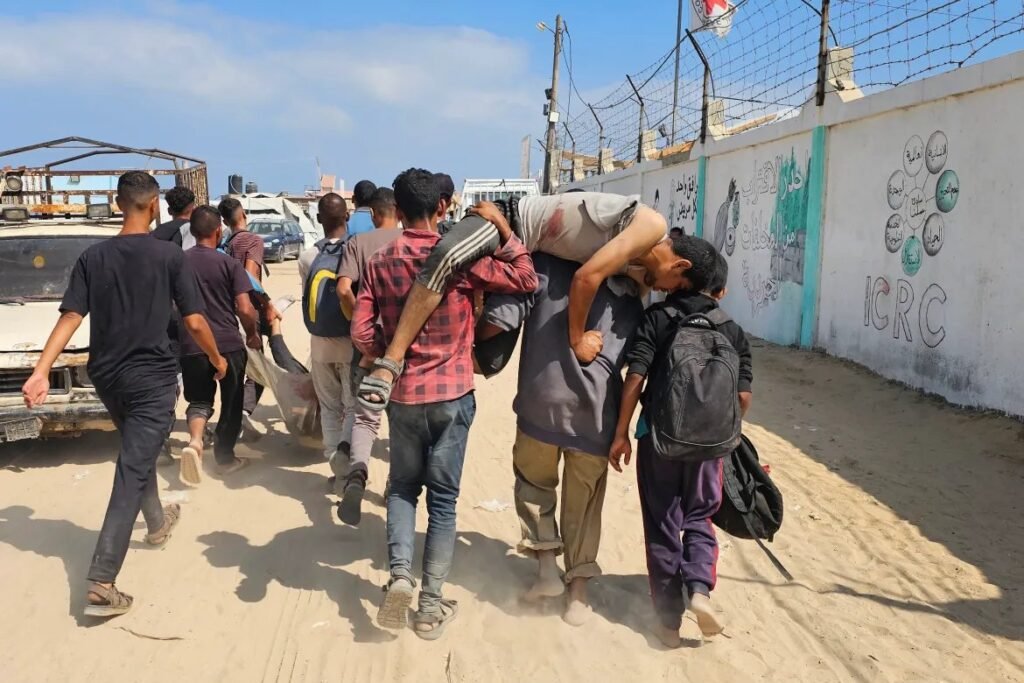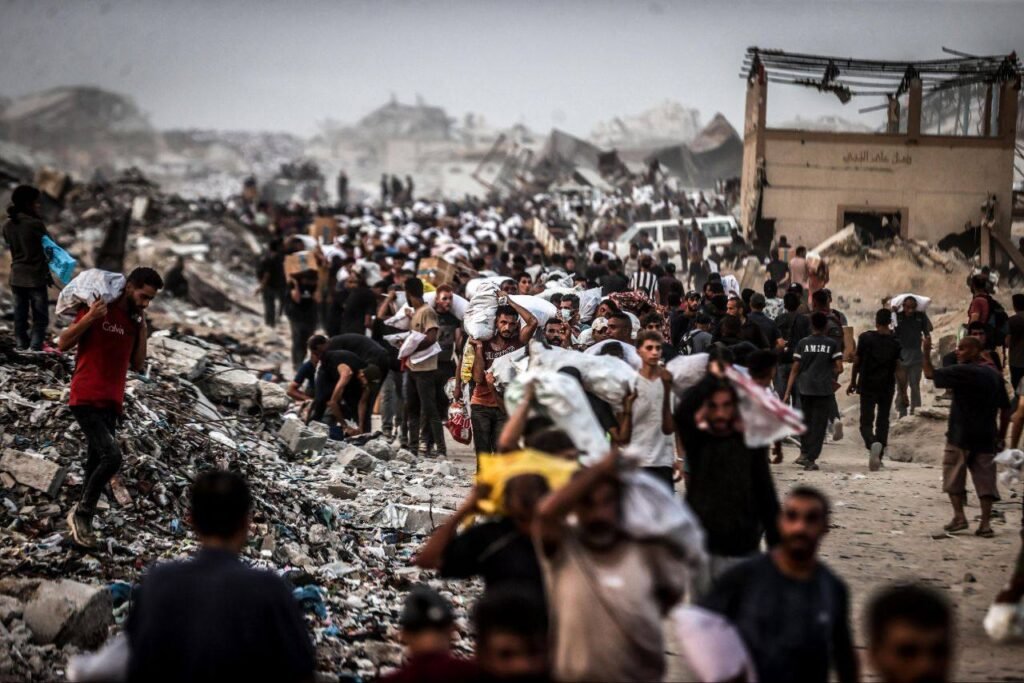
Gaza Herald – Since the beginning of Israel’s full-scale genocide on Gaza in October 2023, which unleashed unprecedented destruction and civilian massacres, the global landscape has shifted dramatically.
What was once framed as a “political conflict” has become an unmistakably moral and humanitarian issue, one that has awakened global conscience. Across continents, millions have spoken out, from artists and political leaders to grassroots movements and civil society, forming one of the most powerful waves of global solidarity with Palestine in modern history.
Art as Resistance: A Global Boycott of Israeli Institutions
In September 2025, more than 1,300 artists from Hollywood, Europe, and around the world, including Mark Ruffalo, Tilda Swinton, Riz Ahmed, Olivia Colman, Javier Bardem, and Ava DuVernay, signed a collective pledge to boycott Israeli film and cultural institutions accused of complicity in what they called “genocide and apartheid” against Palestinians.
This movement reignited the role of art as an ethical and political force. It reminded the world that culture is not neutral in the face of mass killing, but it can be a powerful form of resistance and moral clarity. Through their public stance, these artists helped expose Israel’s crimes to audiences who might otherwise have remained silent, transforming the cultural sphere into a platform of accountability.
Artists4Ceasefire: The Call for an End to the Killing
In October 2023, hundreds of global artists launched the Artists4Ceasefire initiative, demanding an immediate ceasefire, humanitarian access, and the release of captives.
This campaign, that signed by figures across music, film, and visual arts, represented one of the first transnational cultural movements opposing the ongoing genocide in Gaza. It wasn’t just a call for peace; it was an act of defiance against the normalization of mass civilian killings. The initiative revealed how the moral weight of the creative world had decisively shifted, standing with the oppressed, not with the occupier.
Music Takes a Stand: “No Music for Genocide”
A wave of musicians joined the campaign “No Music for Genocide”, including Lorde, Caribou, and Hayley Williams, announcing a ban on broadcasting their music in Israel. They described it as a stand against a regime engaged in systematic extermination, apartheid, and ethnic cleansing.
Concerts and global events such as “Together for Palestine” used art and music as tools of consciousness, transforming stages into acts of resistance. For many artists, silence was no longer an option. Their voice sent a message louder than any lyric: complicity in genocide is unacceptable.
The Global Political Shift: From Silence to Condemnation
At the UN General Assembly sessions of 2024 and 2025, several world leaders broke decades of diplomatic caution, publicly labeling Israel’s assault on Gaza as genocide. Among them were: Recep Tayyip Erdoğan (Turkey), Gustavo Petro (Colombia), Cyril Ramaphosa (South Africa), Anwar Ibrahim (Malaysia), and Cardinal Pietro Parolin, Secretary of State of the Vatican, who described the situation as “an ongoing massacre against an unarmed population.”
Their statements marked a historic rupture in global discourse. The word genocide was no longer taboo in diplomatic halls. The world began to recognize what Palestinians had been saying for decades: it is the systematic destruction of a people.
Europe’s Changing Stance
In 2025, the European Commission proposed a package of sanctions against Israeli officials, including extremist ministers and settlers, while suspending Israel’s privileged trade arrangements with the EU. This unprecedented move reflected growing public and political pressure across Europe to end unconditional support for Israel.
European protests, from London to Madrid, Berlin, and Dublin, became weekly demonstrations of conscience. Citizens, unions, and student groups united behind one slogan: “Stop the genocide in Gaza.”
Recognition of the State of Palestine
By 2025, more than 145 countries had officially recognized the State of Palestine. The most recent wave of recognition, by Spain, Norway, and Ireland, was hailed as a historic turning point in Europe’s relationship with Palestine.
These recognitions tell the world that global patience with Israeli impunity is running out, and that the world is increasingly ready to embrace Palestinian sovereignty as both a political necessity and a moral imperative.
The Global Sumud Flotilla: Breaking the Siege
In August 2025, the Global Sumud Flotilla set sail to challenge the 16-year naval blockade on Gaza. Onboard were hundreds of activists, doctors, and journalists from over 40 countries, including climate activist Greta Thunberg, who called Israel’s campaign “a silent genocide the world must no longer ignore.”
Though Israeli forces intercepted the flotilla and detained many participants, the mission reignited international attention on Gaza’s suffocating siege. It reminded the world that even amidst destruction, the spirit of solidarity, sumud (steadfastness), still sails forward.
The Genocide as a Catalyst for Global Conscience
What Israel sought to bury under rubble, the world uncovered through the testimonies, images, and resistance of Palestinians. The genocide in Gaza became a moral awakening, transforming silence into action, apathy into outrage.