Gaza Herald_ More than 100 Palestinians were killed in Gaza since US President Donald Trump called on Israel to “immediately stop the bombing,” as indirect ceasefire negotiations prepare to open in Egypt. The weekend’s intense raids focused on residential neighbourhoods, refugee camps, and humanitarian distribution sites underline a brutal reality: diplomacy on paper has not halted the assault on Gaza’s civilians.
Over Saturday and Sunday, Gaza endured heavy bombardment. The Gaza Government Media Office reported at least 94 deaths over the two days, with at least seven more killed on Monday morning, bringing the recent total to more than 100. Local sources recorded 131 air and artillery strikes across densely populated areas over the weekend alone.
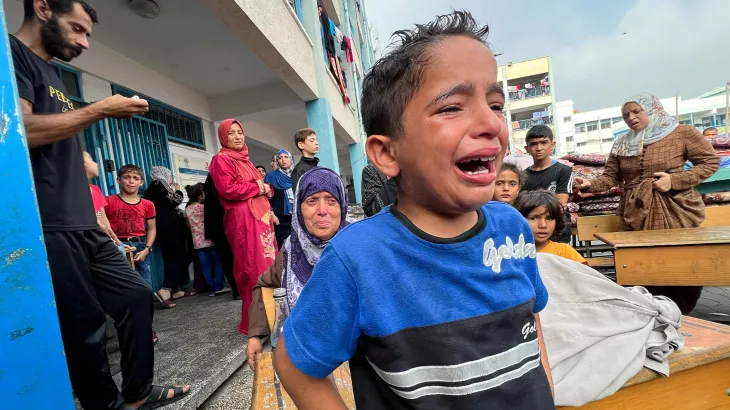
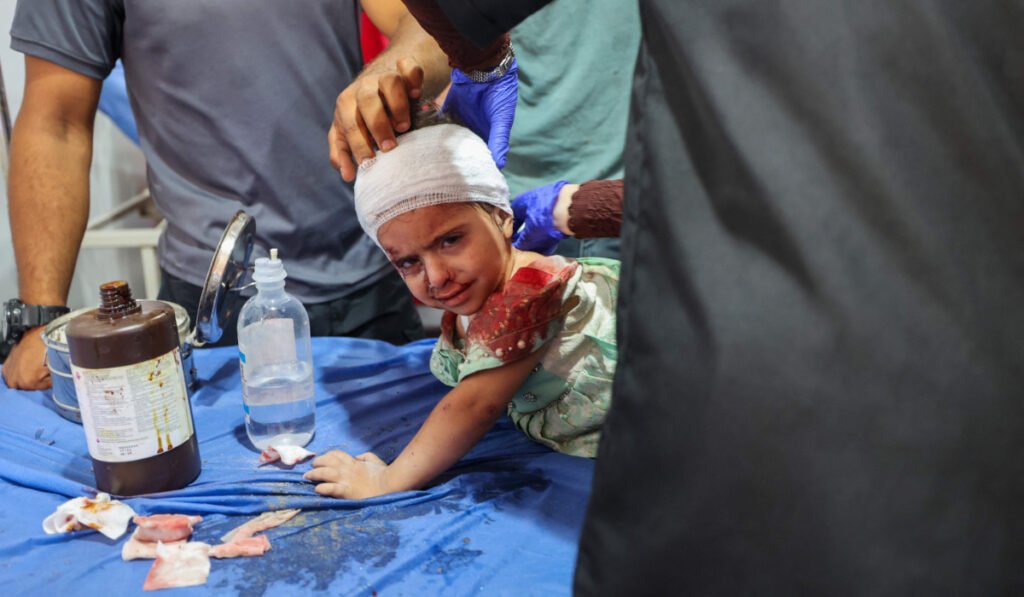
Residents of Gaza City described the deployment of explosive barrels dropped by remotely controlled vehicles, striking homes in the al Jalaa neighborhood and elsewhere. Attacks also struck displaced families sheltering in and around schools: an assault on the Greek Orthodox (al Rum) School in Tal al Hawa wounded and killed displaced Palestinians, including children. Shelling near an aid distribution center southwest of Khan Younis further endangered civilians who had gathered to receive desperately needed assistance.
The humanitarian fallout continues to deepen. One Palestinian died of malnutrition on Monday, increasing the documented toll of deaths attributable to the Israeli-imposed famine to at least 460. Since October 2023, the Gaza Government Media Office says Israeli forces have killed at least 67,160 Palestinians, including more than 20,000 children; another 9,500 are reported missing and presumed dead.
The violence arrives as negotiators prepare to meet in Cairo. A Hamas delegation led by Chief Negotiator Khalil al-Hayya arrived in Egypt ahead of indirect talks expected to begin on Monday. Hamas has indicated willingness to release all Israeli captives under the terms of the White House’s 20-point proposal, though it has not accepted other provisions such as disarmament or foreign forces taking control of Gaza.
Despite the diplomatic activity, Israeli officials deny that fighting has paused. Military chief Eyal Zamir described the situation as a “change in the operational situation,” not a ceasefire, saying Israel intends to continue reshaping the region and “attack and destroy the enemy on every front.” Israeli state radio reported that the head of Israel’s delegation and two US envoys would not attend Monday’s sessions in Sharm el Sheikh, though they might join on Tuesday.
The deaths over the weekend demonstrate how fragile any pause in fighting has been in practice. Even when international leaders publicly urge restraint, the bombs fall and civilians die. The reported use of remote explosive devices and attacks on sites near aid distribution points illustrates how humanitarian access and civilian protection have become increasingly precarious in a conflict where starvation, displacement, and bombardment interact to create catastrophe.
The current sequence of diplomatic maneuvering in Cairo, while strikes continue on the ground, underscores a hard truth: ceasefire logistics cannot succeed while bombardment persists. Any durable agreement will require an immediate, verifiable halt to attacks, unfettered humanitarian corridors, and guarantees that released captives and civilians can move and recover in safety.