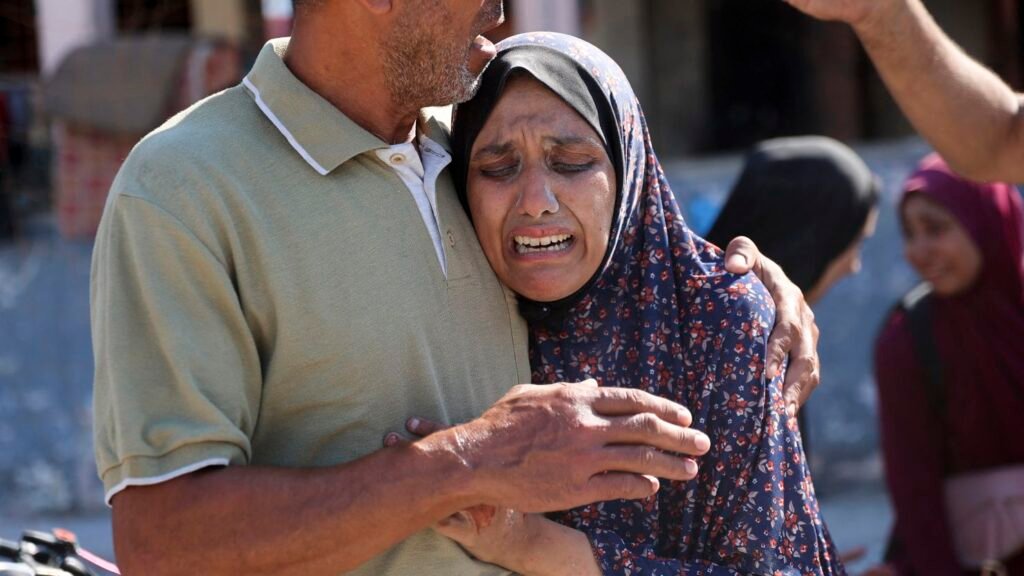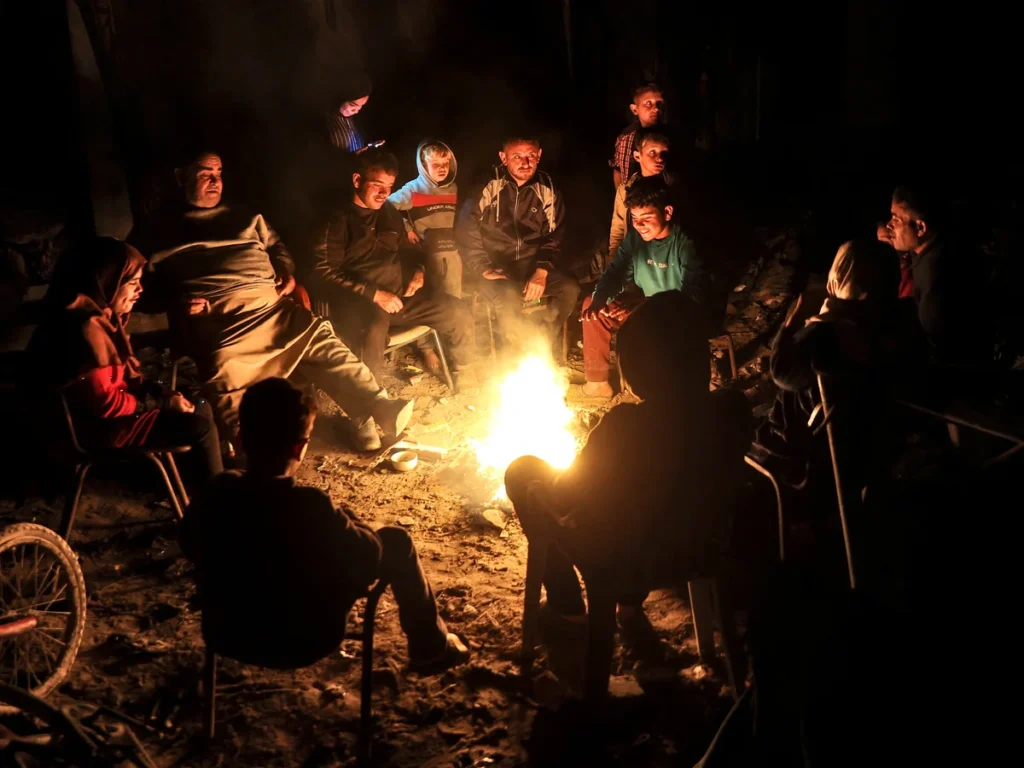
Gaza Herald_ Gaza City is living through one of its harshest chapters yet, as Israel’s military assault intensifies across neighborhoods, driving residents toward forced displacement. Yet, against the odds, hundreds of thousands of Palestinians remain determined to stay, clinging to their city with the hope of thwarting Israel’s plans to erase it.
According to the Government Media Office, about 900,000 Palestinians remain trapped inside Gaza City, enduring severe shortages of food and clean water, as well as constant bombardment that threatens their lives at every moment. Despite the relentless attacks, many insist on staying, believing their presence is the only barrier left against Israel’s efforts to depopulate and destroy the city.
Displacement Under Fire
While some residents refuse to abandon their homes despite the escalating bombardment, others are desperate to flee southward but cannot afford the staggering transportation costs, which exceed $3,000 per family.
Israel continues to apply pressure, claiming far fewer remain in the city, while vowing to demolish it neighborhood by neighborhood.
Local sources report that the largest concentrations of civilians are now in the southern parts of Al-Shati refugee camp, Al-Nafaq neighborhood, Al-Sahaba, Al-Shaabiya, Al-Samer, and the Saraya junction, as well as on the edges of Tel al-Hawa and Al-Shati. Meanwhile, Israeli tanks are pushing deeper into Sheikh Radwan and Al-Nasr.
Stories of Survival and Loss
In Tel al-Hawa, Abdullah al-Bitar sheltered with 16 relatives in the ground floor of an apartment building near the Jordanian Hospital when missiles struck the upper floors.
“We crawled out from under the rubble, calling for our children and wives,” he recounted. “We took refuge at the hospital, but the medical teams had stopped working. We stayed trapped for 24 hours alongside 22 other families until we were evacuated at night toward Al-Nuseirat.”
Elsewhere, tragedy struck the al-Ashi family. Marwan (67) and his son Hani (38) were killed by an Israeli drone while trying to rescue neighbors. “My father chose to stay one more day with my sister, and Hani went back to secure his store,” said son Salem. “The aircraft struck them before they could reach us in the central region.”
Life Under Siege
For those who remain, survival is a daily ordeal. Water desalination plants have been destroyed or relocated south, water trucks have vanished, and municipal pipelines have collapsed. Families walk long distances just to fill a gallon of water.
Markets are paralyzed, with limited activity only in Al-Shati market and slight movement in Saraya and Al-Sahaba markets. Essentials are increasingly out of reach.
“We are trapped between death and helplessness,” said Halima al-Ashi, an elderly woman in Al-Nasr. “The smell of death is everywhere. Drones fire at anything that moves. We can’t afford to flee. Most of those who left had to sell their furniture or phones.”
A City That Doesn’t Sleep
The bombardment spares no hour. “Airstrikes turn night into day,” said resident Mohammed Maqdad, who refuses to leave the northwest. “Every night is worse than the one before. I’ve seen buildings collapse on their residents without warning. Neighbors left to gather supplies before evacuating, and never returned.”
Rescue Teams Overwhelmed
Emergency crews admit the scale of destruction paralyzes them. With no heavy equipment, civil defense teams are forced to leave victims under the rubble.
“We receive desperate calls from Al-Shati, Sheikh Radwan, and Al-Jalaa Street,” said a civil defense spokesperson. “But we cannot respond. One of the most horrific attacks was on the Shawa building, packed with displaced families near the Al-Samer junction. It left dozens dead or wounded, and fires raging.”
Between Impossible Escape and Deadly Staying
Entire neighborhoods, such as Tel al-Hawa, have been forcibly emptied under the weight of bombardment and fire belts. Still, thousands of families in Al-Sabra, Al-Daraj, and around the Fishermen’s Port remain, holding onto fragile hope for a ceasefire or a safe escape route that has yet to appear.