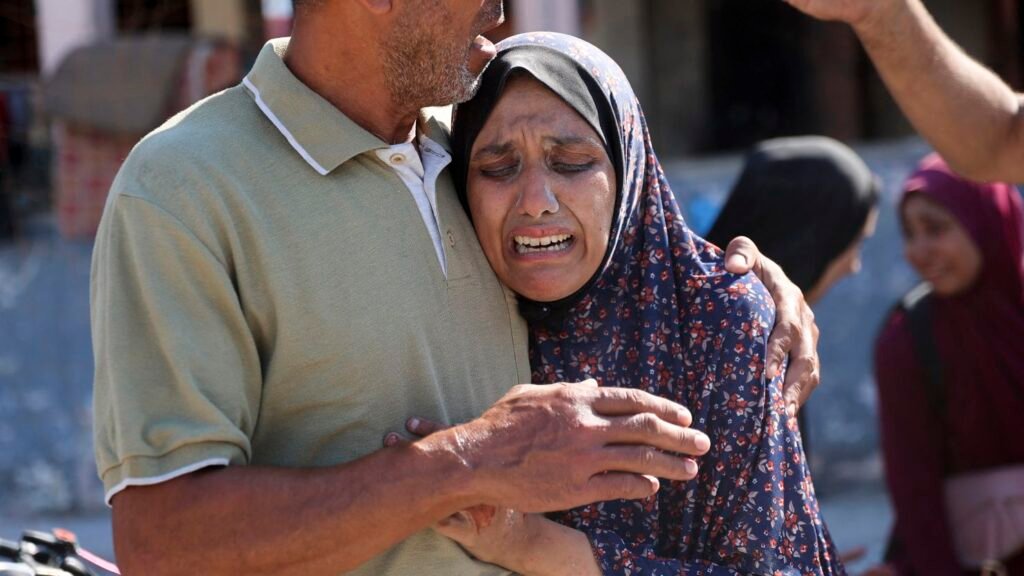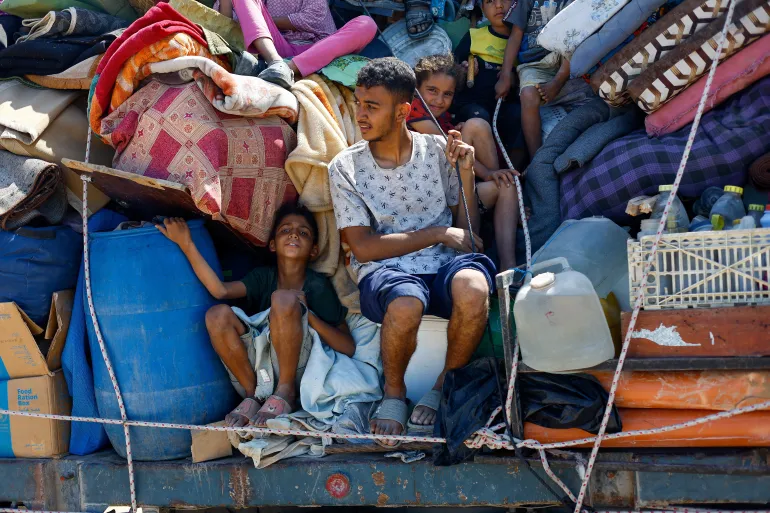
Gaza Herald- In Gaza, displacement has ceased to be an occasional calamity and has become a relentless routine of survival. Each Israeli air raid, each new evacuation order, pushes families once more into the cycle of flight, some clutching a few salvaged belongings, others leaving with nothing but their exhausted bodies and broken spirits.
Streets have transformed into sprawling camps, where people sleep on the bare earth under an unforgiving sky. A few manage to stretch plastic sheets or fragile tents against the wind and dust, while many others huddle by the shattered walls of ruined homes, clinging to whatever fragments still stand.
Even the act of displacement has become unbearably costly. A single journey from Gaza City southward can demand thousands of dollars for transport, a flimsy tent, and the most basic sanitary setup. Countless families, left with nothing but scraps of cash, cannot afford this “choice.” Many decide to remain under bombardment, as exile has become financially as impossible as it is emotionally devastating.
A Strategy of Destruction and Expulsion
Israel’s campaign seeks more than military control; it is an effort to empty Gaza of its people. For weeks, bombardments have leveled residential towers, flattened neighborhoods, and crushed displacement camps. Over a thousand residential buildings have been erased, thousands more heavily damaged, and even the tents of the displaced are being repeatedly destroyed.
The cycle of forced displacement only deepened after Israel tore up the ceasefire agreement in March. Since then, Gaza has been swept by new waves of mass flight: nearly 2 million people, or about 90 percent of the population, have been uprooted. The southern Strip now bears the impossible weight of over a million displaced, suffocating under shattered infrastructure, broken water networks, and a collapsing sanitation system.
No Place of Safety
Talk of “humanitarian safe zones” rings hollow to Gazans. Experience has taught them there is no true refuge; schools are bombed, shelters targeted, convoys struck on supposed escape routes. Everywhere the displaced flee, they remain within Israel’s crosshairs.
Aid agencies have sounded the alarm: UNRWA describes tents crammed beyond capacity, outbreaks of disease, and dwindling supplies of food and water as Israel strangles crossings. Amnesty International and other rights groups have condemned the displacement as an unlawful forced transfer and warned of starvation being used deliberately as a weapon of war.
But behind every figure lies a human story: children uprooted multiple times within two years; mothers walking for hours in search of medicine or clean water; elderly residents who refuse to leave their homes, preferring death within familiar walls to a lifetime of exile.
A Renewed Nakba
After nearly two years of relentless war, Gazans are enduring a catastrophe that mirrors and, in many ways, surpasses the Nakba of 1948. What they face is not a rejection of life, but the slow and systematic theft of it: the erasure of homes, the denial of food and medicine, the stripping away of safety and dignity, and the suffocation of the simple right to exist.
The question that lingers in the air is as heavy as the smoke over Gaza’s ruins: how long will displacement remain the imposed destiny of its people, and how long will the world permit them to endure a war without end, and without mercy?