GazaHerad – Four days after Israel announced the opening of a so-called “humanitarian corridor” into the Gaza Strip, the truth is clear: the corridor is fictional. While headlines report aid trucks entering, virtually none have reached the areas or people most in need. For over two million Palestinians enduring siege, displacement, and starvation, the announcement is not a lifeline; it’s a public relations stunt.
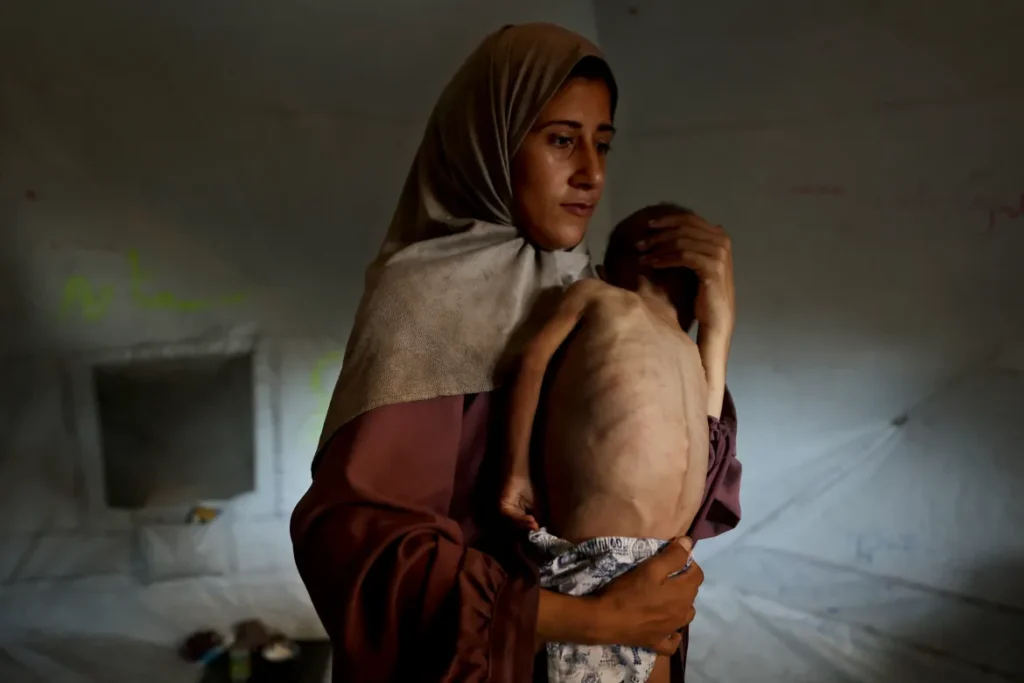
Hunger is widespread. In the absence of functioning markets or organized distribution, families risk their lives heading to areas like Zikim or chaotic aid centers in central and southern Gaza. They wait for trucks that never arrive. Most people are barely eating, and many go days without food. The suffering is real, but the so-called aid is not.
Humanitarian Spectacle, Not Relief
“There is agreement among people here that everything that has been happening for the past four days has just been for spectacle,” a Gaza resident said bluntly.
That spectacle includes Israel’s heavily publicized announcement of resumed aid deliveries through the Kerem Shalom crossing. Yet local markets show no change. Prices are still unaffordable. Goods are still missing. The quantities allowed in are too small to matter, and crucially, Israel refuses to provide security to ensure the aid actually reaches those in need.
On Sunday, just 73 trucks entered Gaza. On Monday, 87. Both numbers are symbolic compared to the 600 trucks per day required to meet basic needs, according to the UN and Gaza authorities. Even before the war’s most recent escalation, Israel had permitted only 5% of this minimum and fully closed the crossing for 148 days starting March 2.
This week, the world’s leading food security body confirmed what Gazans have feared for months: “The worst-case scenario of famine is now happening.” Starvation is no longer a looming possibility. It is here, and it is worsening.
Yet Israel’s actions suggest that even in the face of mass starvation, aid is not being used to save lives. It is being used to manage optics. The limited reopening of crossings is not a humanitarian shift; it’s a temporary adjustment under pressure, designed to appear responsive while changing nothing on the ground.
Israel’s Message: Aid Without Ceasefire
Israel has made no commitment to a ceasefire or even a pause in its military campaign. On the contrary, a formal military statement this week reiterated, “The army will continue its operations against terrorist infrastructure,” and clarified that “the humanitarian response does not mean a change in the rules of engagement.”
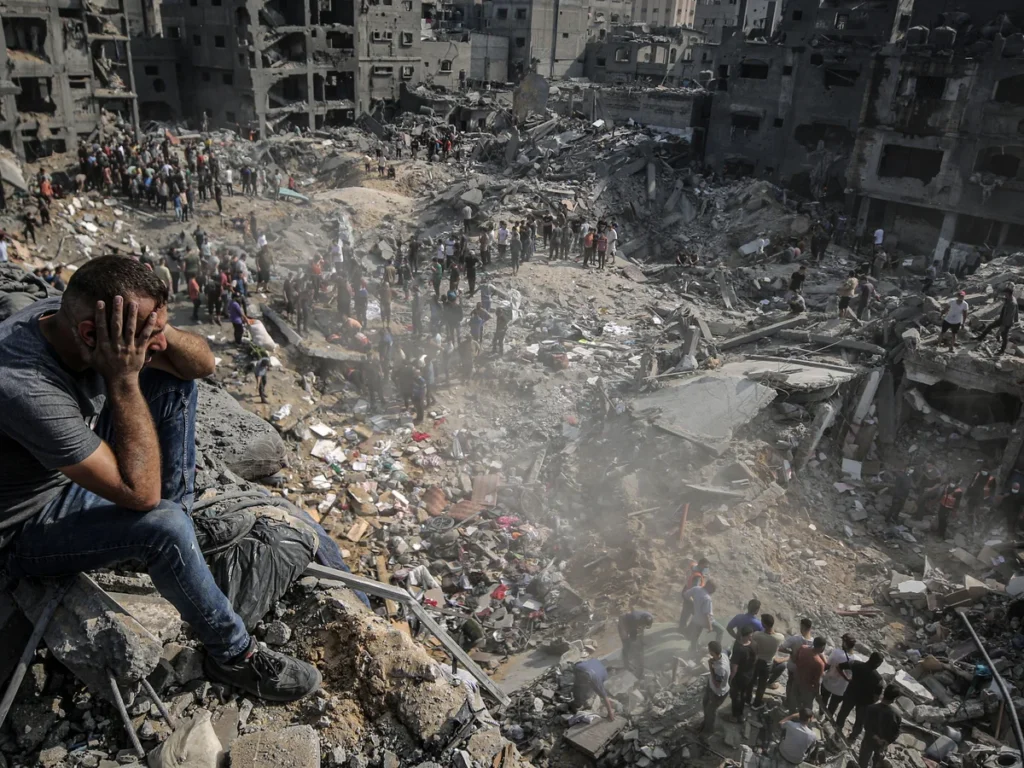
In plain terms, aid may enter, but the bombing continues. Civilians still die. Homes still collapse. Humanitarian relief, under these conditions, is a distraction tactic, nothing more.
What we are witnessing is not humanitarianism; it is humanitarian theater. A media strategy crafted to delay international backlash while preserving total Israeli control over both the war and the narrative.
This performance has precedent. In February 2025, Israel launched the so-called “Gaza Humanitarian Foundation” centers. Dressed in slogans like “alleviating hunger,” these centers in fact served as militarized aid zones, where food was politicized, aid was weaponized, and independent humanitarian groups were pushed out. In its July 3 report, Amnesty International condemned this campaign, calling it “a deadly plan” designed by Israel, with U.S. backing, to turn food into another weapon in a war of annihilation.
Israel’s policy is not accidental. Starvation has become a strategic tool in its arsenal. The limited aid permitted this week was not a shift in thinking but a maneuver designed to ease global pressure without changing policy. The war continues. The siege remains. And the aid, when allowed, is used to maintain control, not to relieve suffering.
What the world is seeing is not a humanitarian breakthrough. It is a smokescreen. A display meant to confuse, appease, and mislead.
Until there is an end to this genocidal war, the lifting of the siege, and the unrestricted entry of aid monitored by independent bodies, Israel’s gestures cannot be viewed as genuine relief efforts. They are tools of manipulation. carefully calibrated to keep Gaza just alive enough to avoid collapse, but never strong enough to survive.