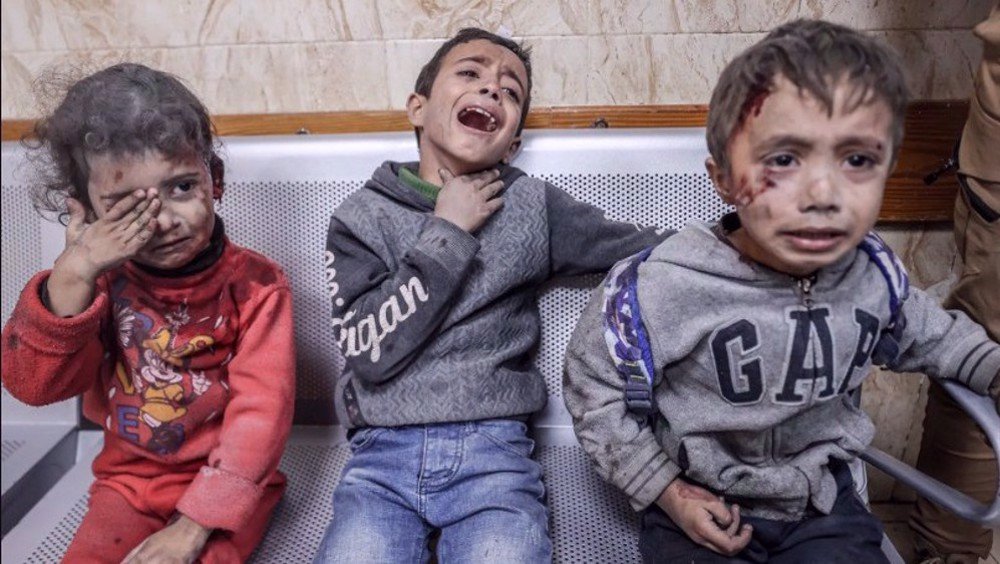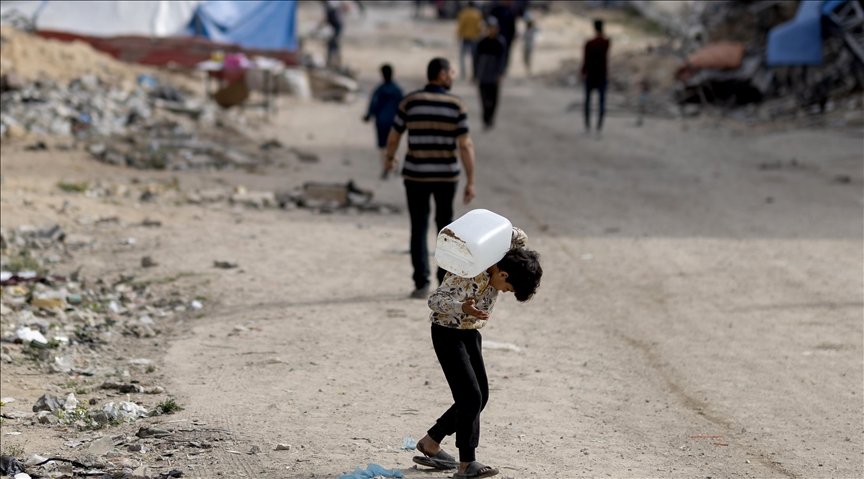
GazaHerald – The humanitarian crisis in the Gaza Strip has reached catastrophic levels as Israeli forces are implementing a “systematic war of thirst.” In recent days, a series of deadly airstrikes have targeted civilians waiting in line for water, water tankers, and distribution points, attacks that have killed hundreds, according to medical sources and Gaza’s government media office.
One of the most horrific attacks took place in the Nuseirat refugee camp, where an Israeli airstrike struck a water tanker. Al-Awda Hospital confirmed multiple casualties.
In a separate attack on a freshwater collection point in the “new camp” northwest of Nuseirat, 12 civilians were killed, including eight children. According to the Gaza media office, more than 700 civilians, mostly children, have died while attempting to access water since the war began.
In total, 112 freshwater points and 720 water wells have been deliberately targeted and destroyed, according to Palestinian officials, depriving over 1.25 million people of clean drinking water. These actions, they claim, represent a clear violation of international law and constitute a war crime.
Fuel Blockade Paralyzes Water Infrastructure, Raises Risk of Epidemics
Beyond direct strikes, Israel’s ongoing blockade on fuel imports has crippled Gaza’s already strained water and sanitation systems. Authorities say Israel is blocking the entry of 12 million liters of fuel per month, a vital supply needed to run desalination plants, sewage treatment facilities, and municipal water wells.
As a result, entire municipalities have been forced to shut down essential services. In central Gaza, local authorities announced a complete suspension of water distribution, sanitation, and waste removal due to fuel shortages. According to Amjad al-Shawa, head of the Network of Community-Based Organizations in Gaza, only 150,000 liters of fuel have entered the enclave in recent days. barely enough for one day, while none has reached the northern or Gaza governorates.
The situation worsened on March 9 when Israeli authorities cut off the last remaining power line supplying the central Gaza desalination plant in Deir el-Balah, further reducing access to drinkable water. Municipal spokesperson Asem Alnabih said that only 12 of Gaza’s 70 water wells remain functional. “We’re on the verge of death. Water can reach only 50 percent of the city,” he said.
Children and Families Forced to Endure Hours in Search of Water
For ordinary Palestinians, survival has become a daily ordeal. Families spend hours under the blazing sun waiting for small amounts of water. Displaced mother Aya Fayoumi said her family barely receives enough to drink. “There’s never any water in the toilets. There’s barely enough drinking water. So we have nothing left for personal hygiene or to wash clothes,” she said.
According to the International Rescue Committee, most people in Gaza now receive far below the World Health Organization’s emergency minimum of 15 liters of water per person per day, facing dehydration, disease, and desperation.
The Gaza media office is calling on international organizations to urgently intervene, lift the blockade on fuel and water, and open a formal investigation into what it describes as crimes of collective punishment and deliberate thirst. The statement also places moral and legal blame on Israel’s allies, particularly the United States, Germany, France, and Britain, for either supporting or staying silent in the face of the deepening humanitarian disaster.