
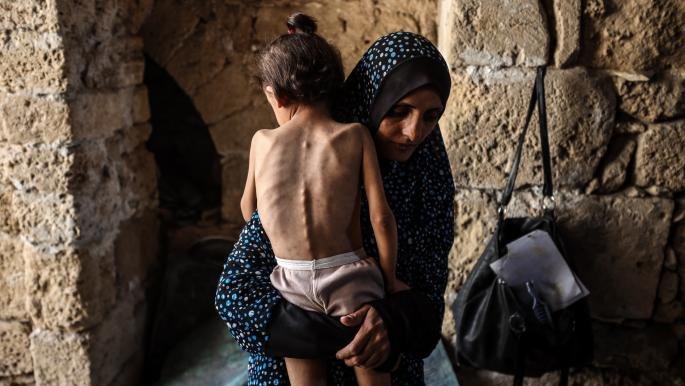
GAZA- In a dimly lit corner of the Rantisi Children’s Hospital in the heart of Gaza City, Fatima Mahmoud sits silently beside her daughter’s hospital bed. Her weathered hands, marked by years of exhaustion and heartbreak, cradle the fragile fingers of her child. She doesn’t speak much, just murmurs quiet prayers, hoping that a miracle might stop the relentless spread of cancer in her little girl’s body.
Seven years ago, Fatima gave birth to a daughter who was diagnosed with cancer shortly after she opened her eyes to this world. Since then, life has become a continuous battle, a burden that weighs heavily on her shoulders. She forces a faint smile every time her daughter opens her eyes, a smile that tries, and fails, to hide the anguish she carries inside.
“My daughter has been sick since birth. Two years ago, we were able to take her to Israeli hospitals outside Gaza for treatment,” she says in a voice trembling with held-back tears. “But since then, we’ve been denied permission to leave again. The permit never came.”
A window that slammed shut
That rare journey to treatment outside Gaza had felt like a crack in the suffocating wall of blockade, a glimpse of hope. The medical care brought a small improvement, a pause in the constant fear. But then the door slammed shut again. For two years now, Fatima has waited for a new travel permit. Every day that passes, her daughter’s condition deteriorates a little more. Her small frame grows weaker, her smile rarer. And Fatima, helpless, watches and prays.
She returns to the same hospital chair every morning, a chair that holds not just her body but the crushing weight of powerlessness. With each new sunrise, she is locked in battle against a silent disease eating away at her child and against a system that bars her from accessing the only treatment that could save her.
Fatima’s story is not an exception. Across Gaza, thousands of mothers like her fight similar wars behind closed doors. In another neighborhood, Salwa Jamil Abu Ghaben wakes each morning haunted by the moment in 2014 when she discovered a lump in her chest. At the time, she reassured her frightened son. “Cancer doesn’t kill if there’s treatment.” But in Gaza, even treatment has become a fading mirage.
Dr. Mohammed Abu Nada, director of the Gaza Cancer Center, shares harrowing statistics: two cancer patients die every day, adding up to more than 1,300 deaths since the latest war began. The reasons are many, the blockade, the bombardment, the collapsing healthcare system, but the result is always the same: slow death in silence.
The numbers are terrifying. Over 10,000 people in Gaza are currently in need of cancer treatment. Yet Gaza’s hospitals, stripped of chemotherapy supplies, diagnostic tools, and basic medication, are unable to meet even a fraction of the need. At least 11,000 cancer patients are now without any treatment at all. The war has rendered outbound travel nearly impossible, turning every border crossing into a brick wall.
Holding On to What’s Left
And so we return to Fatima, whose eyes well up as she glances once more at her daughter’s fragile frame. The child is thinner than she was a week ago. Her lips are pale, her breathing shallow. Fatima wipes away a tear that escapes despite her efforts to appear strong.
“I’m not asking for a miracle,” she whispers. “I’m just asking for my daughter to get the treatment she needs. I just want her to live, like any other child.”
But in Gaza, even such a simple request is too much. The blockade suffocates the living. The war steals the dreams of the sick. And cancer patients are forced into a cruel double battle: against the disease ravaging their bodies and against a world that denies them dignity, access, and basic human rights.
At the end of each day, Fatima returns to her modest home, carrying her daughter and her despair with her. Tomorrow, she will make the same journey. She will sit again in that chair. She will pray again for help. And the world, as always, may not answer.
In Gaza, the war, the illness, and the siege are intertwined in a human tragedy that seems to have no end. Mothers like Fatima carry shattered dreams and broken hearts in a place where even hope has become a luxury not everyone can afford.
Gaza- In a dimly lit corner of the Rantisi Children’s Hospital in the heart of Gaza City, Fatima Mahmoud sits silently beside her daughter’s hospital bed. Her weathered hands, marked by years of exhaustion and heartbreak, cradle the fragile fingers of her child. She doesn’t speak much, just murmurs quiet prayers, hoping that a miracle might stop the relentless spread of cancer in her little girl’s body.
Seven years ago, Fatima gave birth to a daughter who was diagnosed with cancer shortly after she opened her eyes to this world. Since then, life has become a continuous battle, a burden that weighs heavily on her shoulders. She forces a faint smile every time her daughter opens her eyes, a smile that tries, and fails, to hide the anguish she carries inside.
“My daughter has been sick since birth. Two years ago, we were able to take her to Israeli hospitals outside Gaza for treatment,” she says in a voice trembling with held-back tears. “But since then, we’ve been denied permission to leave again. The permit never came.”
A window that slammed shut
That rare journey to treatment outside Gaza had felt like a crack in the suffocating wall of blockade, a glimpse of hope. The medical care brought a small improvement, a pause in the constant fear. But then the door slammed shut again. For two years now, Fatima has waited for a new travel permit. Every day that passes, her daughter’s condition deteriorates a little more. Her small frame grows weaker, her smile rarer. And Fatima, helpless, watches and prays.
She returns to the same hospital chair every morning, a chair that holds not just her body but the crushing weight of powerlessness. With each new sunrise, she is locked in battle against a silent disease eating away at her child and against a system that bars her from accessing the only treatment that could save her.
Fatima’s story is not an exception. Across Gaza, thousands of mothers like her fight similar wars behind closed doors. In another neighborhood, Salwa Jamil Abu Ghaben wakes each morning haunted by the moment in 2014 when she discovered a lump in her chest. At the time, she reassured her frightened son. “Cancer doesn’t kill if there’s treatment.” But in Gaza, even treatment has become a fading mirage.
Dr. Mohammed Abu Nada, director of the Gaza Cancer Center, shares harrowing statistics: two cancer patients die every day, adding up to more than 1,300 deaths since the latest war began. The reasons are many, the blockade, the bombardment, the collapsing healthcare system, but the result is always the same: slow death in silence.
The numbers are terrifying. Over 10,000 people in Gaza are currently in need of cancer treatment. Yet Gaza’s hospitals, stripped of chemotherapy supplies, diagnostic tools, and basic medication, are unable to meet even a fraction of the need. At least 11,000 cancer patients are now without any treatment at all. The war has rendered outbound travel nearly impossible, turning every border crossing into a brick wall.
Holding On to What’s Left
And so we return to Fatima, whose eyes well up as she glances once more at her daughter’s fragile frame. The child is thinner than she was a week ago. Her lips are pale, her breathing shallow. Fatima wipes away a tear that escapes despite her efforts to appear strong.
“I’m not asking for a miracle,” she whispers. “I’m just asking for my daughter to get the treatment she needs. I just want her to live, like any other child.”
But in Gaza, even such a simple request is too much. The blockade suffocates the living. The war steals the dreams of the sick. And cancer patients are forced into a cruel double battle: against the disease ravaging their bodies and against a world that denies them dignity, access, and basic human rights.
At the end of each day, Fatima returns to her modest home, carrying her daughter and her despair with her. Tomorrow, she will make the same journey. She will sit again in that chair. She will pray again for help. And the world, as always, may not answer.
In Gaza, the war, the illness, and the siege are intertwined in a human tragedy that seems to have no end. Mothers like Fatima carry shattered dreams and broken hearts in a place where even hope has become a luxury not everyone can afford.

