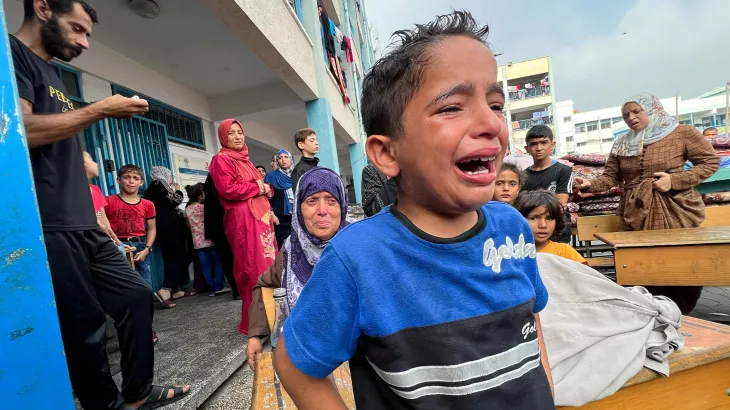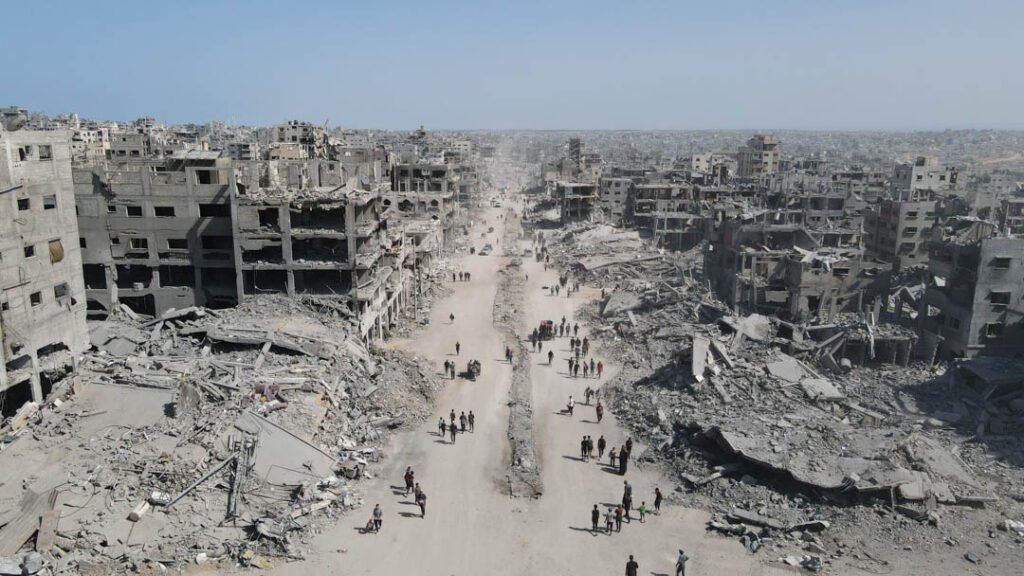
Gaza Herald – Israeli occupation forces continued violating the Gaza ceasefire agreement on Friday through heavy artillery shelling, gunfire, and demolition operations targeting multiple areas across the besieged Strip, particularly eastern Khan Younis and northern Rafah. Local sources reported intense bombardment and live fire from Israeli occupation vehicles throughout the night, alongside large-scale destruction of residential structures in eastern Gaza.
The escalation came as Nikolay Mladenov, the head of the “Peace Council” for Gaza, presented a “roadmap” to implement U.S. President Donald Trump’s proposed plan for Gaza. The proposal includes phased Israeli withdrawal, reconstruction arrangements, deployment of an international stabilization force, and the gradual disarmament of Palestinian resistance factions under international supervision.
Speaking before the UN Security Council, Mladenov claimed that Hamas’ refusal to disarm and relinquish control of Gaza remains the “main obstacle” to the proposed peace framework. He argued that reconstruction funds and international investment would remain blocked unless resistance weapons are surrendered, while acknowledging that Gaza continues to face a catastrophic humanitarian crisis, with nearly 80% of buildings destroyed or damaged.
The proposal has sparked widespread Palestinian criticism, with many viewing it as an attempt to reshape Gaza politically and geographically under conditions imposed by the Israeli occupation. Critics argue that linking reconstruction and humanitarian relief to disarmament effectively turns aid into a political pressure tool while ignoring ongoing Israeli attacks, restrictions on humanitarian assistance, and continued military control over large parts of the territory.
Hamas rejected the report and accused Mladenov of adopting the Israeli narrative while overlooking daily ceasefire violations committed by Israeli occupation forces. Hamas spokesperson Hazem Qassem stated that the movement remains committed to the ceasefire agreement despite ongoing Israeli attacks and restrictions, adding that Hamas is prepared to transfer governance responsibilities immediately to a national Palestinian administrative committee.
The ceasefire agreement, which officially entered into force in October 2025 after the Israeli genocide on Gaza entered its third year, remains fragile amid continued attacks and unresolved political disputes. While the first phase included prisoner exchanges between Israel and Palestinian factions, negotiations surrounding Israeli withdrawal and the future of Gaza remain stalled, as Palestinians continue to warn against plans that could institutionalize division, siege, and foreign-controlled governance over the Strip.