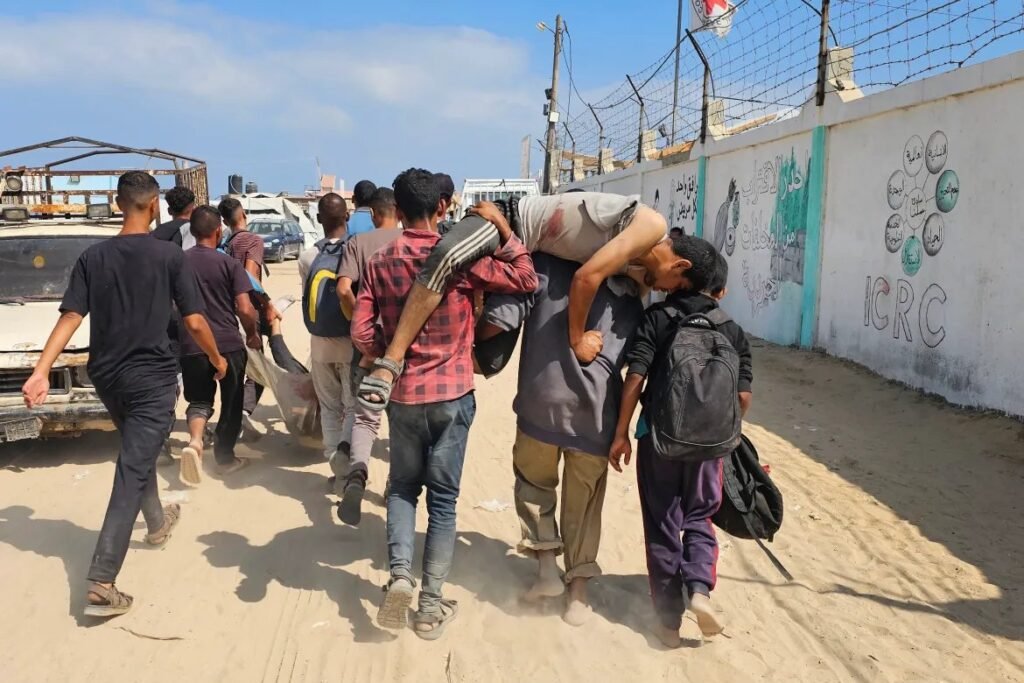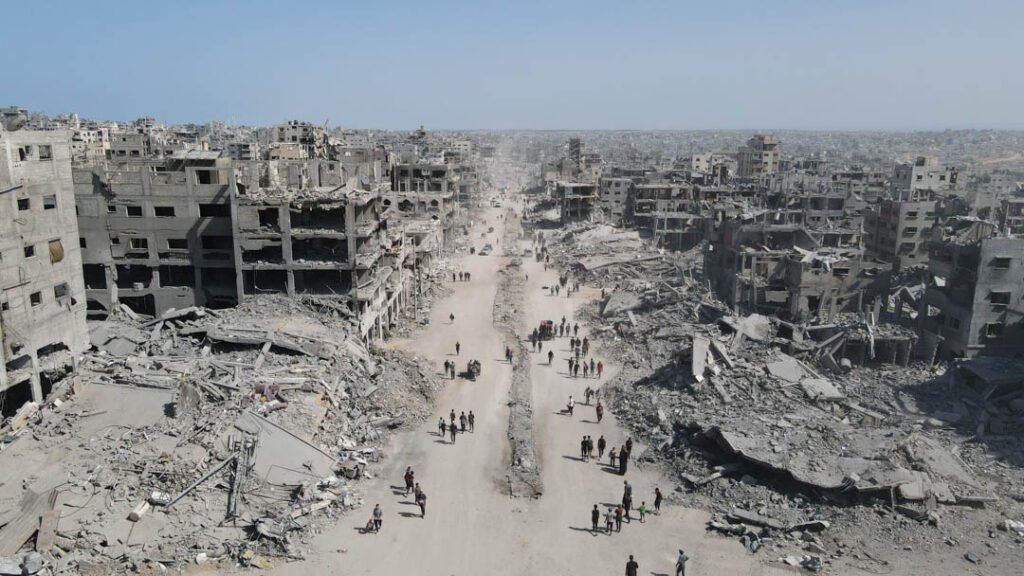
Gaza Herald – Despite repeated references to a ceasefire in the Gaza Strip, developments on the ground and political rhetoric indicate that Israeli military attacks have not truly ceased. Instead, they appear to have entered a phase of calibrated escalation, characterized by daily strikes and killings, raising concerns about a potential return to large-scale attacks.
Political analyst Alaa Al-Rimawi argues that the current situation cannot be described as a “post-war phase,” but rather as a continuation of the war in different ways. He explained that Israeli occupation forces are pursuing a strategy aimed at weakening Gaza’s internal environment through intermittent yet intensive military actions designed to impose sustained attrition.
This approach, he noted, keeps the territory under constant pressure while preserving the option to expand attacks at any moment without formally declaring a new war. It also provides Israeli decision-makers with broader room for maneuver, both politically and militarily, amid internal pressures and regional challenges.
According to figures from the Palestinian Ministry of Health, the death toll since the October 2025 ceasefire has reached 836, with 2,365 injuries and 768 bodies recovered, highlighting the continued human cost despite the nominal truce.
At the same time, political efforts have continued without achieving meaningful progress. Reports indicate that recent meetings involving Israeli Prime Minister Benjamin Netanyahu and international diplomat Nickolay Mladenov focused primarily on managing the current situation rather than reaching a comprehensive political settlement.
Media sources suggest that these discussions centered on evaluating the post-ceasefire phase and adjusting operational mechanisms, without any tangible breakthrough on key files. Negotiations related to Gaza are widely viewed as stalled, particularly amid a ceasefire, and Israel has not fulfilled its obligations under earlier phases of the agreement.
Hamas has reiterated that any progress depends on full implementation of prior commitments, accusing Israel of failing to adhere to agreed terms, especially regarding ongoing military attacks on the ground.
Meanwhile, Israeli statements increasingly signal the possibility of expanding military attacks. Reports quoting military officials indicate that a broader round of fighting may be “almost inevitable,” suggesting that the current phase may soon shift into more intensive and wide-ranging attacks.
Analysts interpret this rhetoric as part of an effort to prepare domestic public opinion for potential escalation, particularly in the absence of political progress and amid growing pressure on the Israeli government.
In this context, continued targeting of civilian infrastructure and public services is seen as part of a strategy aimed at maintaining instability and pressure within Gaza, potentially laying the groundwork for justifying further escalation.
Overall, the situation appears to be moving along two parallel tracks: a sustained phase of daily attrition through intermittent military actions and the looming possibility of a broader escalation that could significantly reshape the war in the near future.