
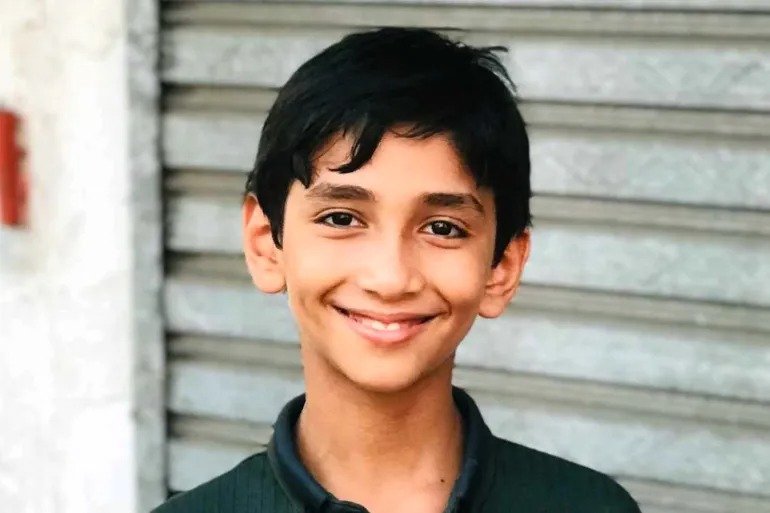
Gaza Herald – “I woke up happy. Today is my birthday. My father gave me 10 shekels; my uncle gave me money, and my mother too. May God bless them.”
These were the last words written by child martyr Mahdi Hassouna (11 years old) in his diary before he was killed in a devastating Israeli massacre that left more than 200 dead.
Notes written under fire
With the outbreak of the war in Gaza, Mahdi began documenting his daily life, as if sensing he needed to leave something behind.
He wrote about simple things: water, the market, helping his parents, and small dreams that never went beyond a football or a martial arts belt.
In one entry, he wrote: “Tomorrow I will go fill fresh and salty water, and help my father bring lunch food.”
In another, he wrote: “I woke up early, got dressed, and went to bring groceries for my mother.”
These lines were not just memories; they became painful testimony to the lives of thousands of children in Gaza, where childhood was replaced by survival under siege, long queues for water and food, and daily struggle for basic needs.
“This is all I have left of him.”
His father, journalist Sayed Hassouna, said: “This is all I have left of Mahdi, a notebook I read every day. Sometimes I smile at how mature he was, then I break down remembering his laughter.”
He added that Mahdi was intelligent and a natural leader among his siblings, loved football, held a black belt in kung fu, and endured the hardships of war without complaint, often accompanying his father to fetch water and supplies.
Mahdi was not just a child; his father described him as “the little man of the house.”
 Survival and displacement
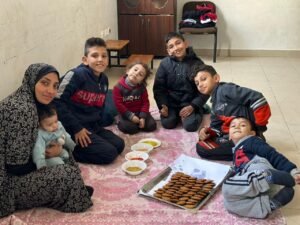
During the months of genocidal war, Mahdi and his family survived multiple near-death experiences.
Their home in the “Al-Taj 3” building was bombed; his mother, journalist Amina Hamid, and his sister were injured in a later strike, and the family endured more than 30 forced displacements.
In March 2024, his father was detained during the storming of Al-Shifa Hospital, later released in the south, preventing him from seeing his family during critical moments.
The final call
On April 24, 2024, the father received a call from his wife moments before their home was struck.
He said: “She was scared, speaking about the sound of planes. She tried to reassure me, but I felt something was wrong.”
Ten minutes later, the news arrived:
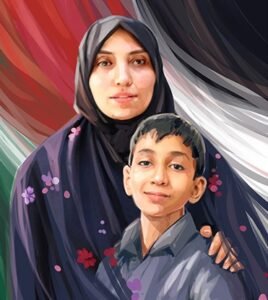
“Amina and Mahdi were martyred.”
 A devastating massacre
The family home in Al-Shati refugee camp was struck without warning in a heavy air raid that killed over 200 civilians, most of them women and children.
The father said: “My five children were pulled out injured. We waited for Mahdi and his mother for a long time, but they never came out. She took him with her.”
An absence that remains
The father said: “Mahdi’s absence left a huge void. I used to see him as a young man who would achieve his dreams and graduate while his mother celebrated him.”
One of his teachers described him as: “One of the most outstanding students, exceptional and highly aware for his age.”
Because of forced displacement and separation across Gaza at the time, the father was unable to bid farewell or bury his wife and child.
Mahdi Hassouna, only eleven years old, left behind a small notebook, but it remains a living record of unfinished dreams.
His writings were not just words; they became testimony to a time when children’s dreams were crushed and their birthdays turned into moments of loss and mourning.

