
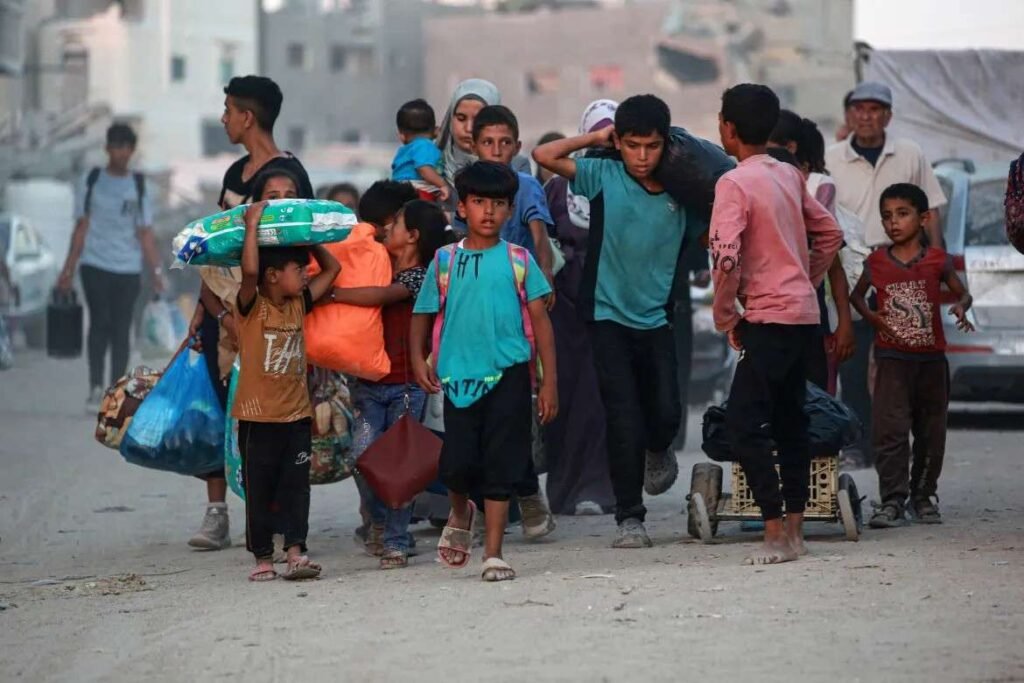
Gaza Herald – Gaza, with its geography and its grieving population, stands as one of the most severe environments in the world where children are subjected to grave violations of their fundamental rights. In a place where reality has turned into an unrelenting nightmare, children endure widespread violence and destruction, living in a constant state of fear that reflects a humanitarian tragedy beyond imagination.
Children in Gaza, who should be growing up in safety, face challenges far beyond ordinary limits. They have become victims of a seemingly endless genocide.
The humanitarian situation for children in Gaza cannot be understood without acknowledging the daily human losses. The city, long defined by recurring violence, imposes harsh conditions that force children to live under continuous threat, whether from bombardment, explosions, or the fragmentation of families. They do not merely live in fear, but in a persistent state of despair, as if trapped within walls of destruction and poverty.
Their environment is filled with ongoing threats to life. Schools, parks, and community centers have largely disappeared, replaced by shelters for displaced families or makeshift medical facilities. In this context, children are stripped of their rights to education and play, replaced instead by daily encounters with pain and loss.
The challenges facing Gaza’s children are numerous and deeply interconnected. Constant physical danger remains at the forefront, as ongoing Israeli bombardment and indiscriminate attacks expose them to injury or killing. Education has been severely disrupted, with schools destroyed or repurposed, depriving children of learning opportunities and jeopardizing their future. Family structures have also been shattered, with many children losing one or both parents, increasing their psychological vulnerability and sense of insecurity.
At the same time, prolonged exposure to trauma has led to widespread psychological disorders, including chronic anxiety, depression, and post-traumatic stress. The absence of stability further compounds these issues, as repeated cycles of attacking any sense of normal routine leave children in a constant state of tension. These hardships go beyond immediate suffering, leaving deep psychological scars that may persist into adulthood and shape their prospects.
The impact of war on Gaza’s children extends far beyond the present. Long-term psychological and social consequences accumulate, affecting their development and ability to integrate into society. Growing up in an environment dominated by attack hinders the development of social and communication skills, while the lack of education undermines cognitive growth and future opportunities. Continuous exposure to fear erodes their sense of security and trust in the future, increasing the likelihood of lasting mental health conditions.
Despite international conventions designed to protect children in times of war, the situation in Gaza demonstrates a failure to effectively implement these protections. The ongoing military and economic blockade, coupled with persistent violations against children, continues to exacerbate the crisis. Meaningful international action is urgently needed, not only to provide medical and educational support but also to ensure the unimpeded delivery of humanitarian aid and to safeguard children from the direct impacts of war.
Addressing the psychological toll on Gaza’s children requires structured, evidence-based interventions. This includes providing safe spaces for psychological support, where children can express their emotions and engage in therapeutic activities. Rebuilding daily routines is equally critical, as it helps restore a sense of stability and security. Family support systems must also be strengthened, enabling caregivers to better assist children in coping with trauma.
Specialized psychological care is essential for those suffering from severe conditions such as chronic anxiety and depression. At the same time, fostering resilience among children is crucial, equipping them with the tools to cope with adversity and navigate ongoing hardship.
In conclusion, despite their remarkable inner strength, Gaza’s children remain victims of a harsh reality that demands urgent and serious intervention. Wars have consistently shown that children bear the heaviest burden of destruction, carrying its consequences into the future. Yet their suffering must not be accepted as inevitable.
Coordinated efforts at both local and international levels can make a meaningful difference. The international community must take concrete steps to protect the rights of Gaza’s children and prioritize their psychological and social well-being, restoring hope for a future beyond the pain of genocide.

