
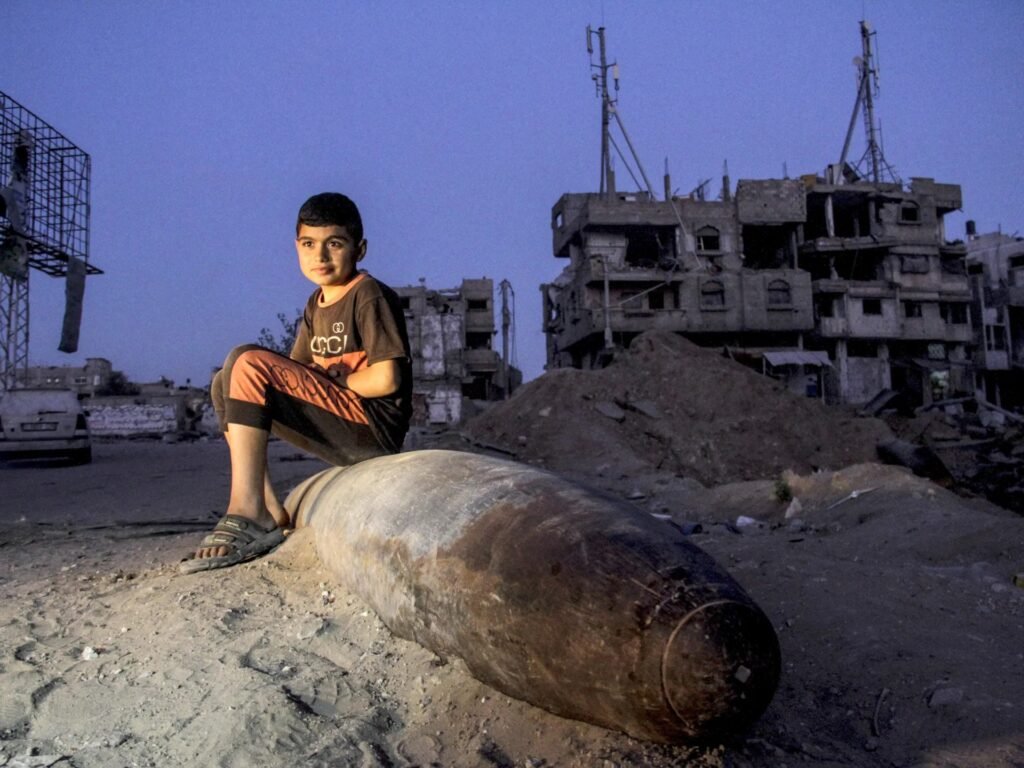
Gaza Herald – The United Nations has warned of the growing dangers posed by unexploded ordnance in the Gaza Strip, particularly to civilians and children, noting that it also hampers long-term reconstruction efforts.
A report issued by the organization stated that the territory, which has suffered widespread destruction due to the war, is now heavily contaminated with unexploded munitions that continue to kill and injure civilians regularly.
The report explained that bombs, shells, and even bullets have been scattered across Gaza since the outbreak of the war on October 7, 2023, worsening the humanitarian situation.
A survey conducted by the United Nations Mine Action Service revealed that more than 1,000 people have been killed as a result of these munitions, while experts believe the actual number is significantly higher.
During a press conference in Geneva, UN official Julius van der Walt said that about half of the victims are children, noting that current data shows a “high density” of unexploded ordnance contamination, even though a comprehensive assessment has not yet been completed.
He added that UN teams have documented more than 1,000 pieces of ordnance during operations lasting two and a half years, averaging roughly one munition every 600 meters—figures limited only to what has been identified so far.
For her part, Narmina Strichinets from the organization Save the Children expressed concern about the heavy toll on children in Gaza, stating that the territory now has the highest number of child amputees in the world.
A report by the organization indicated that the use of explosive weapons results, on average, in around 475 children each month suffering permanent disabilities.
The report also noted that Gaza’s high population density—already among the highest in the world before the war—has become even more dangerous after the available living space for residents was reduced by half, further increasing overcrowding.
The UN official emphasized that explosive weapons have affected all areas of the territory, including densely populated refugee camps, citing a recent incident in which remnants of munitions were found inside an inhabited tent.
He also warned that humanitarian convoys could be at risk of explosion while moving through affected areas due to the widespread presence of these remnants.
Van der Walt estimated that clearing these munitions would require approximately $541 million under optimal conditions, provided that the necessary permits and equipment are available. He warned that the scale of contamination—especially in rubble-filled areas—makes a full assessment difficult and could leave the problem unresolved for decades.

