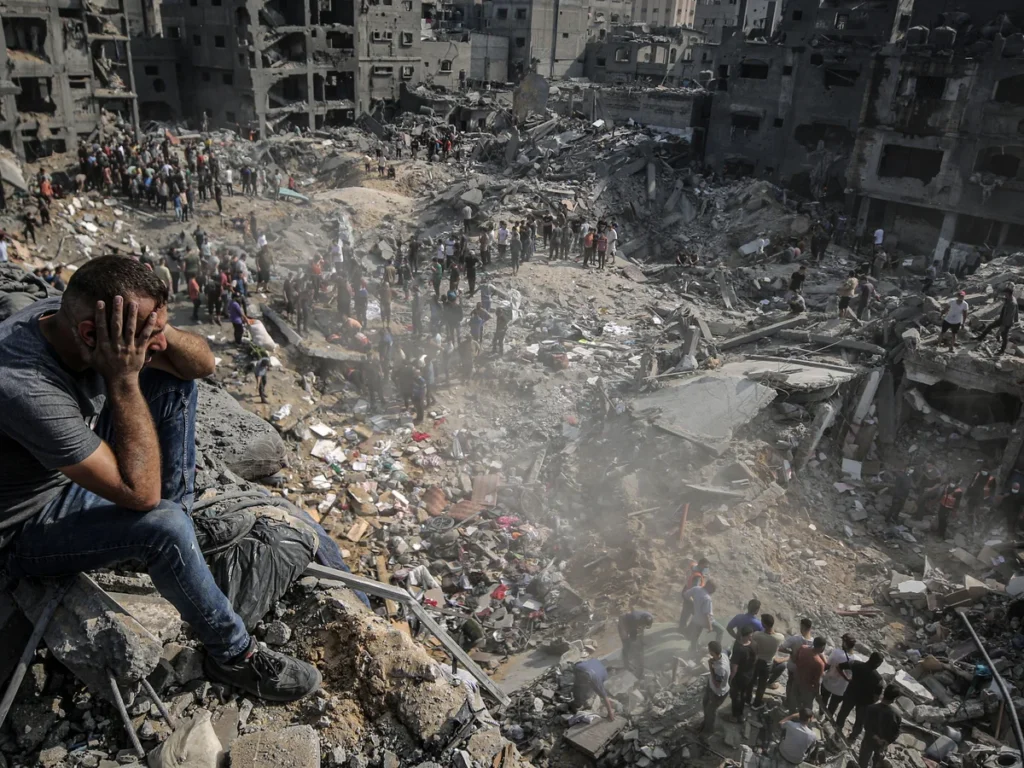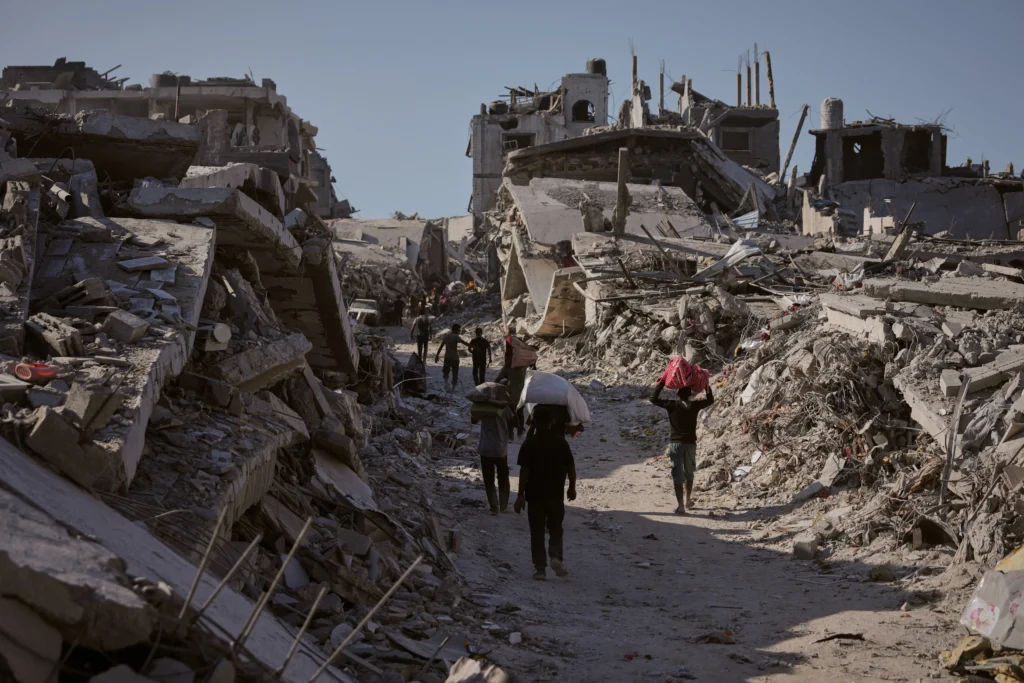
Gaza Herald — Gaza’s humanitarian conditions are deteriorating rapidly as regional tensions and border closures place further strain on the enclave’s already fragile aid system. Residents report dramatic increases in the cost of basic goods, while essential supplies such as food, fuel, and medicines remain critically scarce due to Israeli restrictions at border crossings. For many families, daily life has become a struggle to secure the most basic necessities as shortages intensify.
The situation worsened on February 28 when Israel closed all crossings into Gaza amid the joint military escalation between the United States and Israel against Iran. The closures halted the entry of humanitarian aid, stopped medical evacuations and blocked the flow of essential commodities, aggravating the suffering of more than two million Palestinians living under a prolonged blockade. Although the Karem Abu Salem crossing has partially reopened, the aid allowed in remains far below the roughly 600 trucks per day that humanitarian organizations say are required to meet the population’s needs.
Local markets illustrate the scale of the crisis. Prices for vegetables, flour, and cooking oil have surged between 150 and 300 percent, placing even basic meals beyond the reach of many households. Key staple items are increasingly absent from store shelves, forcing families to ration food and water amid growing uncertainty about future supplies.
The healthcare system is also under severe pressure. Hospitals and clinics are facing acute shortages of fuel and medicines, leaving many facilities operating at minimal capacity. Thousands of patients, including children and those with chronic conditions, are struggling to obtain essential treatment, while cases of malnutrition and related health complications continue to rise.
At the same time, Israeli actions widely viewed as breaches of the October ceasefire have persisted. Since the agreement came into effect, Israeli airstrikes and shelling have reportedly killed at least 648 people and injured nearly 18,000 others. Analysts suggest that Israel is taking advantage of global attention on the conflict with Iran to tighten its military and administrative control over Gaza by restricting crossings and delaying the next stage of the ceasefire process.
Political obstacles are further complicating the situation. Israel has blocked the Palestinian committee assigned to oversee civil administration in Gaza, while the Rafah crossing has remained closed for more than ten days, limiting the entry of humanitarian aid and construction materials. Observers warn that without stronger international pressure to guarantee humanitarian access and advance political solutions, Gaza could face an even deeper cycle of shortages, instability and civilian suffering.