
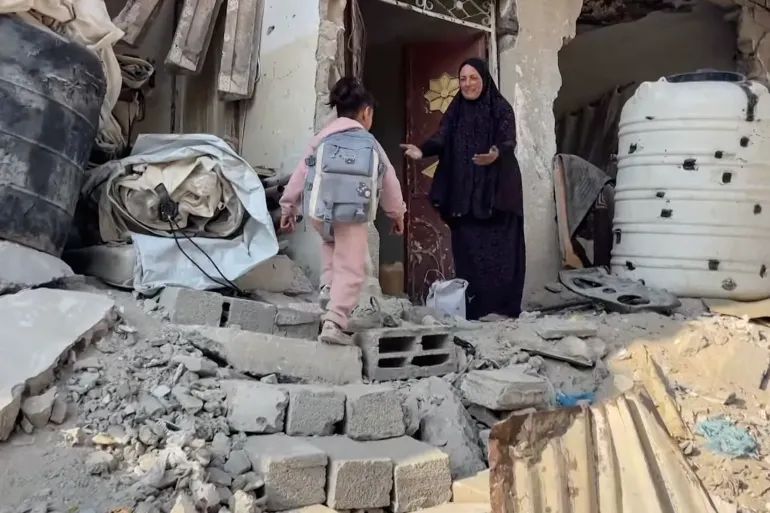
Gaza Herald – On International Women’s Day, while the world celebrates women’s achievements, in Gaza, thousands of women endured relentless hardship, stepping into roles as both mothers and fathers in the aftermath of Israel’s genocidal war. The genocide destroyed homes, displaced families, and left women solely responsible for the survival of their children in overcrowded tents.
Over the past two years of the war, more than 21,000 women became widows, collectively supporting around 56,000 orphaned children. Families faced repeated displacement, shortages of food, water, and medical care, and the near-total collapse of the infrastructure needed for daily life. One in seven households in Gaza is now led by a woman.
The crisis deepened due to severe shortages of cooking gas, which the Israeli authorities limited to a handful of trucks per week following the ceasefire in October. Many families were forced to return to using firewood, increasing the daily burden on women who already faced exhausting responsibilities.
Access to water remained precarious as well, with many wells and supply networks destroyed. UN estimates indicated that over 1.1 million people, roughly half of Gaza’s population, continued to live in tents or temporary shelters months after the ceasefire, struggling to survive amid ongoing scarcity and insecurity.
The psychological toll on women was profound. Reports from the Palestinian Ministry of Women’s Affairs revealed that 75% of women suffered from depression, 62% experienced insomnia, and 65% faced chronic anxiety. Multiple displacements and ongoing genocide left them with virtually no safe space, food security, or stability.
International Women’s Day in Gaza has become a stark reminder not of celebration, but of endurance. It reflected the relentless struggle of thousands of widows and caregivers navigating the ruins of a war that claimed over 72,000 lives, including 12,400 women and 18,592 children, leaving families fractured and communities in crisis.

