
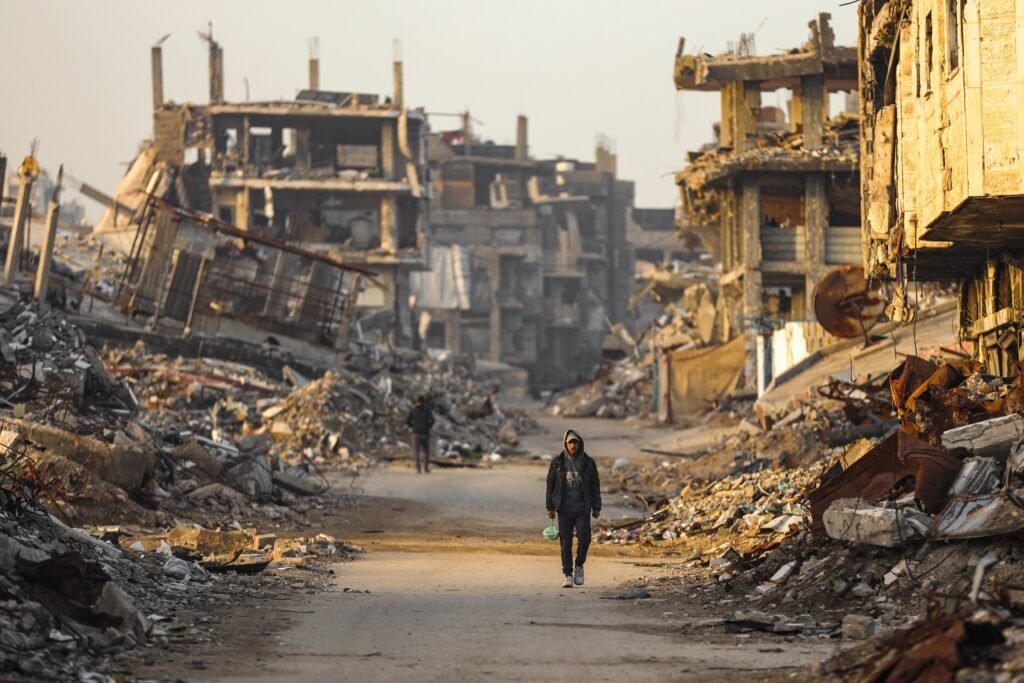
Gaza Herald – The Gaza Center for Human Rights warned Thursday that a prolonged administrative and governmental vacuum in the Gaza Strip is threatening fundamental rights and compounding an already catastrophic humanitarian situation, 145 days after the ceasefire was declared.
In a statement, the organization said the transitional governance framework announced in the aftermath of the ceasefire has failed to assume effective responsibilities on the ground. The National Committee for Gaza Administration, along with other newly formed bodies, has not begun operational work inside the enclave, raising serious concerns about their ability to respond to urgent civilian needs.
The center stressed that this vacuum is unfolding amid continued Israeli military operations, including airstrikes, artillery shelling, and direct fire incidents, alongside what it described as a systematic policy of siege and obstruction of humanitarian aid. It argued that despite the ceasefire, grave violations persist, and the humanitarian toll continues to mount.
According to the statement, the absence of effective governance has intensified the collapse of essential sectors, particularly health and education, which were already devastated after 28 months of war. Nearly 90% of educational institutions have reportedly been destroyed, while large portions of the healthcare system remain incapacitated amid severe shortages of resources and personnel.
The group further noted that Israel has targeted former governing structures in Gaza while simultaneously restricting the Palestinian Authority from assuming administrative control, leaving civilians in what it described as a dangerous institutional void at a critical juncture. It expressed concern that prioritizing security measures, such as police recruitment, over urgent restoration of health and education services risks exacerbating internal tensions.
The Gaza Center for Human Rights called on the transitional bodies to immediately assume their responsibilities and implement a comprehensive emergency plan to restore essential services. It also urged the international community, the United Nations, and donor states to intervene, lift restrictions hindering civil administration, and ensure the resources necessary to prevent further humanitarian deterioration for more than two million Palestinians in the Strip.

