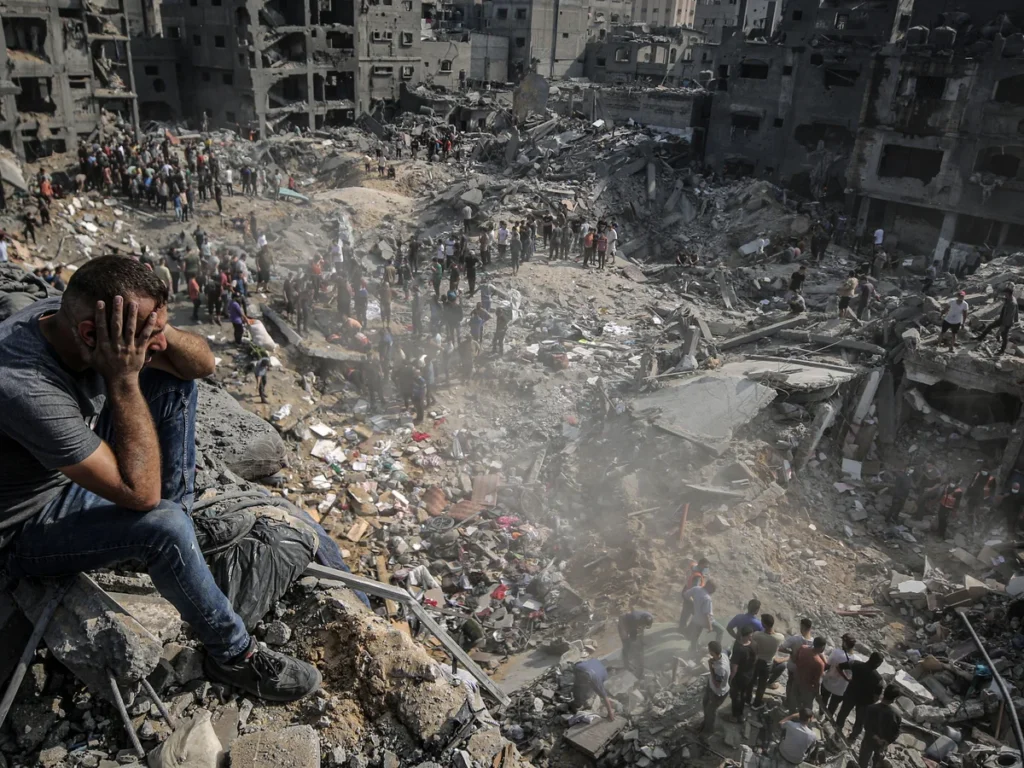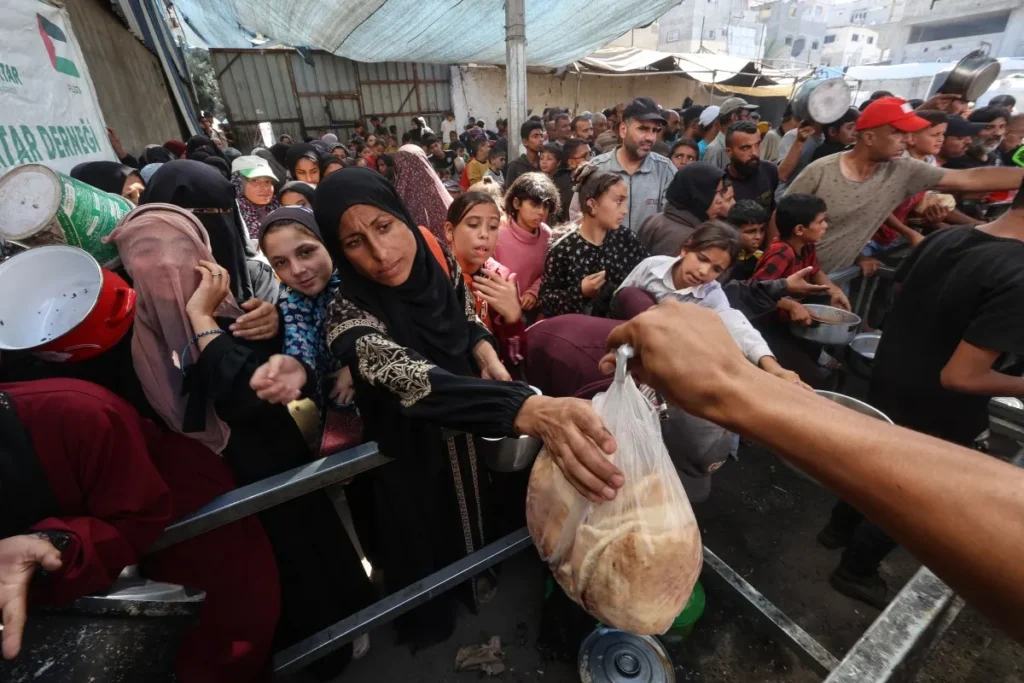
Gaza Herald_ After Israel announced the closure of all crossings in the Palestinian territories until further notice, anxiety is mounting across the Gaza Strip over the possible return of famine. For months, Palestinians in Gaza have endured a suffocating blockade and what many describe as deliberate starvation, and the latest decision threatens to intensify an already dire reality.
On Saturday, Israeli authorities declared that every crossing point, including Rafah, would be sealed beginning Sunday. The move comes amid the ongoing U.S., Israeli military campaign against Iran and Tehran’s response. Israel’s Coordination of Government Activities in the Territories stated that the closure applies to both the West Bank and Gaza and follows the joint military operation launched against Iran.
The decision halts not only the movement of people but also the flow of food, medicine, and fuel into Gaza, a territory that relies almost entirely on these entry points for survival. In a place where daily life depends on fragile supply lines, even short interruptions can trigger immediate shortages.
The announcement has sparked widespread reaction among Palestinians in Gaza, particularly on social media, where many warn that the closure could push the humanitarian crisis to a breaking point. Activists argue that Israel is using regional tensions as a pretext to tighten collective pressure on more than two million civilians, further deepening their suffering.
Many are questioning whether Gaza is entering an even harsher phase. Critics contend that the justifications for the closures are unconvincing and that the timing, as global attention shifts toward Iran, allows Israel to impose harsher measures with reduced international scrutiny.
Observers warn that prolonged closure of the crossings would have severe humanitarian consequences, affecting access to basic necessities such as food, medical supplies, and fuel. Rising prices, dwindling goods, and delays in humanitarian aid are already reinforcing fears that famine could once again loom over the Strip.
Although a ceasefire agreement took effect on October 10, 2025, daily life in Gaza has seen little meaningful improvement. Critics say Israel has failed to meet its commitments under the agreement, including permitting agreed quantities of humanitarian assistance and reopening crossings in a sustained manner. As a result, Gaza remains trapped in a fragile and precarious state, with its population facing renewed uncertainty about their most basic needs.
In the absence of sustained international pressure and meaningful guarantees for the uninterrupted flow of humanitarian aid, Gaza’s civilian population remains dangerously exposed to political calculations beyond its control. For more than two million Palestinians, the closure of the crossings is not a temporary administrative measure but a direct threat to their survival. Unless urgent steps are taken to restore access to food, medicine, and fuel, the humanitarian crisis in Gaza risks deepening into a preventable catastrophe.