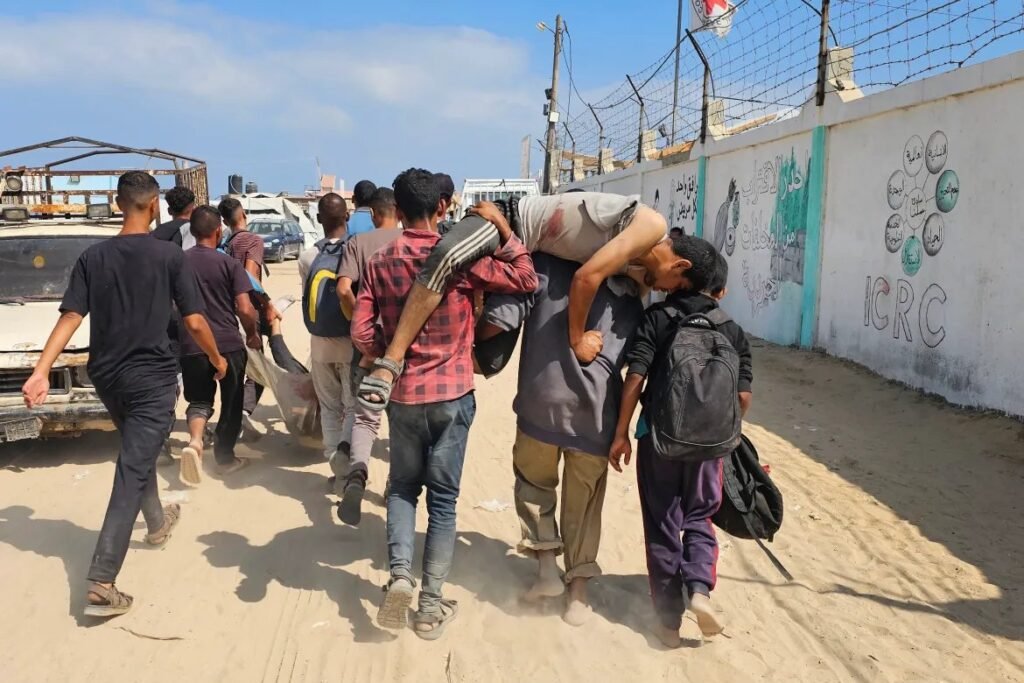
Gaza Herald_ Shells weighing tonnes continue to crash into densely populated residential areas, erasing entire streets in seconds. Where homes and shops once stood, massive craters now consume everything above them. This spectacle has become routine across the Gaza Strip, where more than 72,000 Palestinians have been killed since October 2023 in what amounts to a sustained and methodical genocide.
Despite repeated warnings from leading human rights organizations and unprecedented global protests, Israel’s political and military leadership has enjoyed unwavering external support supplied with advanced weaponry and diplomatic cover. After each bombardment, the toll emerges in staggering figures: the dead, the missing, and the wounded, the majority of them women and children. Modern weapons have carved voids across nearly the entire territory, producing a layered destruction that constitutes a compounded genocide: human, social, cultural, and environmental.
To understand the scale of annihilation, one must imagine the scene before a single strike. A neighborhood once thrived, bound by extended families, kinship, and shared daily life. Brothers lived with their children and elderly parents in multi-story homes built over generations, typical of Gaza’s urban fabric. These bonds extended to neighboring buildings, which were often obliterated in the same attack or reduced to rubble.
The Genocide of Palestinian Childhood
The violence has fallen first and most heavily on children. Those under 18 make up the majority of Gaza’s population, and international officials repeatedly warned that Israel’s military campaign was killing the equivalent of an entire classroom of children every day.
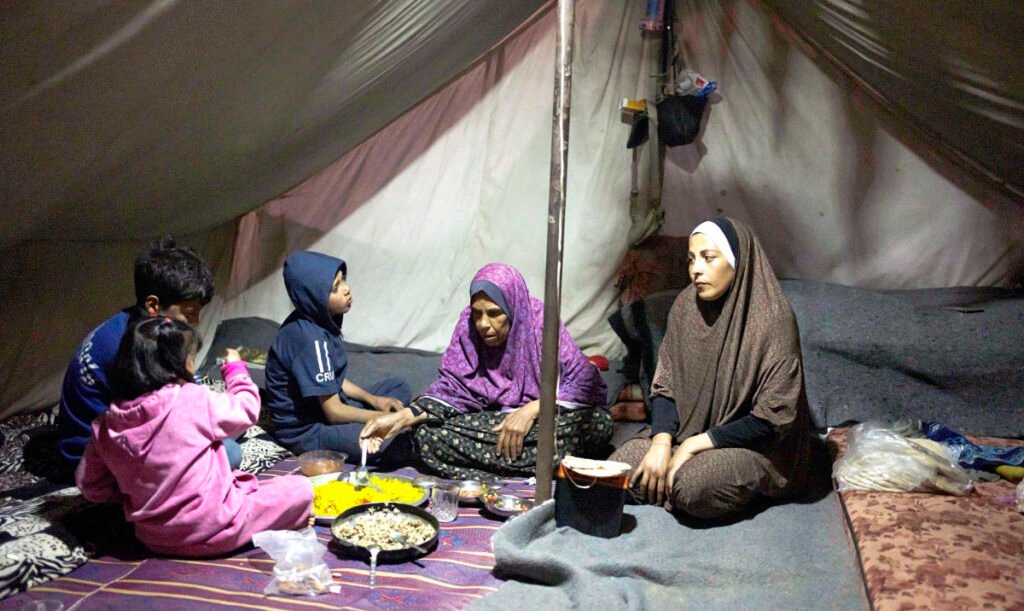
Institutions meant to nurture childhood were among the earliest targets: kindergartens; schools, including those run by UNRWA, playgrounds, hospitals, clinics, and family homes. Schools that survived were transformed into overcrowded shelters for the displaced.
There is not a single child in Gaza who has not witnessed bloodshed and dismembered bodies, often those of relatives, neighbours, or friends. Premature babies were among the most vulnerable; many suffocated in incubators after electricity and fuel were cut, while the Israeli army blocked their evacuation despite desperate appeals.
Some children were pulled from rubble after hours or days, forced to endure the fading breaths of parents and siblings before rescue arrived. Survivors carry unbearable burdens: orphanhood, the loss of family networks, and the erasure of any sense of safety or future. Childhood has been systematically dismantled through repeated displacement, humiliation in daily searches for water and food, and the stripping away of education, healthcare, and stability.
Notebooks, toys, pets, and schoolbags vanished alongside homes. Israeli soldiers were filmed mocking this loss, one riding a child’s wooden rocking horse in a Palestinian home in Sheikh Radwan in 2025, another smashing toys and school supplies in a shop in northern Gaza in late 2023.
Cultural Genocide
Among the homes destroyed were those of teachers, doctors, engineers, artists, and university professors. Gaza’s universities lost vast numbers of academics, including internationally recognised scholars. To be an intellectual in Gaza became a death sentence.
One of them was Refaat Alareer, a renowned professor of English literature, who published his final words days before he was killed in an Israeli strike on 6 December 2023: “If I must die, you must live, to tell my story.” The poem echoed across the world, translated into dozens of languages.
Libraries, public and private, were destroyed. University campuses west of Gaza City were ransacked, their archives and theses annihilated. Cultural institutions housing ancient manuscripts were detonated. In one haunting scene, elderly professor Fayez Abu Shamala apologised on video to fellow writers as he burned their books for cooking fuel after firewood ran out.
With the killing of elders came the loss of oral history and collective memory. Family heirlooms, photographs, and property deeds dating back to the Nakba of 1948 were reduced to ash. Archaeological sites, heritage landmarks, and places of worship were levelled. The Great Omari Mosque, Gaza’s most iconic historical landmark, was reduced to ruins. The Church of Saint Porphyrius was struck on 19 October 2023, killing civilians, Muslims, and Christians alike who had sought refuge inside.
Environmental Genocide
The devastation extended to all living systems. Pets were crushed beneath collapsed buildings; the remains of cats and birds mingled with rubble. Animals later appeared emaciated as humanitarian supplies were blocked and UN trucks stalled at crossings.
Donkeys used for transport after fuel was banned collapsed near craters, shrapnel lodged in their bodies. Horses pulling carts of wounded were shot or died before reaching hospitals. Livestock pens and poultry farms were bombed or left to perish after Israel enforced a total siege, announced by Defence Minister Yoav Gallant on 9 October 2023: no water, no food, no fuel, no electricity, “everything cut off.
Gaza’s vegetation cover has nearly vanished. Farmlands that once fed over two million people, producing vegetables, fruit, and famed citrus crops, were razed or poisoned. With sewage systems destroyed and waste treatment halted, stagnant pools of contamination spread insects and disease. Families burned plastic and toxic materials for cooking, inhaling lethal fumes.
Souq Firas, Gaza’s historic commercial hub, has become a vast rubbish dump. By February 2026, UN data showed waste reaching 300,000 cubic metres, piled up to 13 metres high. Toxins leached into soil and groundwater from pollution and munitions, while untreated sewage flooded the Mediterranean, destroying marine life and contaminating fish that residents still try to eat.
Desecration of the Dead
Even the dead were not spared. Cemeteries were bulldozed, graves exhumed, and remains transferred to Israeli facilities for DNA testing. Bodies were later returned in hundreds of bags to be buried in mass trenches scenes recalling the darkest chapters of the 20th century. Military vehicles were documented driving over corpses, crushing them repeatedly.
This posture reflects a racialised logic that grants sanctity only to one group’s dead while denying humanity to another’s.
Ideology and Continuity
The genocide unfolding in Gaza is not accidental. It is driven by ideology, reinforced by selective religious narratives invoked by Israeli Prime Minister Benjamin Netanyahu and members of his government, including references to the biblical story of Amalek.
This trajectory long predates Netanyahu. The state he leads was founded on the ruins of Palestine, following a campaign of ethnic cleansing in 1948. Former Prime Minister Yitzhak Rabin once said he wished Gaza would “sink into the sea.” In November 2023, Agriculture Minister Avi Dichter declared openly: “This is Gaza’s Nakba 2023.”
Seventy-five years after the Nakba, Israel has returned to that path with unprecedented military power. Entire neighbourhoods are annihilated in moments, each crater holding the details of a multidimensional genocide that has spared no human, cultural, or ecological sphere.
What remains is a population stripped of homes, memory, environment, and hope yet still resisting erasure, still insisting that the world bear witness.