📅 February 24, 2026
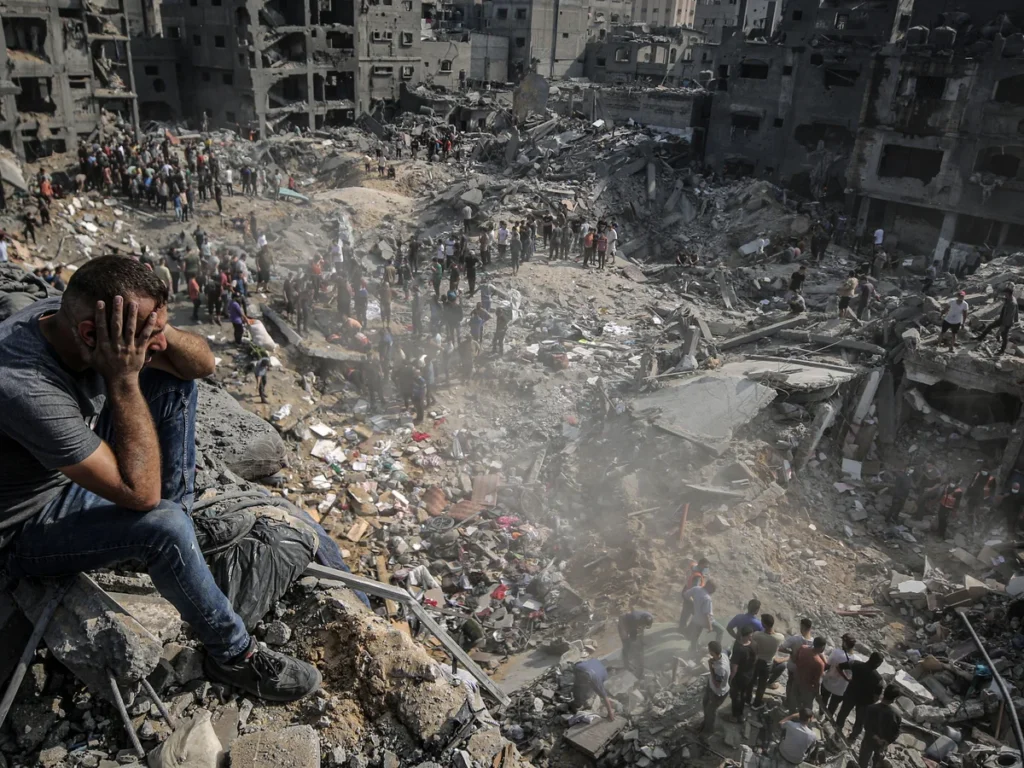
Gaza Herald_After enduring two years of devastating war, Palestinians in the Gaza Strip are marking Ramadan under the weight of a severe economic collapse. Despite a ceasefire announced in October, Israeli restrictions on the entry of food and essential supplies continue, worsening already dire living conditions.
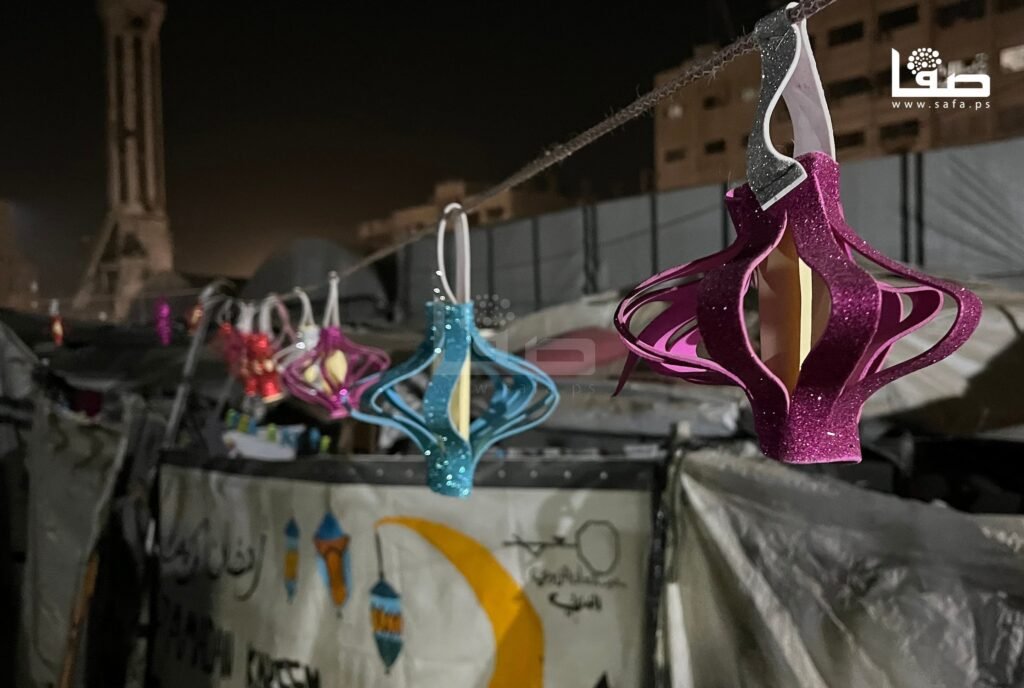
For many families, the festive traditions once associated with Ramadan have been replaced by a daily struggle for survival. Securing even basic necessities such as bread has become difficult. According to an Al Jazeera analysis based on official figures, the sharp rise in food prices has made preparing a proper iftar meal increasingly unattainable for most households.
Soaring food prices
Food prices surged dramatically during periods when crossings into Gaza were restricted or fully closed, with some items increasing by more than 700 percent. Although prices declined slightly after the ceasefire, they remain far above pre-war levels.
Mohammed Barbakh, Director General of Policy and Planning at Gaza’s Ministry of Economy, said official data comparing prices from before October 7, 2023, to the start of this Ramadan reveal significant increases.
Key staples have seen steep price rises:
•Chicken increased from 14 shekels ($4.49) to 25 shekels ($8.01) per kilogram, an 80 percent rise.
•Frozen fish jumped from 8 shekels ($2.56) to 23 shekels ($7.37) per kilogram, a 190 percent increase.
•Frozen red meat rose from 23 shekels ($7.37) to 40 shekels ($12.82) per kilogram, up 75 percent.
•Eggs saw one of the sharpest increases, with a tray of 30 rising from 13 shekels ($4.17) to 35 shekels ($11.22), marking a 170 percent jump.
Vegetables, a cornerstone of Palestinian meals, have also become significantly more expensive. Tomato prices have doubled, while cucumbers have tripled, increasing from 3 shekels ($0.96) to 12 shekels ($3.85) per kilogram. Cheese prices have climbed by as much as 110 percent, directly affecting the affordability of suhoor, the predawn meal before fasting begins.
The rising cost of daily meals
Using data from the Palestinian Central Bureau of Statistics, Al Jazeera estimated the cost of a basic iftar for a family of six. The meal typically includes two chickens, rice, salad, appetizers, cooking oil, gas, and soft drinks.
The total cost has risen to approximately 150 shekels ($48), compared to 79 shekels ($25.32) before the war — an increase of about 90 percent.
Meanwhile, a modest suhoor consisting of cheese, hummus, falafel, and bread now costs 31.5 shekels ($10.10), up from 18.6 shekels ($5.96).
Altogether, the daily food cost for a medium-sized family now reaches 181.5 shekels ($58.17), representing an 88 percent increase compared to pre-war levels.
Collapse of income and livelihoods
These rising prices come as household incomes have plummeted. A United Nations report released in late 2025 showed that annual per capita income in Gaza dropped to just $161 (503 shekels) in 2024, compared to $1,250 (3,900 shekels) in 2022.
The labour market has nearly disappeared. Sami al-Amsi, head of the General Federation of Palestinian Trade Unions, stated in October that unemployment had exceeded 95 percent after widespread destruction of workshops, farmland, and fishing operations.
“The worker is no longer searching for employment because jobs simply do not exist,” al-Amsi said. “Today, workers are searching for food aid just to survive.”
Blockade and market monopolies driving inflation
Economic analyst Ahmed Abu Qamar attributed the dramatic rise in prices to Israeli restrictions on goods entering Gaza, as well as high coordination fees imposed on supply trucks.
He explained that although humanitarian agreements call for 600 trucks to enter Gaza daily, only between 200 and 250 trucks are currently permitted. In reality, Gaza requires around 1,000 trucks each day to meet minimum basic needs.
Abu Qamar also pointed to a monopolistic import system in which only about 10 merchants are authorized to bring goods into Gaza through four Israeli companies. This lack of competition has contributed to artificially high prices and further strained the population.
He emphasized the need to fully reopen crossings and restore free market conditions to ease the burden on Gaza’s residents, who are already struggling to survive amid ongoing devastation.