Gaza Herald- A Palestinian woman has come forward with allegations of physical abuse by Israeli forces while returning to Gaza through the Rafah Crossing, describing a violent encounter that left her injured, restrained, and traumatized. Her testimony adds to growing reports of mistreatment faced by Palestinians attempting to move through one of the enclave’s most tightly controlled entry points.
In recorded footage shared by Palestinian academic and Euro-Med Human Rights Monitor chairman Ramy Abdu, the woman recounted being beaten with the butt of a rifle, bound at the hands and feet, and left bleeding during the incident. The alleged abuse occurred while she was returning to Gaza, reportedly after a period of displacement or medical travel.
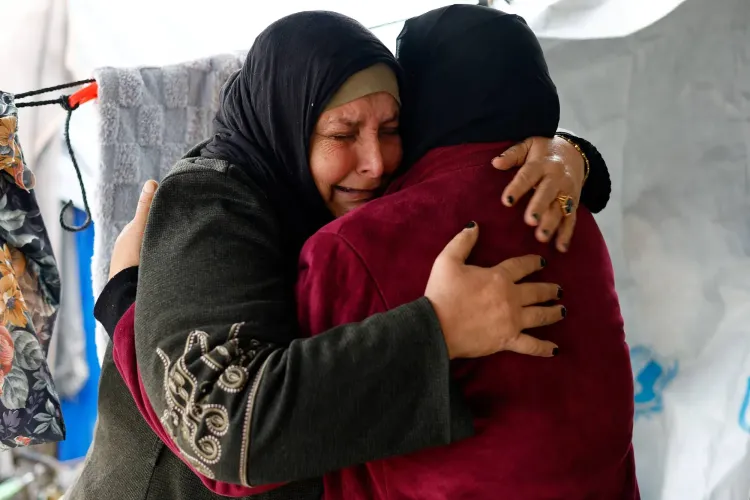
The woman, visibly shaken during the interview, described the experience as deeply humiliating and painful. The footage, filmed by local journalist Ibrahim Haroun, shows her surrounded by others as she delivers her testimony, struggling to recount the events.
Since Israeli forces took control of the Rafah Crossing area in May 2024, movement in and out of Gaza has been severely restricted. Palestinians attempting to leave for medical treatment or return home have faced extensive screening procedures, prolonged interrogations, and uncertain waiting periods.
Human rights organizations, including Euro-Med Human Rights Monitor, Amnesty International, and Human Rights Watch, have documented numerous allegations of arbitrary detention, physical abuse, forced family separation, and denial of medical evacuation involving Palestinians at crossings and checkpoints during the ongoing war.
These conditions have left thousands of Palestinians stranded, separated from families, or unable to access life-saving medical care. Many who do manage to return describe the journey as fraught with fear, uncertainty, and, in some cases, violence.
While individual testimonies require independent verification through medical records, legal complaints, or corroboration by journalists and investigators, human rights advocates say such accounts reflect a broader pattern of systemic mistreatment and coercive control imposed on Gaza’s civilian population.
For many Palestinians, the Rafah Crossing remains not only a gateway between Gaza and the outside world, but also a symbol of the severe restrictions and dangers that have come to define daily life under siege.