Gaza Herald – The Gaza Center for Human Rights has condemned Israel’s continued expansion of the so-called “Yellow Line” in eastern Gaza, stressing that it is a part of a systematic policy to impose new realities on the ground, expand military control, and facilitate the forced displacement of Palestinians.
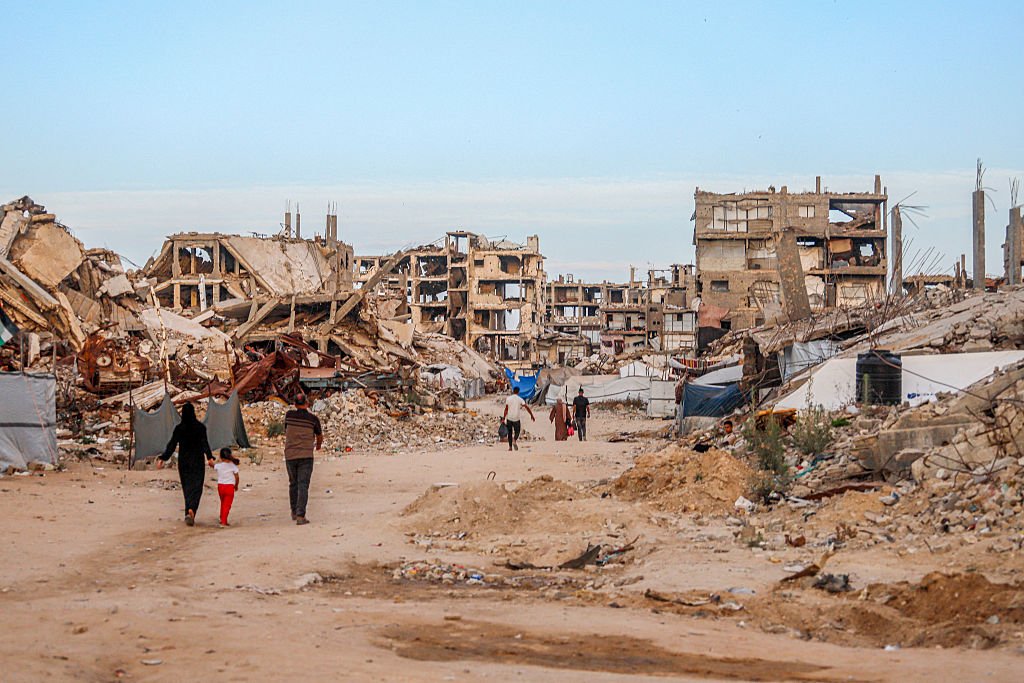
The organization said Israeli forces recently extended the military zone in Gaza City’s Al-Shuja’iya neighborhood by moving yellow concrete barriers, while military bulldozers and tanks were also observed beyond the line in the Al-Mawasi area of Rafah, where agricultural land was leveled and displaced families came under gunfire.
The center warned that repeated attacks on tents sheltering displaced civilians appear intended to pressure residents into leaving the area. It said these developments coincide with plans to establish so-called humanitarian shelter centers in Rafah, arguing that such facilities could be used to confine Palestinians to designated areas, fragment Gaza geographically, and advance a broader policy of forced displacement.
The rights group also condemned Israel’s continued attacks on water infrastructure, stressing that it is a strategy of using water deprivation as a weapon of war. It cited the bombing of a workshop in Gaza City that produced equipment for drilling water wells, killing four Palestinians and injuring others, followed by a second strike on the same location that caused further civilian casualties and widespread damage.
According to the center, the destruction of water-related infrastructure has deepened Gaza’s water crisis, with production falling to around half of pre-war levels and less than half the population receiving water through public networks. It said infrastructure damage has increased water losses to about 65%, while many displaced Palestinians now survive on less than five liters of water per day, well below the minimum required for survival.
The organization said the expansion of military zones, attacks on civilian infrastructure, destruction of water sources, and establishment of shelter centers under Israeli control together reflect an integrated policy aimed at reshaping Gaza’s geographic and demographic landscape. It called on the international community to halt the expansion of military zones, protect civilian infrastructure, particularly water facilities, and reject any humanitarian arrangements that could facilitate forced population transfer or further divide the Gaza Strip.