Gaza Herald _In Gaza, a victim’s story does not necessarily end with death or disappearance. For thousands of families, an even more painful chapter continues: waiting to learn what happened to their loved ones.
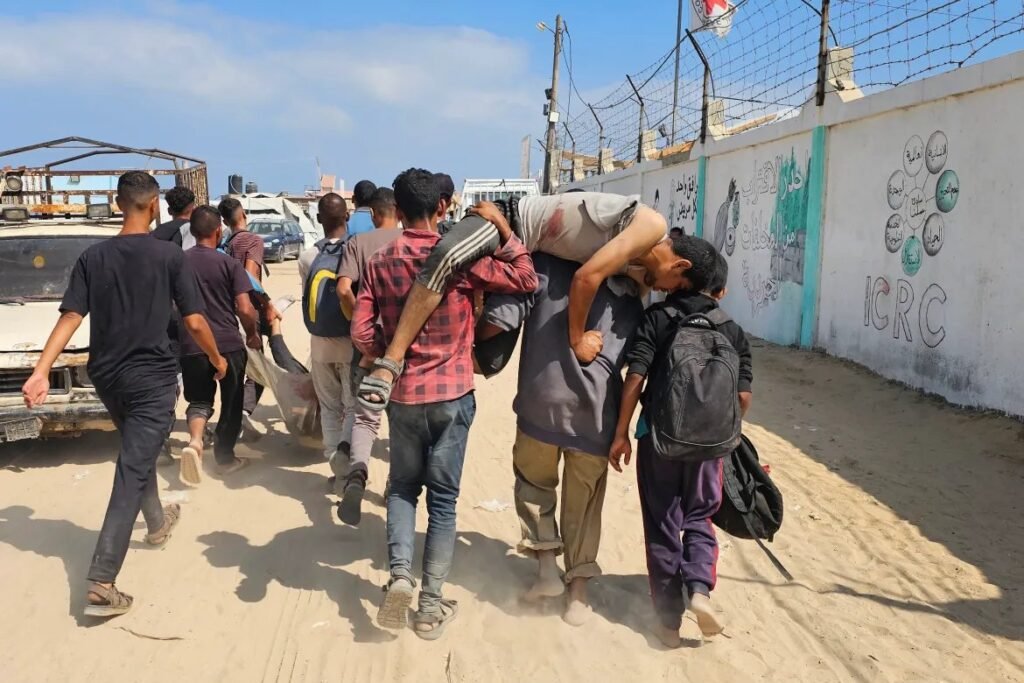
Some people left their homes and never returned. Others disappeared while fleeing or traveling along Gaza’s roads. Children vanished while searching for food. Thousands of bodies are believed to remain trapped beneath mountains of rubble. Other families believe their relatives were detained, yet have received no official information about where they are being held or what has happened to them.
As the world marks the International Day of the Victims of Enforced Disappearances on August 30, the issue of missing Palestinians in the Gaza Strip has once again come into focus as one of the most painful and complex legacies of the war.
More Than 11,000 Missing, but the Numbers Do Not Reveal Their Fate
There is still no complete database capable of determining what happened to everyone who has gone missing in Gaza.
In April, the Palestinian Ministry of Justice reported that more than 11,200 Palestinians had been recorded as missing or forcibly disappeared since October 2023, including more than 4,700 women and children.
A more recent assessment by the Palestinian Center for Missing and Forcibly Disappeared Persons separated the cases into two broad categories. The first includes an estimated 4,000 to 5,000 people believed to remain beneath the ruins of destroyed buildings. The second includes between 2,500 and 3,000 people whose circumstances indicate a possible enforced disappearance.
The center stressed that the latter figure was based on a study examining a sample of 317 cases and does not represent every disappearance across Gaza.
That distinction lies at the heart of the crisis. Not every missing person has been forcibly disappeared, and not everyone whose body has yet to be recovered has the same fate. Some remain buried beneath collapsed buildings. Others disappeared during displacement. And some families believe their relatives were detained without receiving any information about where they are being held.
Thousands of Bodies Still Hidden Beneath the Rubble
On the ground, searching for the missing beneath Gaza’s ruins has become another battle.
Civil Defense teams face severe shortages of heavy machinery, fuel and rescue equipment, while Palestinian authorities estimate that the territory is covered by tens of millions of tons of debris.
In July, the second phase of a project to recover the bodies of Palestinians killed during the war began in cooperation with the International Committee of the Red Cross.
After 381 hours of work, rescue teams recovered the bodies and remains of 233 Palestinians from among 407 people reported missing beneath the ruins of just 20 homes. The recovered victims included 73 children and 106 women.
The figures reveal the enormous limitations facing recovery efforts. Despite hundreds of hours of work, more than one-third of those reported missing beneath those homes remained trapped under the rubble.
During August, recovery operations across Gaza uncovered bodies that had remained buried for years. In the Sabra neighborhood, teams recovered the remains of 112 members of the Abu Sharia and Al-Hassaina families after nearly three years beneath the rubble. Dozens of additional bodies were later recovered from areas including Tel al-Hawa, Zeitoun, Sabra, Sheikh Radwan and Al-Shati.
The International Committee of the Red Cross has said that thousands of families in Gaza are still waiting for information about their loved ones. Some are believed to have remained beneath the rubble for years, while limited forensic resources have made identifying recovered bodies extremely difficult.
Enforced Disappearance: A Different and More Dangerous Reality
But rubble is not the only explanation for the disappearance of thousands of Palestinians.
A study prepared by the Palestinian Center for Missing and Forcibly Disappeared Persons documented indicators of disappearances linked to military raids, neighborhood sieges and detentions during the war.
Among the cases included in the study’s sample, 76 occurred during Israeli military raids on homes and the siege of residential areas. Another 60 took place while people were attempting to return to their homes or obtain basic necessities. Forty-two people disappeared during displacement or while passing through military checkpoints, while 39 vanished while searching for food or waiting for humanitarian assistance.
The study also documented cases connected to the siege or raid of medical facilities, the transfer of patients, and incidents involving journalists and field workers.
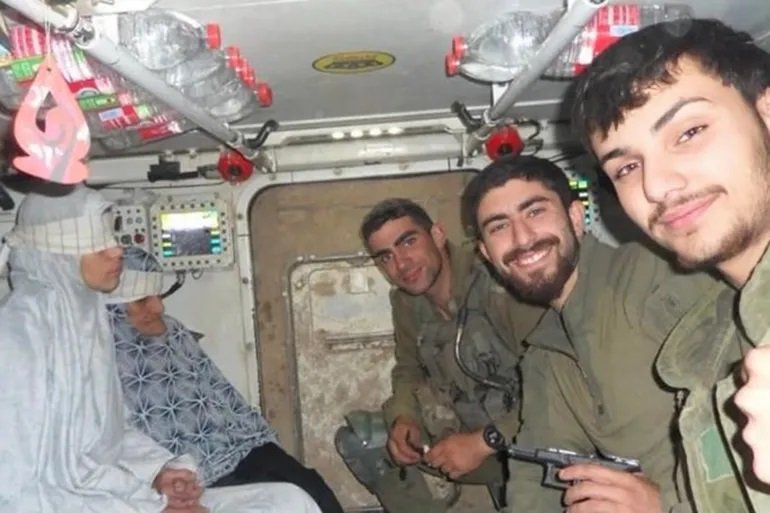
The International Committee of the Red Cross has stated that it has been unable to access Palestinian detainees held in Israeli detention facilities since October 2023 and has called for information about their fate and whereabouts.
This is where the issue moves beyond a humanitarian crisis and into a legal one. Under the United Nations definition, enforced disappearance involves depriving a person of their liberty and then refusing to acknowledge that detention or concealing the person’s fate or whereabouts.
Mahmoud and Ahmed: Names Behind Thousands of Stories
Behind every number is a family living with uncertainty.
Ahmed Abu Awad, a 15-year-old boy, left in August 2025 for the Morag area between Rafah and Khan Younis in search of flour for his family. He never returned, and his family has received no information about what happened to him.
In Jabalia refugee camp, the family of Mahmoud Shaaban has been waiting for answers since December 2023.
Mahmoud Attallah al-Dreimli disappeared while attempting to travel from southern Gaza back to the north in November 2024. Months later, his family saw a photograph showing him blindfolded and bound, providing the first indication that he had been alive after his disappearance.
But the photograph did not answer the questions that followed. His fate and whereabouts remain unknown.
When Bodies Return Without Names
The crisis becomes even more complicated when bodies are eventually recovered or returned to Gaza.
Identifying the dead requires laboratories, forensic equipment and DNA testing, resources that remain severely limited in the Gaza Strip.
Palestinian data indicates that some bodies returned to Gaza without sufficient identifying information, leaving families facing a long and difficult process to determine whether the remains belong to their loved ones.
Finding a body, therefore, does not always bring an end to a disappearance. In some cases, the body itself becomes another unknown, while families wait for scientific confirmation of its identity.
Human rights organizations have also warned that the unregulated removal of rubble before proper forensic documentation could result in the loss of important evidence or the mixing of human remains, making it even harder to identify victims and establish responsibility for their deaths later.
Children Waiting for Their Parents, Parents Waiting for Their Children
Children are among the groups most vulnerable to disappearance.
Some disappeared during bombardments. Others lost contact with their families while fleeing. Children have also gone missing while searching for food, water or firewood, or while trying to reach areas believed to be safer.
For that reason, the issue of missing people in Gaza is not limited to recovering bodies. It also includes the search for missing children, detainees, people believed to be held in custody and those whose families lost all contact with them amid the chaos of war.
The International Committee of the Red Cross has said that thousands of families in Gaza continue to live with uncertainty over the fate of their loved ones. International humanitarian law requires parties to armed conflicts to take all possible measures to determine what happened to people reported missing and to provide their families with any available information.
The War May End, but the Search for the Missing Continues
Today, nearly three years after the war began, thousands of families still do not have definitive answers about the fate of their sons, daughters, parents and relatives.
While search and recovery operations continue, another part of the crisis remains tied to detainees and disappeared Palestinians whose families do not know where they are, whether they are alive, whether they have been killed or whether they remain in detention.
Palestinian organizations have called for the creation of an independent international mechanism to investigate cases of enforced disappearance. They have also demanded that the International Committee of the Red Cross be allowed access to detainees, that recovery teams receive the equipment needed to retrieve bodies, and that Gaza’s forensic capabilities be strengthened to help identify the dead.
In Gaza, the absence of a body does not mean a story has ended, and the absence of information does not necessarily mean a person is dead.
Somewhere between the rubble, detention centers, military checkpoints and the roads taken by displaced families, thousands of Palestinians remain in a painful gray area. Their families do not know whether they should wait for their loved ones to return, search for their bodies or simply hope for one piece of information that finally reveals their fate.
For these families, the question “Where are our children?” is no longer simply a private plea. It has become a test of whether international institutions can help uncover the fate of thousands of missing Palestinians and bring an end to years of agonizing uncertainty.