Gaza Herald_ There is no longer any honest way to describe what is happening in Gaza as a “war” or a “security operation.” What the world is witnessing is the systematic destruction of a besieged civilian population and the deliberate erasure of the structures that allow life to continue. Hospitals, ambulances, doctors, and patients have been turned into targets, not collateral damage. Gaza’s health system has not collapsed by accident; it has been methodically dismantled, strike by strike, policy by policy, under the protection of international silence and political complicity.
On November 5, 2023, only weeks into Israel’s latest onslaught on Gaza, I lost a close friend and colleague, Dr. Maisara Azmi Al Rayyes. He was 28 years old. An Israeli missile struck his family home in Gaza City, killing him alongside much of his immediate family. Maisara was a gifted young physician devoted to women’s and children’s health. After completing his master’s degree at King’s College London as a Chevening Scholar in 2019, he made a conscious decision to return to Gaza, fully aware of the risks, because his people needed him. Until the moment he was killed, he continued working under bombardment, repeatedly placing his own life in danger to care for others.
Dr. Maisara’s death was not an isolated tragedy. Since October 7, 2023, more than 1,700 Palestinian healthcare workers have been killed in Gaza. Their loss represents not only human lives extinguished but the deliberate dismantling of an entire system meant to preserve life.
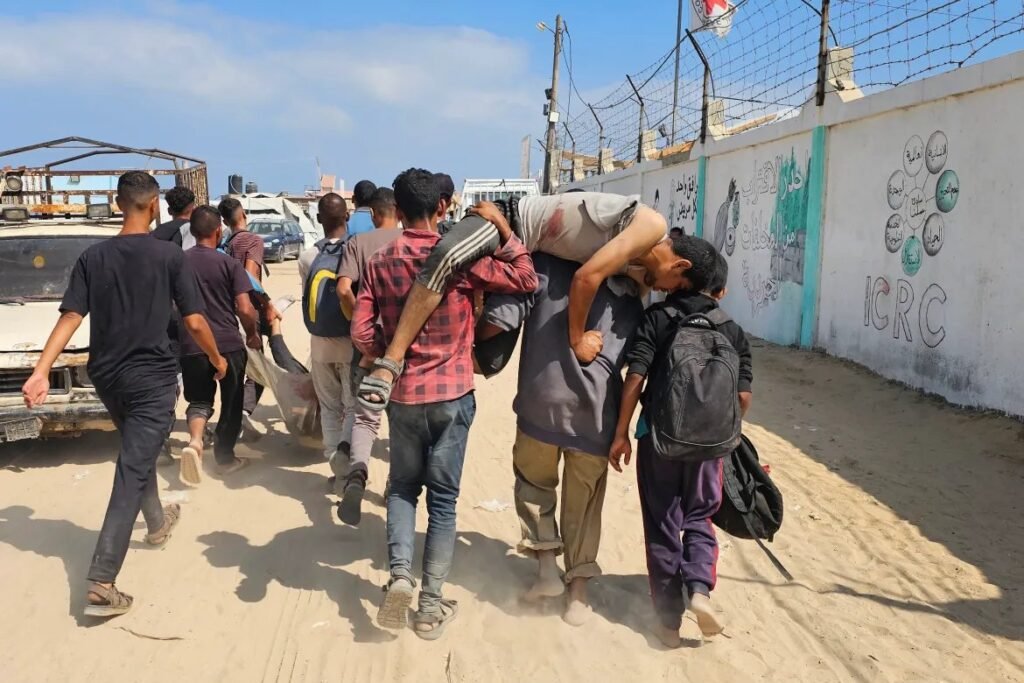
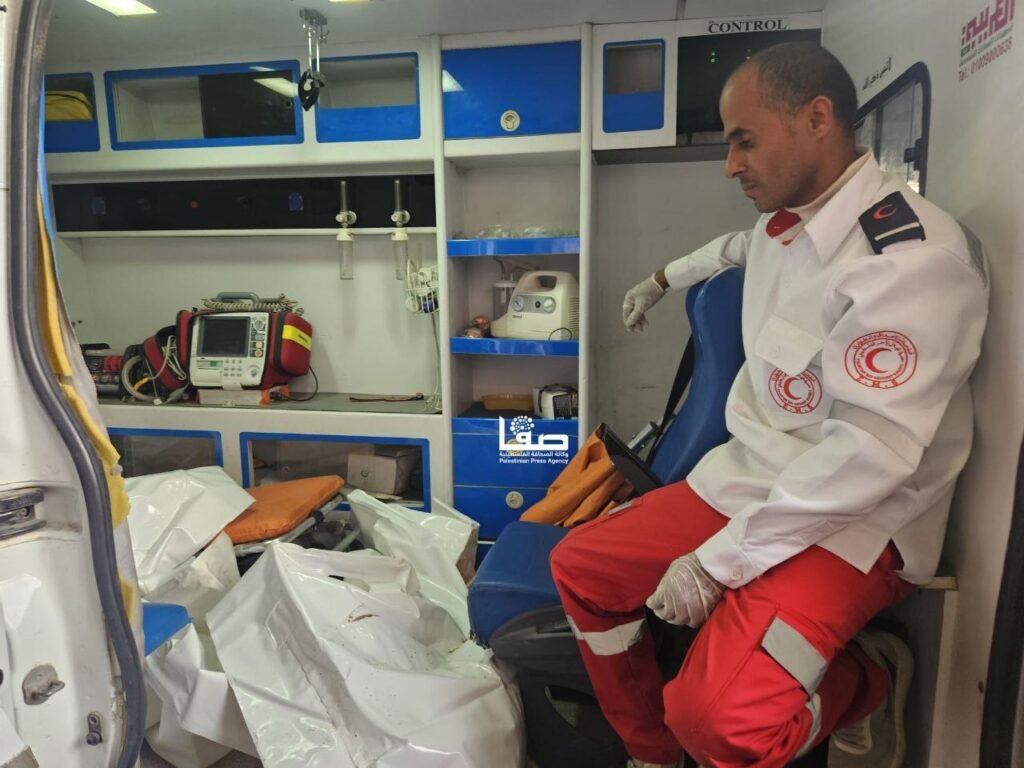
As I was writing these words, news arrived from Gaza of another killing. Hussein Hassan Al-Samiri, a 48-year-old paramedic with the Palestinian Red Crescent Society, was killed when Israeli forces struck clearly marked ambulance crews in al-Mawasi, west of Khan Younis. The attack targeted rescuers responding to a previous strike on tents sheltering displaced families, an assault that killed 21 people, including five children.
Al-Samiri became the fourth healthcare worker killed since a so-called “ceasefire” was declared in October 2025, and the second within a single day. He was killed in a classic “double-tap” attack: an initial strike followed by a second aimed deliberately at medics and rescue teams. This tactic is not new. I witnessed the same method used against ambulances and first responders during Israel’s invasion of Lebanon in 1982, and later in Gaza during repeated assaults over the decades.
In the past two years alone, Palestinian medical workers have also been summarily executed by Israeli forces simply for doing their jobs. One of the most horrifying examples occurred last March in the al-Hashaashin area, where Israeli soldiers executed 15 paramedics and civil defence rescuers as they rushed to aid victims of a missile strike. Their bodies were later buried in a shallow mass grave, apparently to conceal the crime. Video footage recovered from one of the victims’ phones later surfaced, offering irrefutable evidence of the killings.
The footage shocked many observers. Yet, as with the extensive documentation of double-tap attacks, it failed to trigger meaningful consequences. Western governments issued statements of concern, expressed regret, or offered vague warnings, but none took decisive action to stop or sanction Israel.
One must ask: would the reaction have been the same if Palestinian fighters had targeted Israeli doctors, ambulances, or hospitals? Would there have been restraint, or immediate condemnation and punishment? The answer is self-evident. The ongoing slaughter in Gaza is sustained by a deeply rooted, racist double standard that grants Israel impunity. This indifference endangers not only Palestinian lives and healthcare, but the credibility of the so-called rules-based international order itself.
The scale of devastation in Gaza is almost beyond comprehension. Official figures indicate that more than 71,000 Palestinians have been killed since October 7, with countless others still buried under the rubble. Civilians account for over 80 percent of the dead, most of them children, women, and elderly people. Life expectancy in Gaza has collapsed from roughly 74 years to around 35, a catastrophic decline driven by military violence, starvation, disease, displacement, and the systematic destruction of medical infrastructure.
Despite these conditions, Palestinian healthcare workers continue to operate under circumstances that defy imagination. Hospitals and clinics have been bombed, raided, or burned, yet care continues where possible, often at a fraction of normal capacity. The courage and endurance of Gaza’s medical professionals are extraordinary, but resilience alone cannot compensate for the methodical annihilation of an entire healthcare system.
The “ceasefire” announced on October 10, 2025, and promoted internationally as a step toward peace, has done nothing to relieve this suffering. Violence continues under the cover of diplomatic language. Since its declaration, Israeli attacks have killed at least 529 Palestinians and wounded more than 1,400. Gaza’s authorities report more than 1,450 violations of the ceasefire between October 2025 and January 2026, including air strikes, artillery fire, and live shootings.
Among the supposed guarantees attached to this ceasefire were safe evacuation routes for the sick and wounded. In reality, these promises have proven hollow. In late January, only 24 children were evacuated for treatment abroad, accompanied by caregivers. Days later, just five critically ill patients were allowed to leave. Meanwhile, nearly 20,000 patients remain trapped inside Gaza, including thousands of children in urgent need of specialised care unavailable locally. More than 1,200 people have already died while waiting for permission to access life-saving treatment outside the Strip.
Israel has not only destroyed hospitals and killed medical staff; it has sealed Gaza shut, trapping the sick and wounded inside what has become an apocalyptic open-air prison.
This catastrophe is not the result of incompetence or failure by Palestinian doctors and nurses. It is the product of an 18-year siege, intensified by more than two years of relentless bombardment, mass displacement, and the detention, torture, and killing of medical personnel. Since October 2023 alone, more than 1,800 attacks on healthcare facilities and workers have been recorded across the occupied Palestinian territories, killing over 1,000 people and injuring thousands more.
These assaults follow a long-established pattern. Over the past two decades, thousands of attacks on healthcare have been documented, with each military escalation further degrading an already fragile system. Chronic shortages of medicines, equipment, fuel, maintenance capacity, and protection have left Gaza’s healthcare infrastructure exhausted and near collapse.
The humanitarian consequences are visible everywhere. Gaza is now facing its third consecutive winter amid mass displacement. More than 80 percent of buildings have been damaged or destroyed. Families crowd into inadequate shelters, exposed to cold, storms, and disease. Children have already died from hypothermia. Infectious diseases are spreading rapidly, with tens of thousands of respiratory infections and thousands of cases of acute diarrhoea reported in recent weeks, most affecting children.
Even humanitarian assistance is under attack. Dozens of international aid organisations have been barred from operating in Gaza, while new legislation allows the cutting of electricity and water to agencies providing essential services to millions of Palestinian refugees. The outcome is deliberate and predictable: humanitarian collapse, collective punishment, and ethnic cleansing pursued through policy.
What is happening in Gaza is not only an assault on a population but a direct attack on the foundations of international law, including the obligation to protect civilians and medical services during armed conflict. Backed consistently by the United States, Israel has replaced legal norms with unrestrained force.
Europe once declared “never again” in response to the horrors of the Holocaust. That vow was meant as a universal warning against racist violence and impunity. Today, that warning is being ignored.
The genocide unfolding in Gaza is one of the defining moral tests of our time. Humanitarian aid, while vital, cannot address the root causes of illness, suffering, and premature death. Those causes lie in the structural realities of occupation and apartheid that shape every aspect of Palestinian life.
The new year has brought no reprieve for Gaza, only the continuation of a slow-motion genocide and the collapse of Western moral authority. Yet hope persists in the steadfastness of the Palestinian people and in the growing global movement demanding accountability.
“Never again” was not meant to be selective. For Palestinians, the urgency of those words has never been clearer.