Gaza Herald — Cancer patients in Gaza are facing a slow and devastating crisis as access to treatment continues to be denied, leaving thousands waiting for care that may never come. For many, the struggle is no longer about recovery, but about securing permission to survive.
Hani Naim, who has lived with cancer for six years, was previously approved to receive treatment outside Gaza. Today, he remains unable to leave. Like many others, he is trapped by increasingly restrictive measures that prevent patients from accessing specialized care abroad. Naim explained that he once received treatment in Jerusalem and the West Bank, but now has no access to radiotherapy or advanced oncology services, which are no longer available inside Gaza.
Naim is among approximately 11,000 cancer patients currently stranded in the territory, where the healthcare system has largely collapsed. Medical professionals report that cancer-related deaths have surged dramatically since October 2023, as essential treatments such as chemotherapy and radiotherapy have become unavailable. With no functioning treatment pathways and no exit options, a cancer diagnosis has become life-threatening for many patients.
A destroyed center of care
At the center of this crisis is the Turkish-Palestinian Friendship Hospital, once the only specialized cancer treatment facility in Gaza. The hospital has since been rendered inoperable after being converted into a military site and destroyed during the war, leaving patients without a central oncology hub.
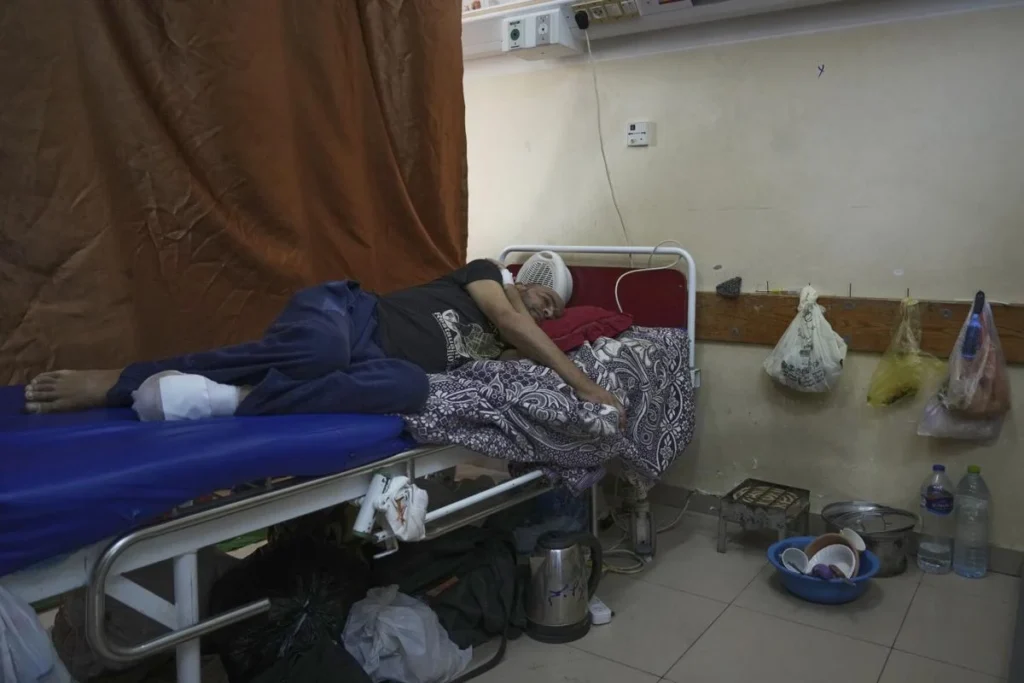
Following its destruction, cancer care has been reduced to improvised efforts within general hospitals that lack both equipment and medication. The director of the Gaza Cancer Center described the situation as one of complete loss, noting that there are no longer tools for diagnosis, no chemotherapy supplies, and no effective treatment options available.
Shortages despite aid claims
Although ceasefire arrangements were expected to allow humanitarian supplies into Gaza, doctors report that critical medical items remain blocked. While some consumer goods have entered the territory, medications for chronic illnesses, cancer treatments, and diagnostic equipment have not.
Medical staff estimate that 60 to 70 percent of standard cancer treatment protocols are currently unavailable. Because cancer therapy depends on precise drug combinations and sequences, the absence of even one medication renders treatment ineffective.
The situation has also affected palliative care. Pain relief medications are in critically short supply and are being rationed, with priority given only to patients in the most advanced stages of illness.
Rising deaths and human cost
The consequences are severe. In the Khan Younis area alone, doctors report that two to three cancer patients die each day. Without treatment, the disease progresses rapidly, reversing decades of medical advances in cancer care.
At present, more than 3,200 patients have official referrals for treatment outside Gaza but are unable to leave due to border closures and restrictions on medical evacuations.
For the remaining healthcare workers, the emotional toll is profound. Many specialists have left the territory, while those who remain are forced to work without the tools needed to save lives. Doctors describe a sense of helplessness, as they can offer little more than presence and comfort to patients who are denied both treatment and the opportunity to seek care elsewhere.