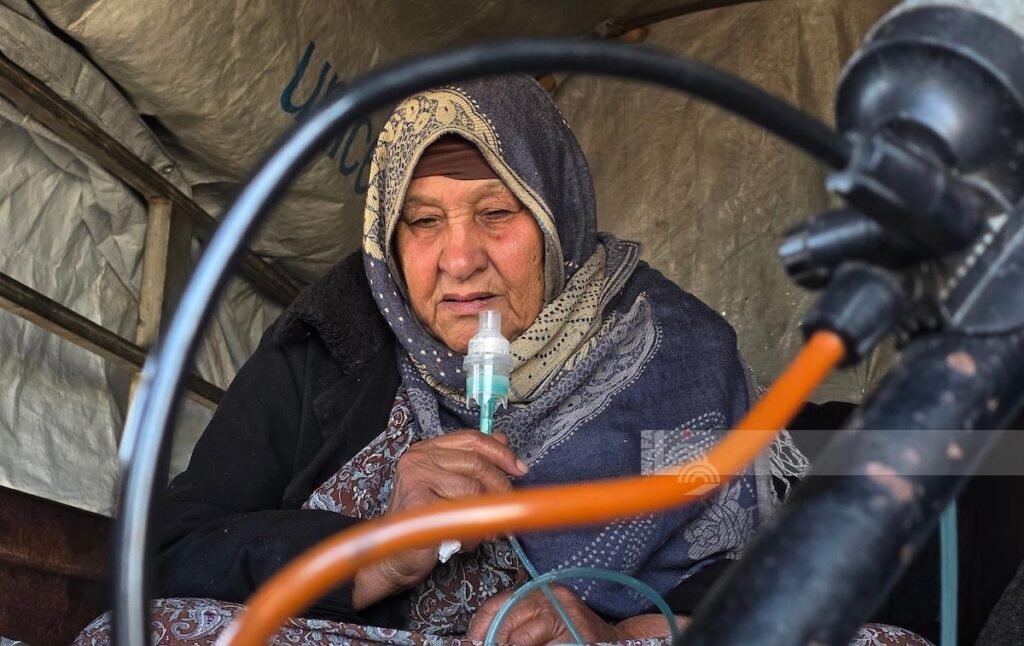
Gaza Herald_ In Khan Younis, in the southern Gaza Strip, Sami Abu Saadeh lives with his ailing mother inside a dilapidated displacement cart that barely shields them from heat, cold, or rain. The cart is unfit for human living, yet it is all they have left after being forcibly displaced from their home. Sami’s mother suffers from heart disease, high blood pressure, diabetes, nerve disorders, and asthma. A visit to Nasser Hospital, only minutes away, costs 60 shekels, a sum far beyond their limited means amid poverty and siege.
A Desperate Invention
Speaking with a voice heavy with worry, Sami said, “Every day I watch my mother suffer, and I feel helpless in the face of the illnesses consuming her body. I decided to make her a manual nebulizer device, which I have been using for nine months now, two to three times a day. The steam helps open her airways and ease her suffocation, even if only temporarily. All of this is so she can breathe and keep living, right here in my hands.”
His mother added quietly, her words filled with sadness, “Every day I feel severe pain in my chest and legs, and my heart beats intensely. Sometimes breathing becomes very difficult, and I can’t wait until my hospital appointment. Getting there costs money and time that I don’t always have, and the fear grows that I might not return.”
Thousands Waiting for Treatment
Sami continued, “We see thousands of other patients in Gaza waiting for treatment, medicine, or a chance to travel abroad to save their lives. But Israeli restrictions and limited resources mean we are living on the edge of danger every moment. Every breath these patients struggle to take reminds us that this suffering is not ours alone.”
Laboratory Supply Shortages Deepen the Crisis
Meanwhile, Gaza’s Ministry of Health has warned of a worsening and catastrophic crisis due to a severe shortage of laboratory consumables, directly affecting the health system’s ability to provide care.
The ministry said that 75 percent of biochemical testing materials are unavailable, while nearly 90 percent of blood testing supplies have been depleted. This has led to the suspension of essential diagnostic services, including tests for endocrine patients, cancer patients, and kidney transplant recipients.
Bacterial culture testing has also halted by 72 percent, as laboratory and blood bank supplies have not been allowed into Gaza for months. The ministry warned that continued shortages could obstruct patient diagnoses and delay or prevent surgical operations.
Humanitarian Response Slowed
In the same context, the United Nations Office for the Coordination of Humanitarian Affairs (OCHA) warned that fuel shortages and road closures are significantly slowing humanitarian response efforts in Gaza.
OCHA noted that the resumption of fuel shipments has not fully resolved the crisis, as access restrictions, storage gaps, and congestion continue to drive up costs and delay the delivery of vital aid.
Deprivation Driving Preventable Deaths
The Gaza Center for Human Rights revealed that 10,000 Palestinians have died due to deprivation of medical treatment in the Strip, including 1,000 people who were denied permission to travel for treatment over the past 25 months because of Israeli restrictions.
The center warned that thousands of patients are engaged in a daily race against time amid the collapse of the health system, the lack of medical equipment and treatments, the continued closure of the Rafah crossing, and obstacles preventing travel.
It stressed that these figures document the deaths of 10,000 patients, including women and children, as a result of the systematic targeting of Gaza’s health system during two years of genocide, and called on the international community to intervene urgently to compel Israel to lift its restrictions, open the crossings, ensure freedom of movement, and secure hospitals’ essential needs.