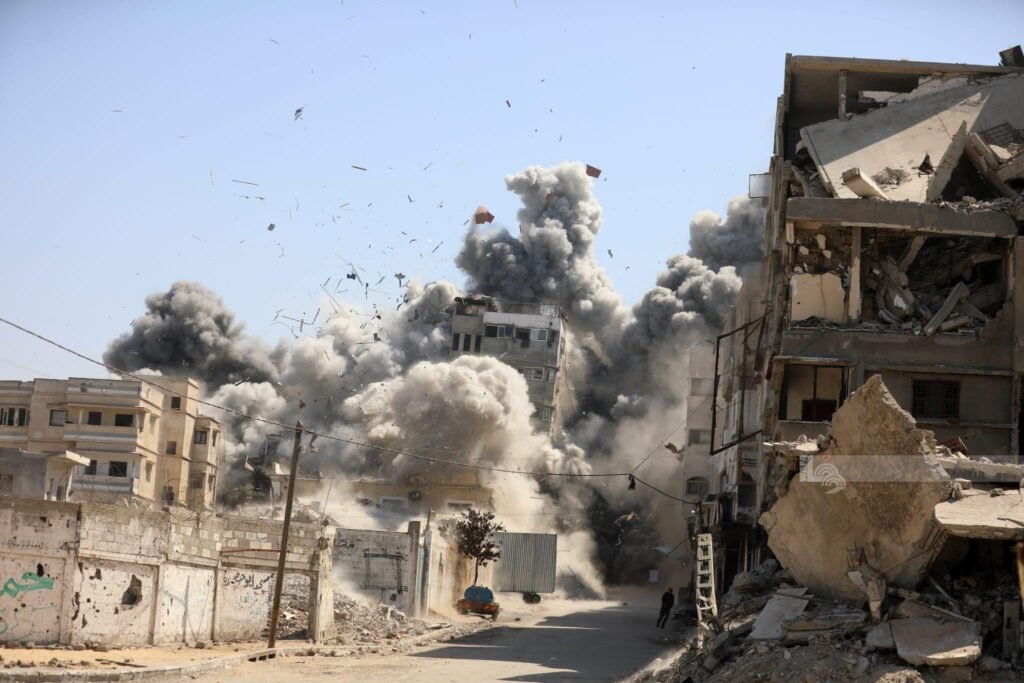
Gaza Herald – Israeli occupation forces continued to violate the Gaza ceasefire for the 81st consecutive day, intensifying artillery shelling, air strikes, and home demolitions across the Strip. Eastern Gaza City came under sustained bombardment, while Israeli warplanes struck east of Khan Younis and near the eastern cemetery of Al-Bureij refugee camp, marking a sharp escalation despite the truce.
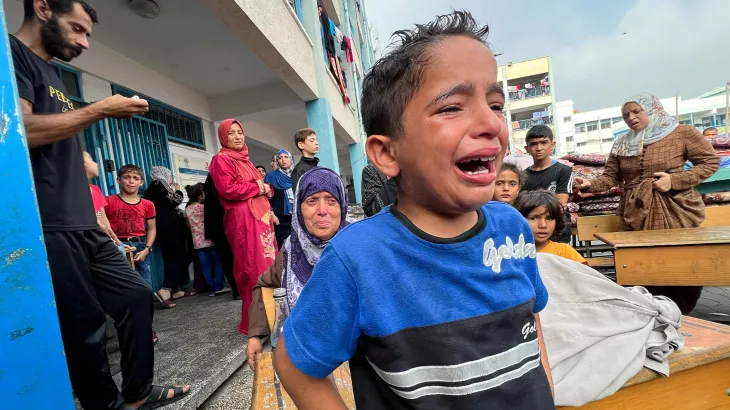
The humanitarian toll deepened as Israel maintained tight restrictions on fuel, water, and reconstruction materials. Municipalities warned that northern Gaza has effectively become a disaster zone, with essential services collapsing. Severe winter weather compounded the crisis, flooding and tearing apart displacement tents and forcing families, many of them children, into the cold with no shelter.
Gaza’s Government Media Office reported 969 Israeli ceasefire violations between October 10 and December 28, resulting in 418 Palestinians killed and 1,141 wounded. The violations included direct live, fire attacks on civilians, military incursions into residential areas, widespread shelling, mass demolitions of homes and institutions, and unlawful arrests, what officials described as a policy of “slow death.”
Politically, tensions mounted ahead of an expectedly fraught meeting between U.S. President Donald Trump and Israeli Prime Minister Benjamin Netanyahu. Disputes reportedly centered on Gaza’s future, including reconstruction versus disarmament, timelines for a second phase of the agreement, and the composition of any multinational force, issues exposing growing cracks between Washington and Tel Aviv.
Israeli media said Netanyahu backtracked on opening the Rafah crossing under pressure from far-right coalition partners, reinforcing U.S. concerns that Israel is stalling on its ceasefire obligations. As talks faltered, Palestinians remained trapped between relentless military pressure and a deepening humanitarian catastrophe, with Israel holding the levers over borders, aid, and the pace of any political progress.