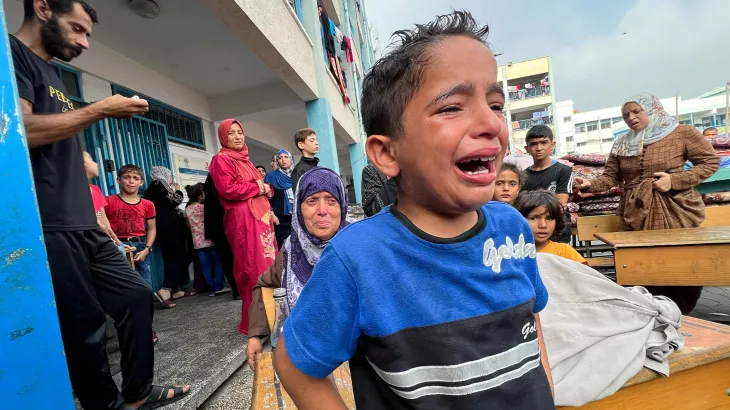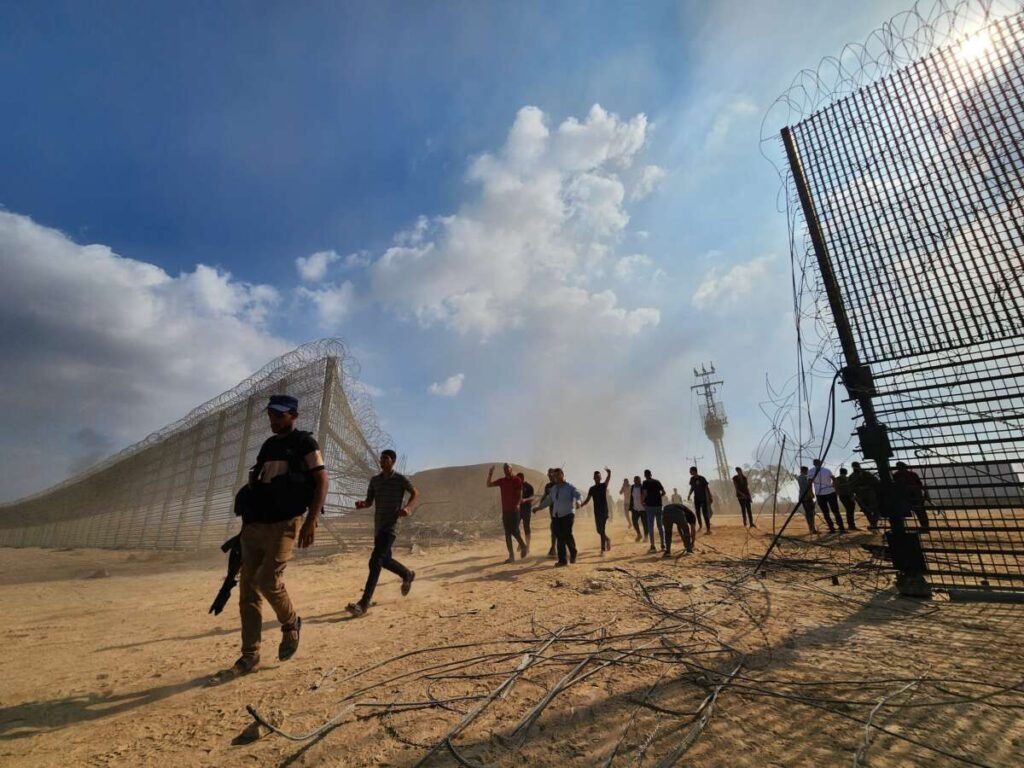
Gaza Herald_ On December 25, 2025, Hamas released what it described as its second official account of the “Al-Aqsa Flood” operation, the unprecedented resistance assault launched on October 7, 2023, against Israeli military sites and settlements surrounding the Gaza Strip. The publication comes after two years of relentless Israeli war on Gaza, marked by mass destruction, widespread civilian casualties, and ongoing displacement.
The narrative was issued in a document titled “Al-Aqsa Flood: Two Years of Steadfastness and the Will of Liberation,” released simultaneously in Arabic and English. According to Hamas, the document aims to provide a comprehensive political, military, and historical reading of the operation and its aftermath, situating it within the broader context of decades of occupation, siege, and denial of Palestinian rights.
In an accompanying statement, the movement said the publication seeks to counter what it described as systematic distortion of Palestinian resistance and to reclaim the narrative after two years of war and information warfare.
“More Than a Military Operation”
Hamas framed the Al-Aqsa Flood not merely as a military action, but as a historic rupture that reshaped Palestinian collective consciousness. The movement described the operation as a moment in which a “free and unmanipulated awareness” emerged, breaking through years of political stagnation and international indifference.
After two years of what it termed genocide and collective punishment in Gaza, Hamas said the meaning of the battle has become unmistakable: the Palestinian people cannot be erased, resistance cannot be crushed, and collective memory cannot be erased through force.
The statement emphasized that despite unprecedented destruction, mass killings, and attempts to forcibly displace Gaza’s population, Palestinian steadfastness has endured, reaffirming what Hamas called the failure the Israeli project to impose submission through violence.
Statehood, Refugees, and Historical Rights
The document reiterates Hamas’s long-standing political position that the establishment of an independent Palestinian state with Jerusalem as its capital, alongside the right of return for Palestinian refugees, is not a future aspiration but a legitimate and internationally recognized right.
According to the narrative, these demands are grounded in international law and historical justice, and are the result of a people who have endured repeated attempts at annihilation without surrendering their national identity or political will.
Hamas framed these rights as non-negotiable, asserting that they are imposed not by armed force alone, but by the persistence of a people who refused to disappear despite systematic violence and displacement.
Reviewing Two Years of War and Resistance
A significant portion of the document is dedicated to reviewing the course of the war in Gaza since October 2023. It outlines the motivations behind the Al-Aqsa Flood operation, presenting it as a response to ongoing occupation, attacks on Al-Aqsa Mosque, the siege of Gaza, and the broader system of apartheid imposed on Palestinians.
The narrative documents the scale of destruction inflicted on Gaza, including the devastation of residential neighborhoods, infrastructure, hospitals, and refugee camps. It also acknowledges the immense human losses while emphasizing what it describes as the extraordinary resilience of Gaza’s population in the face of forced displacement, starvation, and repeated military assaults.
Hamas portrays the Palestinian people not as passive victims, but as central actors whose steadfastness shaped the trajectory of the confrontation.
Political Engagement and Strategic Outcomes
Beyond the battlefield, the publication highlights Hamas’s political engagement throughout the war. It references the movement’s participation in mediation efforts, international initiatives, and prisoner exchange agreements, portraying these actions as part of a broader strategy to halt the assault on Gaza while preserving Palestinian political agency.
The document also claims several strategic outcomes from the Al-Aqsa Flood operation, including the return of the Palestinian question to the center of global political debate. Hamas argues that the war exposed Israel to unprecedented legal, moral, and political scrutiny, contributing to what it describes as growing international isolation.
According to the narrative, legal proceedings, public protests, and shifting global discourse reflect cracks in Israel’s longstanding impunity.
A Framework for the Next Phase
The document concludes by asserting the failure of all attempts to liquidate the Palestinian cause. Hamas reaffirms the Palestinian right to self-determination and rejects any form of external guardianship, imposed administration, or political engineering designed to strip Palestinians of control over their national affairs.
Hamas presents the narrative not only as a historical record of the past two years, but as a political framework for the coming phase of struggle. It emphasizes continuity rather than closure, portraying Al-Aqsa Flood as an ongoing process rather than a single event.
For the movement, the publication is intended to cement a narrative of endurance, resistance, and historical legitimacy, one that challenges dominant international portrayals and asserts the Palestinian right to define its own story.