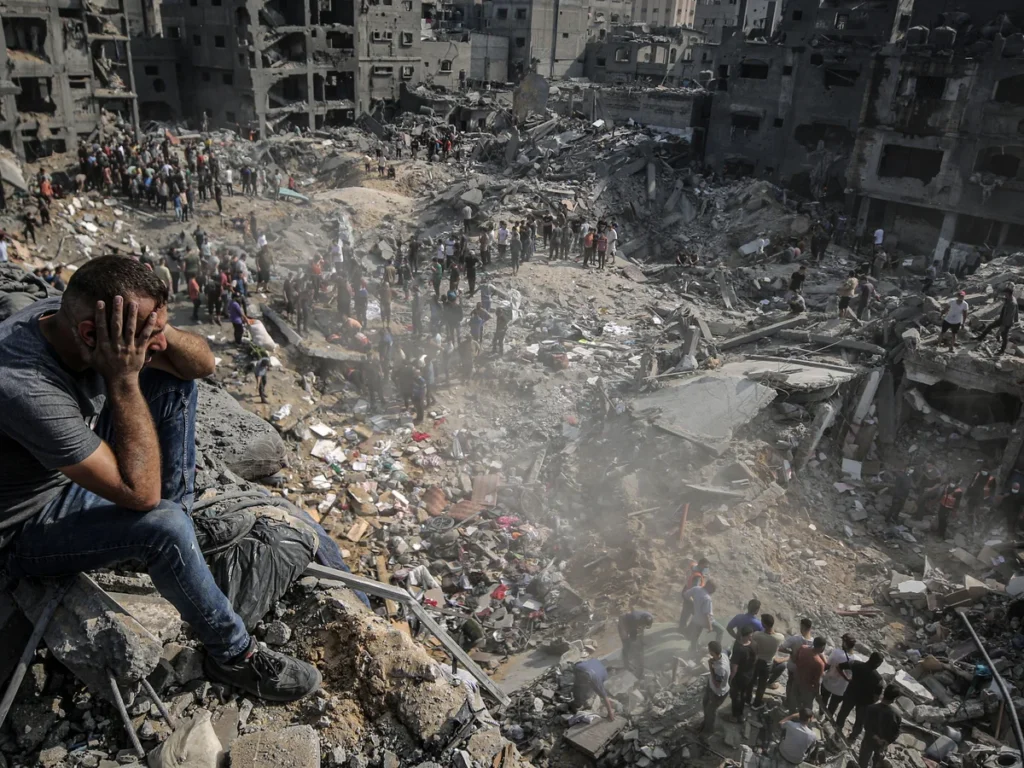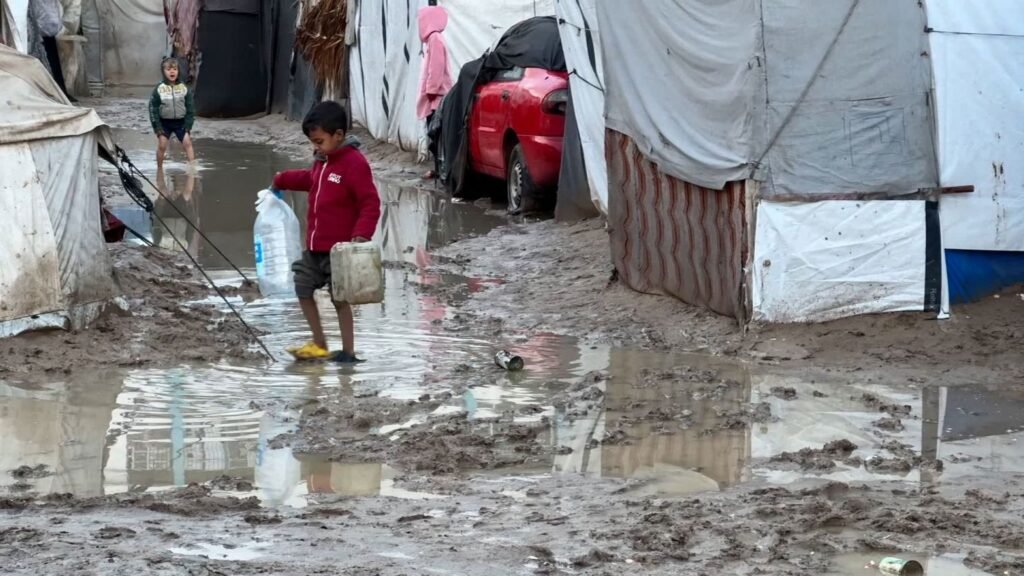
Gaza Herald_ As winter storms sweep across Gaza, hundreds of thousands of Palestinians are trapped between the ruins of bombed homes and fragile tents that offer little protection from rain, wind, or freezing temperatures. What should be a seasonal challenge has become a life-threatening crisis. After two years of Israel’s genocidal assault, more than 70 percent of Gaza’s built environment has been destroyed, transforming winter into another instrument of collective punishment.
With the arrival of severe weather systems, winter is no longer a natural occurrence; it is a direct danger to survival. Families are left exposed amid rubble and displacement, facing conditions that deepen an already catastrophic humanitarian reality.
Homes on the Brink of Collapse
The Euro-Mediterranean Human Rights Monitor has warned that Gaza is on the verge of an escalating humanitarian disaster. Hundreds of partially destroyed homes, structurally weakened by relentless Israeli airstrikes, now risk collapsing due to heavy rain and strong winds.
According to the Monitor, residents are being forced into impossible choices: remain inside buildings that could collapse at any moment or flee to overcrowded, unsafe tents that fail to meet even the most basic standards of protection and dignity. In both cases, civilians, especially children and the elderly, are placed in constant danger.
Shelter Denied by Design
In Tel al-Hawa, west of Gaza City, 52-year-old Mohammed al-Beiram stands beside his damaged home, its walls cracked and roof unstable. “Every time it rains, we fear the house will fall on us,” he says. “We have no alternative. The tents don’t protect us from the cold or the rain. Winter has become another enemy.”
Nearby in Deir al-Balah, Mayada Abdo, a mother of five living in a tent near a school sheltering displaced families, describes nights without sleep. “The cold is unbearable,” she explains. “Rain leaks in from everywhere. The children are constantly sick. What we thought was temporary shelter has become a prison with no safety.”
The Euro-Mediterranean Monitor argues that these conditions are not accidental. It says Israel is deliberately using siege tactics and the denial of shelter to engineer deadly living conditions, stripping Palestinians of their right to safe housing and pushing them toward long-term forced displacement.
A Violation of International Law
Human rights organizations stress that basic humanitarian needs must never be subject to political bargaining or security pretexts. The Monitor has called on the international community to apply immediate and meaningful pressure on Israel to allow the entry of temporary housing, shelter materials, and reconstruction supplies, especially as winter conditions worsen.
It also urged the UN Special Rapporteur on the right to adequate housing to issue an urgent appeal, warning that blocking shelter supplies during harsh winter conditions may amount to willful killing, a grave violation of international humanitarian law.
Weather Worsens an Already Deadly Crisis
UNRWA Media Director Inas Hamdan has warned that conditions in Gaza grow more dangerous with every passing storm. Thousands of families, she said, are living without real protection, either in unsafe tents or inside damaged buildings that could collapse without warning.
She emphasized that preventing the entry of shelter materials significantly worsens the crisis, placing civilians, particularly children and the elderly, at extreme risk. “An urgent response is no longer optional,” Hamdan stated. “It is essential to saving lives.”
Death Beneath the Rubble
Gaza’s Ministry of Interior and National Security reported that since the ceasefire took effect on October 10, at least 18 people have been killed due to the collapse of 46 buildings damaged by Israeli bombardment.
The latest deadly incident occurred in Gaza City’s Sheikh Radwan neighborhood, where a building collapse killed four civilians. In another case, a partially collapsed building trapped residents overnight; five were rescued, while the bodies of two young girls were later recovered from the rubble.
Officials warned that the risk of further collapses is increasing as Israel continues to block reconstruction and refuse the entry of mobile homes, even as winter intensifies.
Winter as a Witness to Ongoing Erasure
As the siege tightens and temperatures drop, winter in Gaza stands as yet another witness to suffering that goes far beyond nature’s cruelty. The cold has become part of a broader system designed to exhaust, displace, and erase a population already devastated by war and homelessness.
Nearly 90 percent of Gaza’s civilian infrastructure has been destroyed since October 2023. Around 71,000 Palestinians have been killed, more than 171,000 wounded, and the United Nations estimates reconstruction costs at approximately $70 billion. Until accountability is enforced and humanitarian access restored, winter will continue to claim lives, quietly, relentlessly, and unjustly.