Gaza Herald_ Palestinian legal scholars, human rights organizations, and prisoner advocacy groups are warning that Israel’s proposed death penalty legislation represents a fundamental break with international law and an alarming escalation in the treatment of Palestinian detainees. They argue that the bill is not merely a punitive legal measure but part of a broader campaign to institutionalize lethal punishment against an occupied population and to criminalize Palestinian resistance in all its forms.
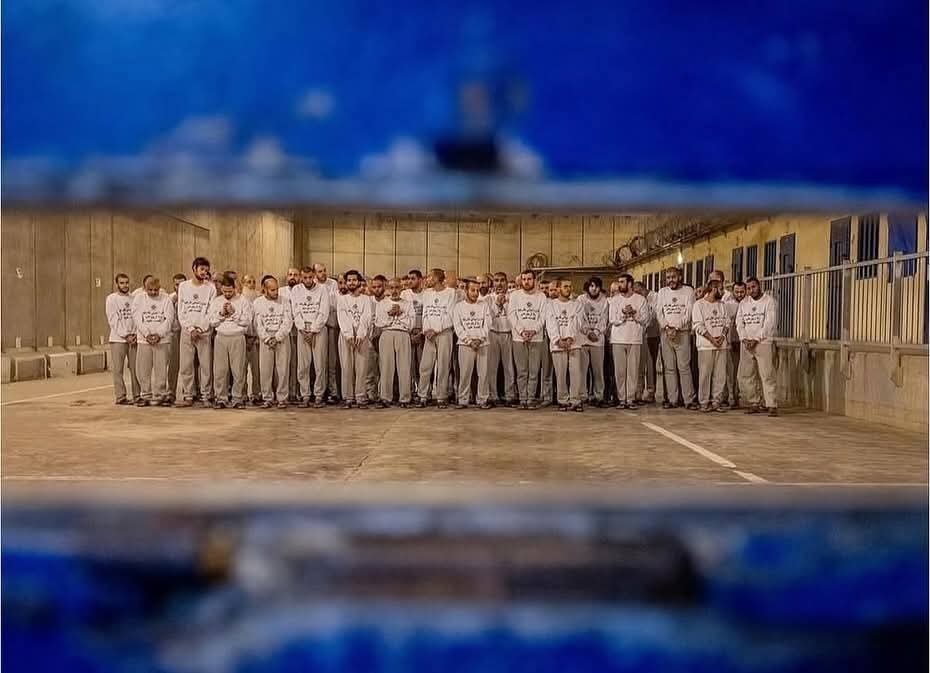
These warnings come as conditions inside Israeli prisons continue to deteriorate sharply. Palestinian detainees have long endured systematic abuse, torture, prolonged solitary confinement, medical neglect, and collective punishment. In the past two years alone, rights groups have documented the deaths of at least 94 Palestinian prisoners in Israeli custody. Video evidence showing sexual assault and rape of detainees, including incidents captured on camera, has further exposed the extent of violence inside the prison system, reinforcing claims that abuse is not incidental but structural.
At the forefront of the push for harsher punishment is Israel’s far-right national security minister, Itamar Ben-Gvir, who oversees the prison system. Ben-Gvir has openly celebrated the worsening conditions faced by Palestinian prisoners, presenting their suffering as a political achievement. In late October, he was filmed standing over Palestinian detainees forced to lie face-down on the floor while publicly demanding the introduction of the death penalty for those he labelled Palestinian “terrorists.” For many Palestinians, the scene symbolized a deliberate display of humiliation and power rather than any genuine concern for justice or security.
A Law Designed to Target Palestinians
In early November, the Israeli Knesset passed the first reading of a bill that would allow courts to impose the death penalty on individuals convicted of killing Israelis if the act is deemed to have been motivated by “racist,” “nationalistic,” or hate-based intent, or carried out to harm the State of Israel or its people. Although the language appears broad, Palestinian analysts stress that the bill is clearly designed to apply almost exclusively to Palestinians.
This targeting is especially stark given the wider context. Israeli settlers and soldiers routinely carry out lethal attacks against Palestinians in the occupied West Bank, while Israeli military operations in Gaza have killed tens of thousands of civilians. Yet such acts rarely result in serious accountability. By contrast, Palestinians accused of violence against Israelis face military courts, near-automatic convictions, and, under the proposed law, potential execution.
For Palestinians, the bill is not perceived as an isolated legal development, but as a declaration of intent to formalise a system of state-sanctioned killing.
“This law is not about justice,” said Farid al-Atrash, director of the Independent Commission for Human Rights in the occupied West Bank. “It is designed to execute prisoners simply for their struggle for freedom and their right to self-determination as an occupied people.”
Erasing Judicial Safeguards
Legal experts warn that the draft legislation systematically dismantles existing safeguards for Palestinian defendants. Under the proposal, both Israeli civil courts and military courts would be granted expanded authority to impose mandatory death sentences in qualifying cases. Crucially, the law would eliminate the power of the president or government to issue pardons to those sentenced to death.
Even more alarming, the bill removes the requirement for judicial unanimity, meaning a death sentence could be imposed without all judges agreeing on the verdict. Palestinian lawyers say this provision alone represents a dramatic erosion of due process, especially in military courts where Palestinians already face overwhelming structural bias.
“This framework strips Palestinians of every remaining legal protection,” al-Atrash said, pointing to the sharp contrast between the harsh treatment of Palestinian defendants and the frequent acquittal or lenient sentencing of Israelis accused of killing Palestinians.
Violating International Humanitarian Law
Human rights advocates argue that the proposed law directly violates international humanitarian law, which recognises Palestinians as a protected population living under occupation. Under the Geneva Conventions, the execution of prisoners of war or protected persons is prohibited, and occupying powers are barred from imposing collective or discriminatory punishment.
“The Knesset, dominated by the far right, is working to transform killing into formal legislation,” said Hassan Breijieh, head of the Bethlehem office of the Wall and Settlements Resistance Commission. “This law seeks to erase international recognition of the Palestinian fighter and reframe him as a criminal with no political or legal rights.”
Amjad al-Najjar, of the Palestinian Prisoners’ Club, described the bill as both racist and illegal in nature.
“It is a double crime,” he said. “It is racist because it targets Palestinians specifically, and it is illegal because it violates international law that protects occupied peoples.”
From Extrajudicial Deaths to Legalised Execution
Former judge and Palestinian lawyer Saeed al-Awiwi framed the proposed law as the culmination of a long-running process aimed at dismantling Palestinian legal rights. He noted that even before the bill, access to detainees by lawyers had been increasingly restricted, leaving many prisoners without effective legal representation.
Al-Awiwi pointed out that numerous Palestinians have already died in Israeli prisons without trial, sentencing, or due process, often as a result of torture, medical neglect, or prolonged detention.
“If the death penalty becomes law,” he warned, “these practices will not only continue, they will gain official legal cover. Execution will simply become the final step in a system that already kills.”
Criminalizing Resistance, Prosecuting Freedom
Supporters of the bill within Israel argue that it is necessary for deterrence. Israel’s National Security Committee has claimed the law is intended to “cut off terrorism at its root” by imposing the harshest possible punishment.
Human rights organizations strongly reject this framing. Amnesty International and other groups have condemned the bill as institutionalized discrimination that collectively targets Palestinians and treats resistance to occupation as an inherently criminal act.
Legal experts say the proposed law reflects a broader shift in Israeli policy, from a system where Palestinian deaths in custody occurred as extrajudicial consequences of occupation to one in which death is explicitly codified as a lawful sentence.
“When an occupying power criminalizes resistance, it is not only prosecuting individuals,” Breijieh said. “It is prosecuting the idea of freedom itself.”
For Palestinians, the death penalty bill is therefore seen as a defining moment. It raises fundamental questions about whether international humanitarian law still applies when the occupied population is Palestinian or whether those legal norms are being deliberately dismantled.
“This law represents the collapse of the international legal order,” al-Najjar said. “An occupation has no legal, moral, or political authority to impose death sentences on the people it occupies.