Gaza Herald _Heavy rains and a deepening storm system are intensifying the humanitarian crisis for hundreds of thousands of displaced Palestinians in the Gaza Strip, where fragile tents and makeshift shelters offer little protection against severe weather.
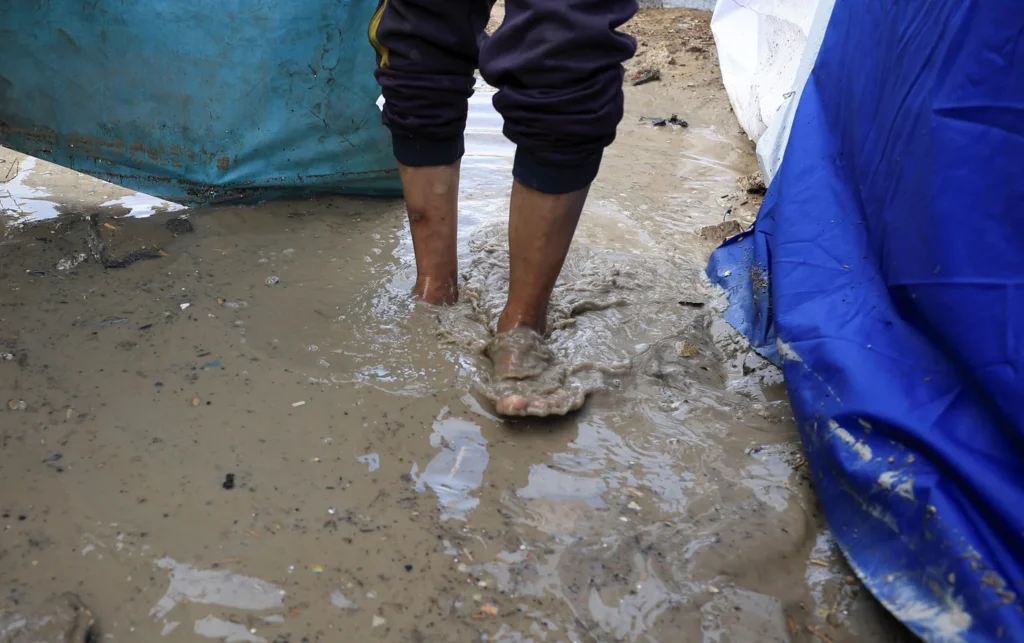
The first phase of the storm began before dawn on Wednesday, flooding thousands of tents across several areas of the besieged territory and compounding the suffering of civilians already enduring more than two years of Israel’s war on the enclave.
The Palestinian Meteorological Department announced the end of the first phase of the storm, while warning that the second phase, forecasted to begin Thursday afternoon and last through Friday evening, will bring heavier rainfall, stronger winds and wider geographic impact. Meteorological maps indicate that Gaza may be one of the most severely affected regions as the storm reaches its peak, raising alarms among emergency workers and humanitarian agencies.
Mahmoud Basal, spokesperson for the Palestinian Civil Defense, warned of an imminent humanitarian disaster due to the severe weather conditions. Much of Gaza’s infrastructure, including wastewater networks, has been destroyed or heavily damaged, allowing floodwaters to mix with raw sewage and increasing the risk of spreading diseases such as dysentery and cholera. With municipal services largely suspended, massive piles of solid waste, including medical waste and animal remains, are scattered across the territory. Heavy rainfall could carry this debris into displacement zones where families are sheltering in unprotected conditions.
The storm also threatens the safety of groundwater resources that many residents rely on, while areas lacking functioning stormwater drainage or pumping stations may experience stagnant surface flooding for days. Aid entering Gaza continues to fall far short of meeting urgent needs, Basal said, stressing the necessity for immediate international intervention.
Earlier data from the Gaza Government Media Office stated that the Strip requires an estimated 300,000 tents and prefabricated housing units to meet the basic shelter needs of displaced Palestinians after widespread destruction over the past two years. According to the UN Office for the Coordination of Humanitarian Affairs, nearly 850,000 people sheltering in 761 displacement sites face the highest risk of flooding during this storm cycle.
The Palestinian Meteorological Department expects three days of cold thunderstorms beginning Wednesday, accompanied by temperatures dropping across the territory, heavy rainfall, occasional icy hail and wind gusts reaching nearly 50 kilometers per hour. Previous storms have swept away tents, contaminated sites with sewage and forced families to relocate from already temporary shelters.
Scenes from areas like Abu Marhil Camp in the Zeitoun neighborhood show entire rows of tents submerged in floodwater as families struggle to salvage their belongings. With the most intense phase of the storm still ahead, humanitarian officials warn that Gaza’s displaced population faces a potentially catastrophic escalation in already dire living conditions.