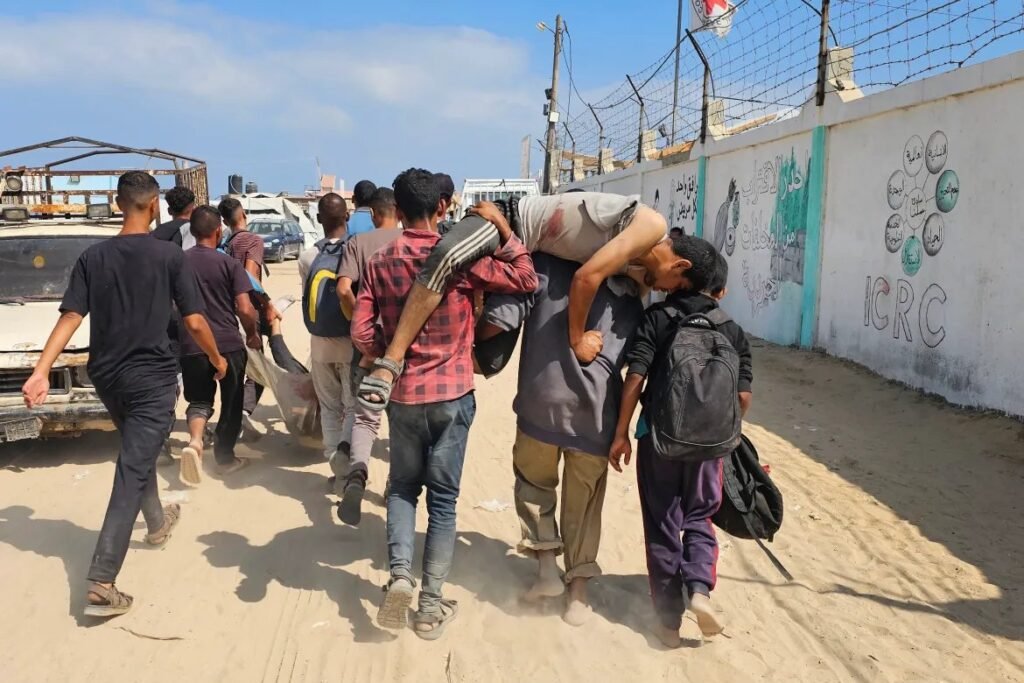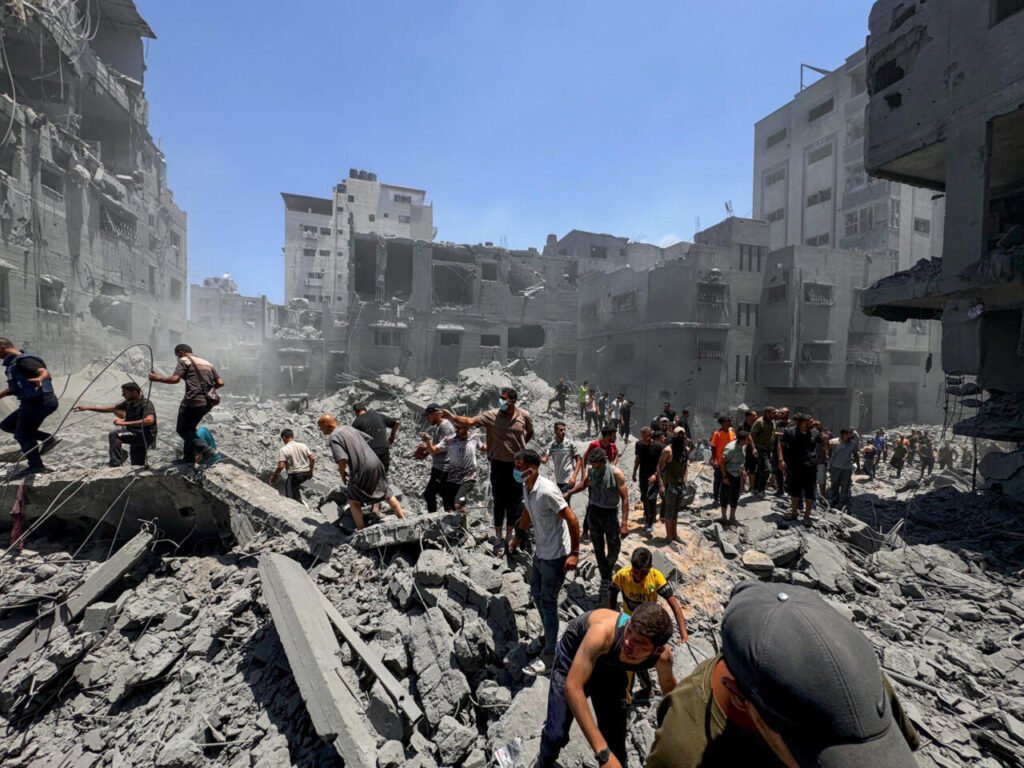
Gaza Herald — The ceasefire declared on 10 October 2025 was supposed to halt Israel’s genocidal assault on Gaza.
Yet, two months later, Israel has breached the agreement more than 500 times, killing at least 356 Palestinians and pushing Gaza’s overall death toll to over 70,000.
Israeli Prime Minister Benjamin Netanyahu has openly dismissed the idea of a true cessation of hostilities, insisting that the war “has not ended”.
Analysts note that while the pace of killing has slowed, Israel’s campaign against Gaza has by no means stopped.
“Genocide isn’t only about large-scale killing,” explained Muhammad Shehada, visiting fellow at the European Council on Foreign Relations, in remarks to Al Jazeera.
“It is also about destroying the ability of a people to continue existing as a group. That is being carried out through the obliteration of infrastructure, the killing, the ethnic cleansing, and the starvation.”
A ceasefire masking ongoing violence
Commentators argue that instead of providing relief to Palestinians, the ceasefire effectively gave the international community political cover to disengage from Israel’s continued crimes.
The US-backed agreement was advertised as a pathway to ending Israeli attacks and enabling a flow of desperately needed aid into Gaza, where famine had already been declared.
“Peace has finally returned to the Middle East,” US President Donald Trump proclaimed at a summit in Egypt’s Sharm el-Sheikh.
But the reality is far from peaceful. Israel continued its military operations, failed to allow the agreed-upon humanitarian aid, destroyed more than 1,500 additional buildings, and expanded deeper into Gaza, displacing people even further from what remained of their homes.
“It was political theatre,” Shehada said. “Everyone was exhausted with the genocide and eager to pretend it was over without actually ending it.”
Since the ceasefire began, Gaza has sporadically appeared in the news, only to vanish again.
“The major difference now is the drastic decline in media attention,” Lebanese-Palestinian writer Elia Ayoub told Al Jazeera.
“That was one of the goals of this so-called ceasefire. There’s far less pressure on Israel, and accountability is nowhere in sight.”
‘Israel’s genocide has not ended’
Amnesty International reinforced this conclusion with a legal analysis released last week, describing what it called the “ongoing genocide in the occupied Gaza Strip”.
“The world must not be deceived. Israel’s genocide is not over,” said Amnesty’s secretary-general, Agnes Callamard.
The organisation pointed to the Palestinians killed since the ceasefire took effect, Israel’s continued obstruction of humanitarian and medical relief, and the famine caused by Israel’s blockade and siege, conditions that have increased disease and death.
“There is no evidence that Israel is taking any meaningful steps to reverse the lethal effects of its crimes,” Callamard added. “Nor is there any indication that its intent has changed.”
Days before the ceasefire, UNRWA chief Philippe Lazzarini reported that 100 Palestinians were dying in Gaza daily , mostly from Israeli military operations or shootings at Gaza Humanitarian Foundation aid lines.
Since the ceasefire, deaths continue from military strikes, albeit at a slower pace, while the foundations of Palestinian life remain shattered.
“Israel is continuing its genocide in Gaza, but at a different rhythm,” defence analyst Hamze Attar told Al Jazeera.
“The destruction of homes continues, the killing continues, and Israel’s entrenchment inside Gaza is part of this genocide. It’s not only about killing, but it’s also about preventing people from returning to their homes and imposing a new reality.”
Ceasefire conditions ignored
One of the deal’s central conditions was the return of captives held in Gaza. Palestinian groups, including Hamas, have returned all surviving captives and all but two of the bodies. One of the remaining bodies may be handed over soon, according to Israeli media.
For months, Israel’s staunchest defenders claimed that the return of captives would bring the war to an end.
But despite Palestinian compliance, Israel has not stopped its pressure on Gaza.
Hamas spokesperson Hazem Qassem reiterated the group’s “commitment to fully completing the exchange process,” despite severe challenges.
On its side, Israel has released 2,000 Palestinian prisoners and returned the bodies of 345 more who died in detention, many showing signs of torture, mutilation, and execution. But its military aggression has continued unabated.
“As soon as a ceasefire is declared, the world stops paying attention,” Shehada said. “And that gives Israel free rein.”
As for the United States, analysts argue that Trump is invested more in the performance of peace than in the realities on the ground. Israel’s constant violations make it almost impossible for mediators to enforce the agreement.
Shehada added that Israel’s long-term objective remains unchanged: the ethnic cleansing of Palestinians from Gaza.
Experts note that Israel has a long history of undermining agreements in Gaza, Lebanon, and Syria. Netanyahu continues to justify the war by claiming the goal is to dismantle Hamas, claims that analysts increasingly dismiss.
“This confirms what we already understood,” Ayoub said.
“The goal is not to defeat Hamas as an armed force. The goal is to make life unsustainable for Palestinians in Gaza in the long run.
It is simply genocide.”