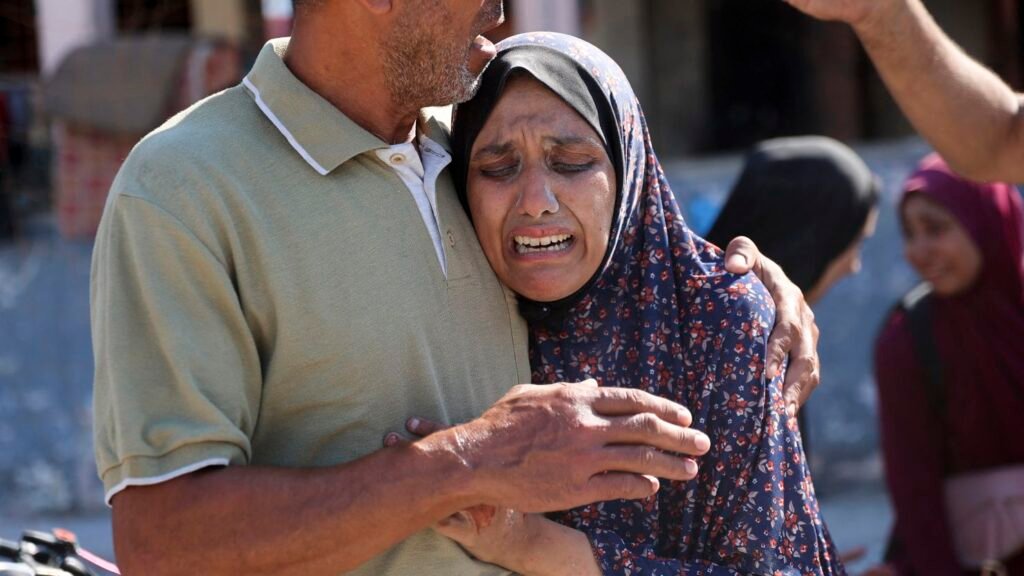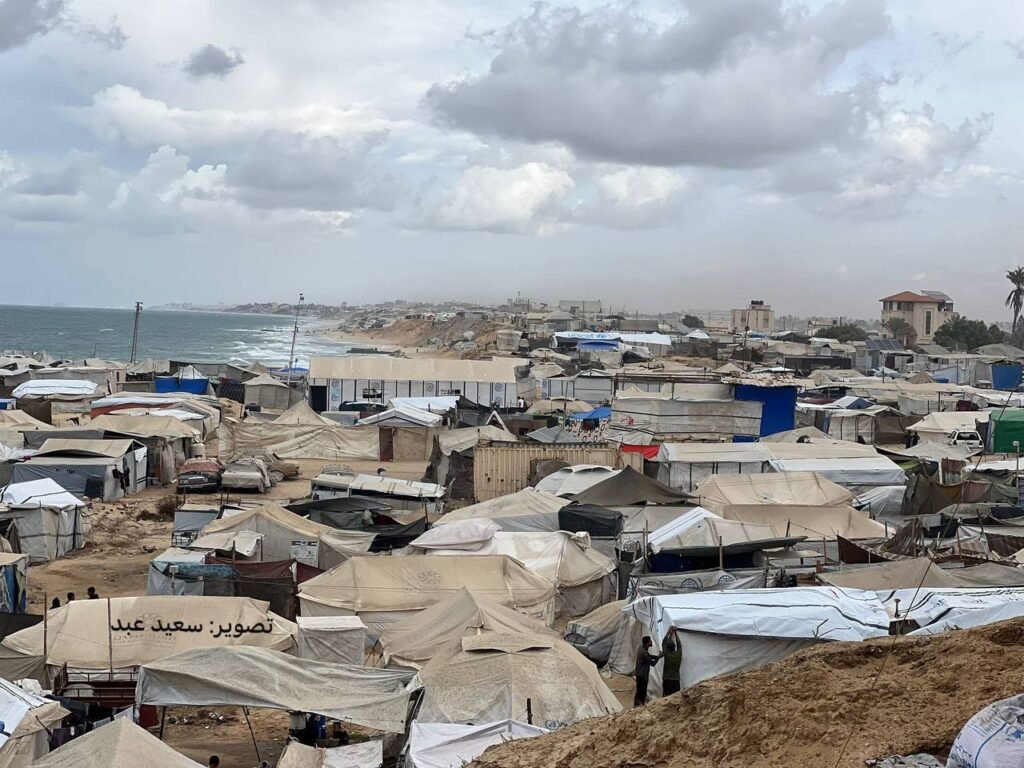
Gaza Herald — As winter descends on the devastated Gaza Strip, hundreds of thousands of displaced Palestinians are facing a new wave of suffering. What was once a season welcomed with joy and hope has now become a looming threat, turning every rainstorm into a battle for survival. With no proper shelters, no infrastructure, and no protection from the cold, families already shattered by war now find themselves confronting a new and relentless humanitarian crisis.
Umm Jihad, a mother of four, helps her husband scoop out the water that flooded their tent in central Gaza after their home in Gaza City’s al-Tuffah neighborhood was destroyed. Her children shiver uncontrollably after being soaked by the rain, their blankets now cold and heavy like blocks of ice rather than sources of warmth. This is only one of thousands of scenes visible across social media platforms or in any alley, street, or camp in Gaza, where winter brings fear instead of comfort after the genocide that left the Strip in unprecedented ruin.
With the first winter storms, the humanitarian tragedy becomes unmistakably clear. Thousands of families find themselves trapped inside fragile tents that can barely withstand wind, let alone stop rainwater. In the bitter cold, these makeshift shelters turn into pools of mud, while damaged homes become drafty boxes offering no protection. Children, women, and the elderly are exposed directly to harsh weather with no proper shelter, heating, or basic infrastructure.
As heavy rain pours and the storm intensifies, the daily suffering of displaced families worsens. With homes and livelihoods lost, they now struggle with the absence of adequate shelter, limited access to health services, and severe shortages of food and clean water. This harsh reality signals the urgent need for rapid humanitarian action to provide safe, dignified living conditions and protect the most vulnerable from Gaza’s brutal winter.
War in Disguise: Torn Tents and Mud
Tents in displacement areas are nothing more than temporary patches of thin fabric, unable to withstand winter rain. There is no infrastructure, no electricity, clean water, or proper sanitation, while families crowd into tight spaces with no privacy or safety. At the first rainfall, tents flood, bedding becomes soaked, and the cold nights turn into a painful struggle. Each heavy downpour raises fears of the tent collapsing or flooding again, turning sleep into a rare luxury.
Families live with constant anxiety as they brace for every shift in the weather. They tighten loose poles with bits of cloth and rope, only to begin a new battle at sunrise to drain water and clean mud. As journalist Mohammed Qaoud wrote, “Winter in Gaza is not just weather, it is another war. It means tents slapped by rain as though the warplanes never left, and families kicked out of the only corner of warmth they managed to create from scraps of nylon and cardboard.”
Humanitarian Alarm
Hamas spokesperson Hazem Qassem warned that Gaza is entering a rapidly escalating disaster as winter storms flood tents and expose displaced families, especially children, women, and the sick, to deadly conditions. He stressed that the ongoing siege and destruction, combined with Israel’s obstruction of reconstruction and aid, extend the genocide by other means.
Humanitarian and UN agencies issued similar alerts. The UN Office for Humanitarian Affairs (OCHA) warned that hundreds of thousands lack proper shelter, blankets, and heating. Essential supplies, including water, shelter materials, and medical items, remain insufficient due to Israel’s refusal to allow most aid shipments into Gaza.
International human rights groups also warned of an imminent disaster, especially as Israel continues to block the entry of tents, caravans, and winter supplies. Doctors Without Borders emergency coordinator Frantz Lof highlighted the severe damage to tents caused by wind and rain, stressing that cold temperatures are deepening the suffering of Gaza’s displaced population. He urged the international community to pressure Israel to allow essential materials into the Strip, stating: “No one can claim they didn’t know winter was coming. Gaza lived a horrific winter last year, and the world cannot allow a repeat.”
Once a season celebrated with joy, winter has now turned into a nightmare for Gaza’s displaced. Families pray for the storms to pass quickly, fearing the cold as much as the bombs that destroyed their homes. With every drop of rain, Gaza’s humanitarian catastrophe deepens, raising the same painful question: How long will this unbearable reality continue?
As Gaza enters another unforgiving winter, the suffering of its displaced families highlights a crisis the world cannot ignore. Without immediate and meaningful international intervention to provide shelter, supplies, and protection, thousands will continue to face conditions no human should endure. Gaza’s winter tragedy is not a natural disaster, it is the direct result of war, blockade, and deliberate deprivation. The question now is whether the global community will act before the cold claims even more lives.