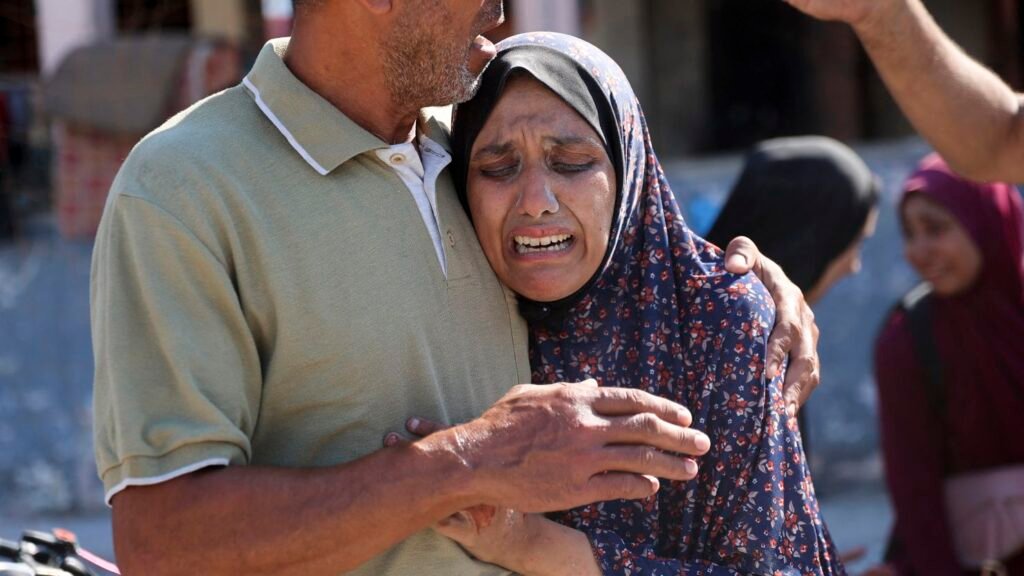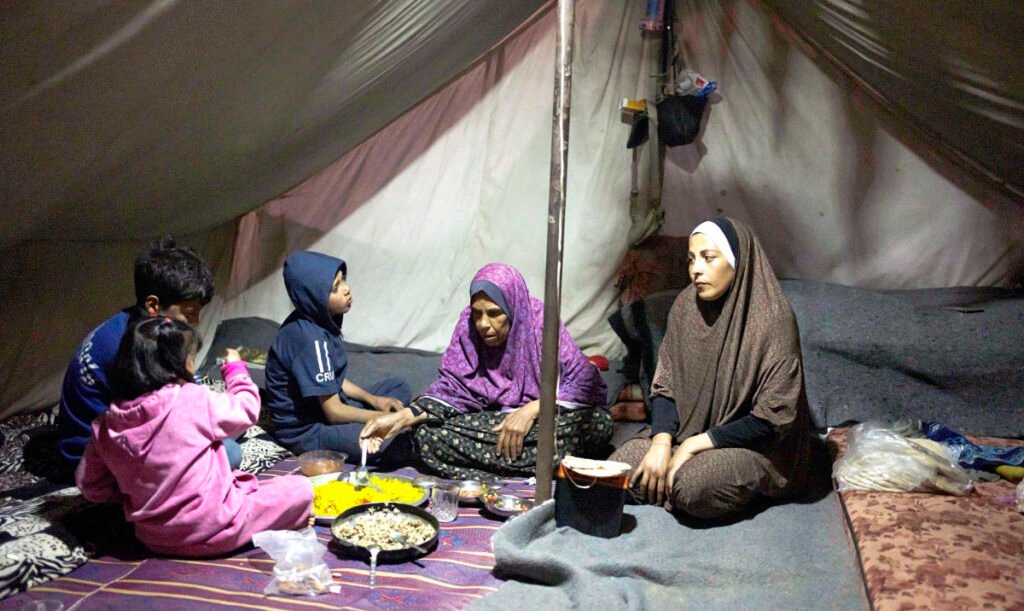
Gaza Herald_ After every downpour, the displacement camp where Hamza al-Mutawwaq and his family live turns into a sea of mud. The rain, which once symbolized renewal and life, has become a curse. Mud clings to shoes, clothes, and tents; puddles turn into small lakes that trap families inside their makeshift shelters. Children slip as they try to play between the sagging tents, and parents struggle to keep their few belongings dry.
“It’s as if people are sleeping on a flowing river of rainwater,” said al-Mutawwaq, a 50-year-old father of 13, speaking from the Nuseirat refugee camp in central Gaza. “Every drop that falls from the sky feels like another punishment we have to endure.”
After two years of relentless Israeli bombardment that has flattened most of Gaza, even rain now brings dread. Nearly 2.2 million Palestinians, almost the entire population, have been displaced, and more than 80 percent of the Strip’s buildings have been destroyed since October 2023. For many, winter is no longer a season; it is a test of survival.
Al-Mutawwaq, who once worked as a carpenter, has been living in the camp for two months. When the ceasefire was announced last month, he had hoped it would bring temporary shelters, something to shield his family until they could rebuild their home. But Israel’s continued violations of the truce have prevented the entry of tents and mobile homes, leaving hundreds of thousands to face the cold in ragged, worn-out shelters.
“The whole world looks forward to winter, to warmth and comfort,” he said. “But for us, it’s a nightmare that comes with the rain. These tents won’t protect us from the cold or the water that seeps through every night.”
With no relief arriving, many displaced Palestinians have turned to the black market in a desperate attempt to find shelter materials. Prices for tarpaulins, blankets, and even second-hand tents have skyrocketed beyond the reach of most. “People here have lost everything,” al-Mutawwaq said. “No work, no income, no savings. They sell their last possessions just to buy something to cover their children.”
‘Unacceptable Neglect’
Under the ceasefire agreement, Israel was required to allow hundreds of thousands of tents and mobile shelters into Gaza. Yet, a month later, almost nothing has entered. According to Gaza’s Government Media Office, Israel permits an average of only 155 trucks a day—carrying commercial goods, fuel, and humanitarian aid, far short of the 600 trucks stipulated in the truce.
Amjad al-Shawa, head of the Palestinian NGOs Network, described the situation as “catastrophic.” He said Israel’s restrictions have left millions exposed to hunger, cold, and disease. “People need shelter, blankets, and warm clothes. These are basic human rights, not luxuries,” he said. “To deny them even this is to condemn them to die slowly, under rain and rubble.”
He called on the international community to act urgently: “It’s unacceptable to reward people’s resilience with silence and neglect. Gaza’s civilians have endured two years of one of the most horrific wars in modern times. They deserve protection, not abandonment.”
Children and Mothers at Risk
Ismail al-Thawabta, spokesperson for Gaza’s Government Media Office, warned that nearly half a million children and around 100,000 pregnant women face life-threatening conditions this winter due to a lack of heating and shelter. “The war has exhausted everyone’s ability to cope,” he said. “We fear floods in the camps and low-lying areas because the infrastructure is destroyed. Last winter, 17 people, most of them children, died from cold and exposure. This year could be worse.”
For 30-year-old Amal Mehanna, a widow and mother of three, winter brings back haunting memories. Her home in the al-Karama neighborhood of northwest Gaza City was destroyed during Israeli airstrikes. Since then, she and her children have moved from one tent to another, trying to stay alive.
“I can’t remember how many times we’ve moved,” she said softly. “Each time we build a small space, it floods or collapses. It’s a war of survival every single day.”
Last winter, her daughter fell gravely ill from the cold. “We had only one blanket,” Mehanna recalled. “The children slept close to me, shivering through the night. I told them stories to distract them from the cold, but even words froze in my mouth.”
Now that the clouds have returned, Mehanna fears what lies ahead. “Our tent is nothing but a thin piece of fabric. It leaks when it rains, it flaps when the wind blows. Winter is coming, and we have nothing, no blankets, no warm clothes, not even shoes that can withstand the mud.”
For Gaza’s displaced, survival this winter will not depend on courage or endurance, but on whether the world chooses to look away or finally act.