Gaza Herald_ The world’s gaze has turned away from Gaza. The headlines have faded, and so has the outrage. After more than two years of Israel’s campaign of annihilation, a so-called ceasefire was declared, sold to the world as a step toward “peace.” But for Palestinians, the bombs never truly stopped, and neither did the lies that enabled them.
On 13 October, in the Egyptian resort of Sharm el-Sheik, US President Donald Trump presided over what he called a “historic day.” Surrounded by smiling officials and Arab leaders, he announced that “peace in the Middle East” had finally been achieved. Cameras captured the handshakes, the speeches, and the glittering illusion of diplomacy. The world was told the war was over.
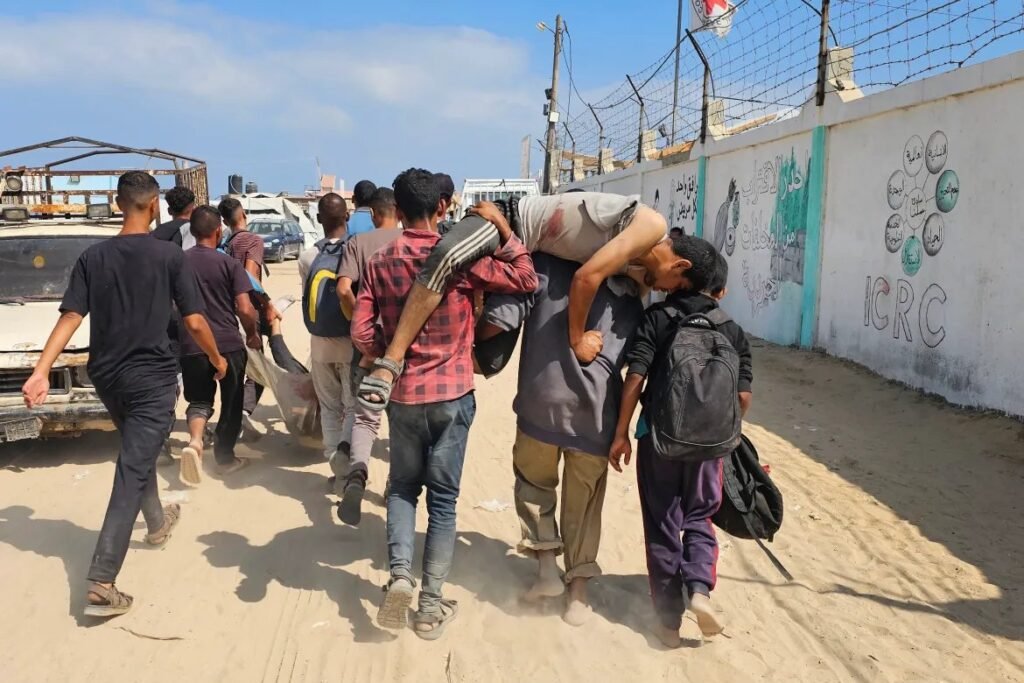
Yet only days later, the illusion collapsed. Israeli Prime Minister Benjamin Netanyahu authorized a new wave of airstrikes on Gaza, killing more than 100 Palestinians, including 47 children. The destruction mirrored the horrors of the previous two years: flattened homes, bleeding children, and families crushed beneath rubble. Still, much of the British media did not call it what it was, a continuation of genocide, but instead presented it as a “test” of the ceasefire.
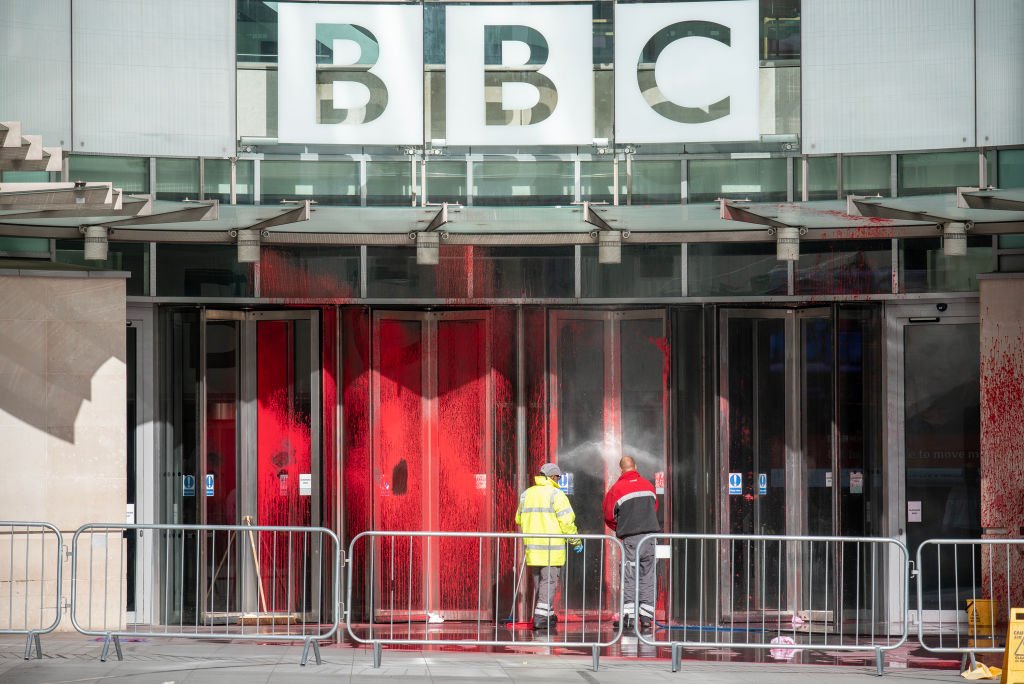
Across the UK press, from the BBC to The Times and The Guardian, the coverage carried the same tone of detachment. The BBC’s live feed described Israel’s air raids as a “test of the ceasefire.” Sky News and the Financial Times chose to highlight the “fragility” of the truce, as if the issue were diplomatic instability rather than deliberate mass killing. Even LBC adopted the same language, echoing the state narrative almost word for word.
This kind of framing does more than distort reality; it sustains Israel’s impunity. It recycles the myth that Israel acts only in response to threats, rather than as an occupying power enforcing apartheid through force and starvation. The victims are turned into statistics, the perpetrators into negotiators. The very concept of genocide is softened, hidden behind euphemisms like “renewed tensions” and “security operations.”
For two years, Israel’s campaign in Gaza systematically erased entire neighborhoods, destroyed hospitals, targeted journalists and aid workers, and starved a population already trapped under siege. The so-called ceasefire did not end that violence; it only rebranded it. The bombings continued, though less televised; the blockade tightened, though less discussed; and the dispossession of Palestinians expanded under the cover of diplomatic theater.
While Gaza bled, much of the Western press shifted its focus elsewhere, to elections, to markets, to celebrity scandals. For them, Gaza became yesterday’s story. But for Palestinians, there has been no “after.” The trauma persists in the ruins, in the families searching for loved ones, in the endless funerals that have become part of daily life.
British media institutions, which pride themselves on integrity and truth, have repeatedly failed to name Israel’s crimes. Their headlines speak of “clashes,” “flare-ups,” and “mutual violence”, phrases that erase the asymmetry of power between a nuclear-armed occupier and a besieged civilian population. This linguistic deception transforms genocide into geopolitics and occupation into “defense.”
Every misleading headline carries a cost. It shapes how the public perceives justice and whose lives are deemed worthy of empathy. When newspapers portray Israel’s bombings as “retaliation,” they normalize collective punishment. When broadcasters speak of “both sides,” they obscure the fundamental reality: there is one occupier, and one occupied.
The silence, or worse, the moral neutrality, of the UK media has become an extension of policy. It aligns with a government that continues to arm Israel, echo its talking points, and block international accountability. The media’s failure to confront these crimes directly allows genocide to continue unchallenged under the guise of “stability.”
As new bombs fall on Gaza under the banner of a ceasefire, one truth becomes impossible to deny: Israel’s war never ended. What has changed is not the reality on the ground, but the willingness of Western institutions to look away. The genocide has been buried beneath the language of diplomacy, while those who report it honestly are smeared, silenced, or ignored.
For Palestinians, the so-called “peace in the Middle East” means only the continuation of suffering under a quieter name. The rubble still smokes, the graves open, and the world’s indifference still burns.
The war did not end in Gaza; it was simply rebranded. And much of the British press became its willing publicist.