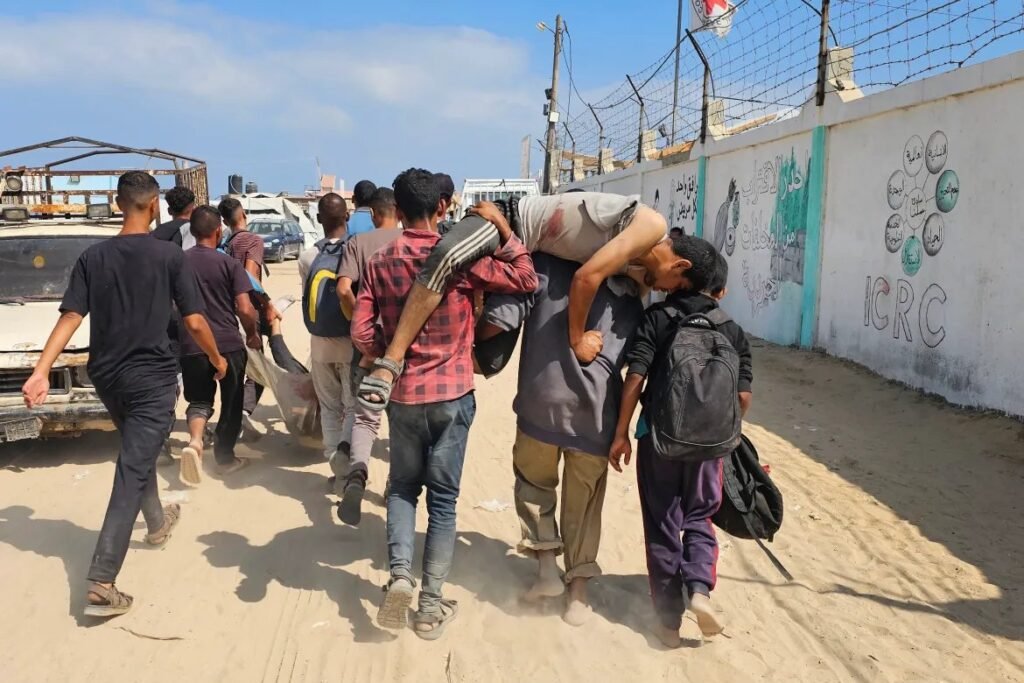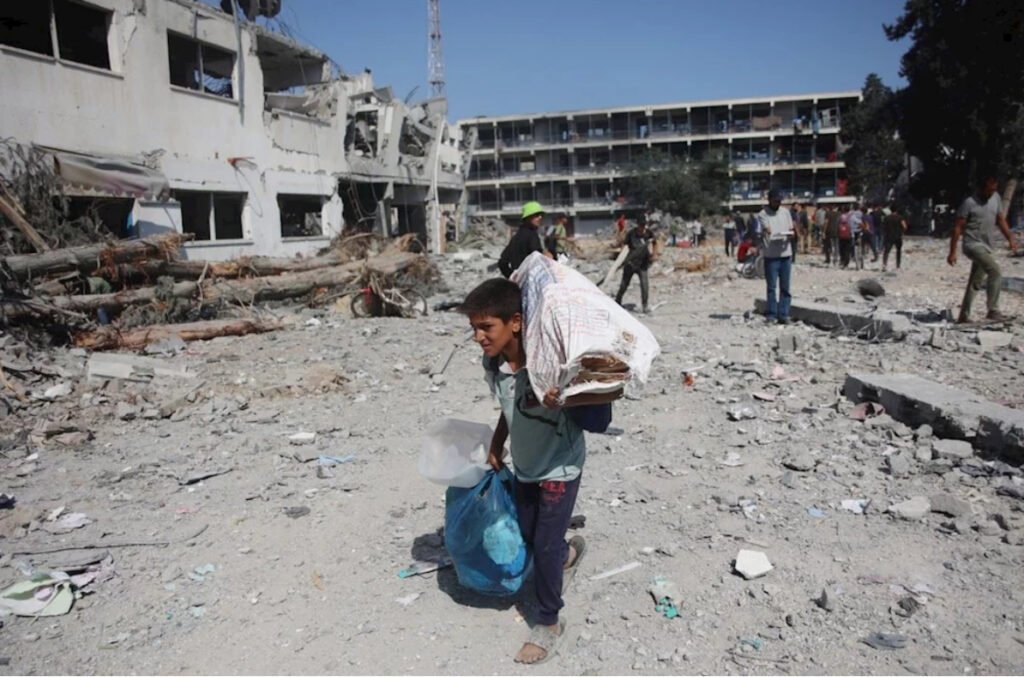
Gaza Herald _ Despite an active ceasefire deal that was meant to offer Gaza a rare moment of relief, Israeli forces resumed attacks across multiple areas of the Strip on Friday, plunging residents back into fear and uncertainty. The day’s events underscored what Palestinians describe as a unilateral unraveling of the fragile truce and a continuation of the pattern that has defined the past two years: Israel agreeing to pauses, then breaking them within hours.
Renewed Attacks and Civilian Casualties
Israeli forces killed three Palestinians in separate incidents across Gaza, including one person who succumbed to wounds from a previous air raid. The assaults came as Israeli naval vessels opened heavy gunfire off the coast of Gaza City, shattering any sense of calm that the ceasefire was supposed to bring.
Further attacks struck the Shuja’iyya and Tuffah neighborhoods in eastern Gaza City, where residential buildings were reportedly demolished under intense artillery fire. Residents said the bombardment felt indistinguishable from the early days of the war, making the so-called ceasefire appear meaningless on the ground.
Israeli Air and Ground Fire in the South
In southern Gaza, heavy artillery and automatic gunfire were reported east of Khan Younis. Residents described Israeli helicopters circling overhead since the previous night, another clear violation of the truce. The sustained attacks have continued to spread panic among communities already exhausted from displacement, loss, and two years of destruction.
Restricted Humanitarian Aid Despite Agreement
Humanitarian access also remained severely limited. Only a few food aid trucks entered Gaza through the Kissufim crossing, despite Israel’s agreement to ease restrictions during the ceasefire. Local monitors say the flow of aid remains “slow, tightly controlled, and far below what is needed,” as Israel continues imposing a strangling blockade even while publicly claiming to facilitate relief efforts.
In northern Gaza, a Palestinian man was shot and killed by Israeli occupation forces in Jabalia. Medical staff at Al-Shifa Hospital confirmed his death, marking yet another casualty in a truce that Palestinians argue exists “only on paper.”
Today’s string of violations has reinforced what many Palestinians already fear: that the ceasefire is neither respected nor intended to last. As long as Israeli forces continue to strike populated areas, restrict humanitarian aid, and carry out lethal operations across the Strip, the promise of calm will remain out of reach. For Gaza’s civilians, already displaced, hungry, and traumatized, the ceasefire feels less like a genuine pause in violence and more like a temporary illusion shattered repeatedly by Israeli fire.