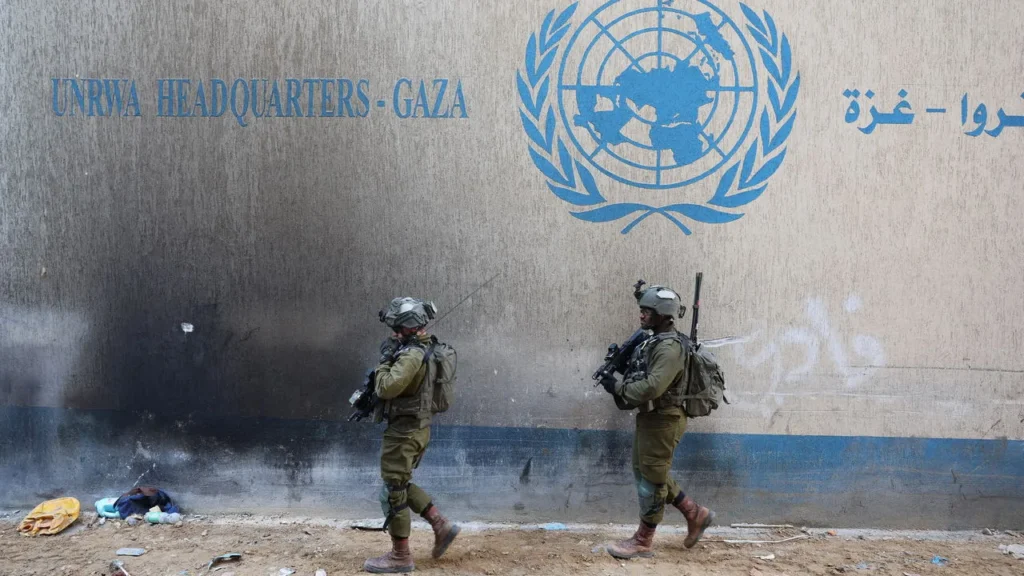
Gaza Herald_ For more than seven decades, the United Nations Relief and Works Agency for Palestine Refugees (UNRWA) has been a lifeline for millions of Palestinians. Created in December 1949, it remains the only UN agency dedicated to a single dispossessed people, the Palestinians. From food distribution to healthcare, education, and utilities, UNRWA has long been woven into every aspect of Palestinian life.
But amid Israel’s genocidal war on Gaza, the agency has been deliberately sidelined and suffocated. Under relentless Israeli pressure and Western complicity, its operations were restricted at the very moment two million besieged Palestinians needed it most.
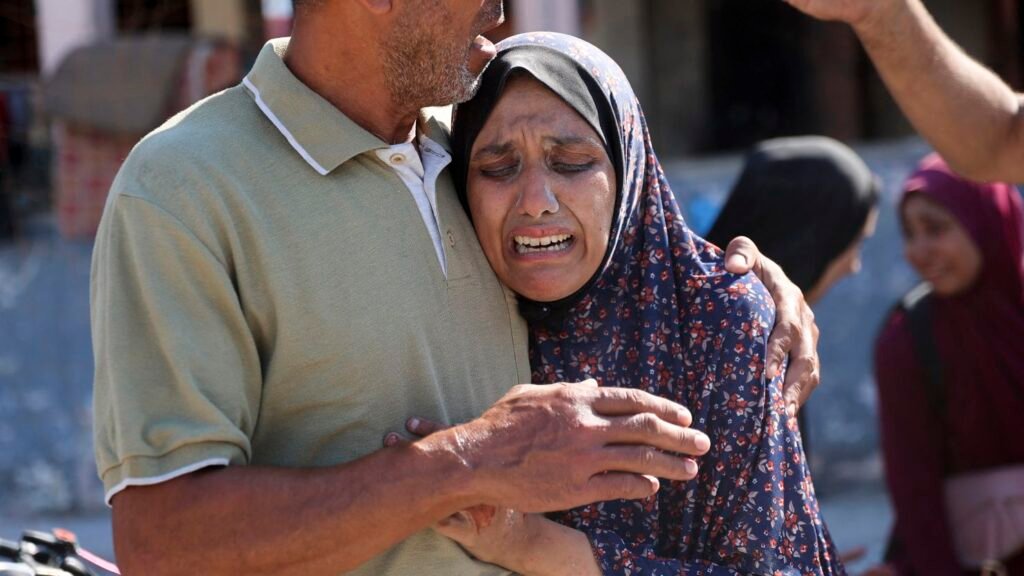
Today, as famine devastates Gaza and starvation claims more lives daily, the only real solution is to bring UNRWA back fully funded, fully empowered, and fully protected.
A Lifeline Across Generations
UNRWA’s services were never abstract. They shaped the daily lives of Palestinian families like my own. My parents, my siblings, and I all studied in UNRWA schools, where education was free and teachers were dedicated. We often depended on UNRWA’s food parcels during times of financial struggle. We visited its clinics for vaccinations and basic treatment when private healthcare was beyond reach.
Even after October 7, 2023, when Israel launched its ongoing genocide in Gaza, UNRWA continued to operate under impossible conditions. Staff worked to distribute food, keep schools running as shelters, and deliver healthcare despite bombings and displacement.
But in January 2024, Israel mounted a smear campaign against the agency, accusing a handful of its employees of involvement in resistance operations. Nineteen staff were investigated, some dismissed, yet Israel used these allegations to demand Western donors cut off funds. The United States, much of the European Union, and other Western powers quickly complied. At the height of Gaza’s humanitarian catastrophe, UNRWA’s resources were gutted.
Brief Hope, Then a Return to Famine
When a temporary ceasefire was announced in early 2024, UNRWA briefly resumed aid distribution. It organized orderly systems: families registered with ID numbers, received scheduled pickup times, and collected food parcels proportionate to their household size. For a few weeks, aid in Gaza flowed with dignity and fairness.
But this fragile normalcy collapsed when Israel renewed its war in March. By April 25, UNRWA announced its food supplies had run out. Since then, Gaza has been plunged into famine again, with over a million people enduring hunger and malnutrition.
Into the vacuum came the so-called Gaza Humanitarian Foundation (GHF), a body designed to replace UNRWA under Israel’s supervision. Its chaotic distribution system has been marked by violence: parcels dumped in fenced areas, desperate crowds rushing in, and Israeli soldiers or foreign mercenaries opening fire. More than 2,500 Palestinians have been killed while simply trying to collect food.
Meanwhile, commercial trucks have been allowed in under Israeli control, delivering goods only to merchants who sell them at exorbitant prices. Starvation has become an industry managed by occupation, enforced with bullets, and profited from by war profiteers.
Western Hypocrisy
The same governments that cut UNRWA’s funding later issued statements demanding urgent action to end Gaza’s famine. In August 2024, foreign ministers of 19 EU countries, along with Norway, Switzerland, the UK, Canada, Australia, and Japan, declared: “Famine is unfolding before our eyes. Urgent action is needed now to halt and reverse starvation.”
But their words ring hollow. By capitulating to Israel’s campaign against UNRWA, they stripped Gaza of its only functioning humanitarian lifeline. Their policies did not just fail to prevent famine; they actively fueled it.
UNRWA as Gaza’s Shield
UNRWA was never perfect, but it was structured, fair, and trusted. It offered stability, dignity, and hope in a life shaped by dispossession and siege. Allowing Israel to dismantle the agency is not a bureaucratic decision; it is a green light for the starvation and erasure of an entire people.
If the international community is serious about ending the genocide and the famine in Gaza, it must restore UNRWA’s funding, shield it from political sabotage, and force Israel to allow its full return to the Strip. Without UNRWA, Gaza will remain trapped in a cycle of hunger and despair engineered by occupation and enforced by violence.
UNRWA has always been more than an agency; for generations of Palestinians, it has been a lifeline, a classroom, a clinic, a food parcel, and a fragment of stability in a world of chaos. Destroying it would be tantamount to destroying Palestinian survival itself.