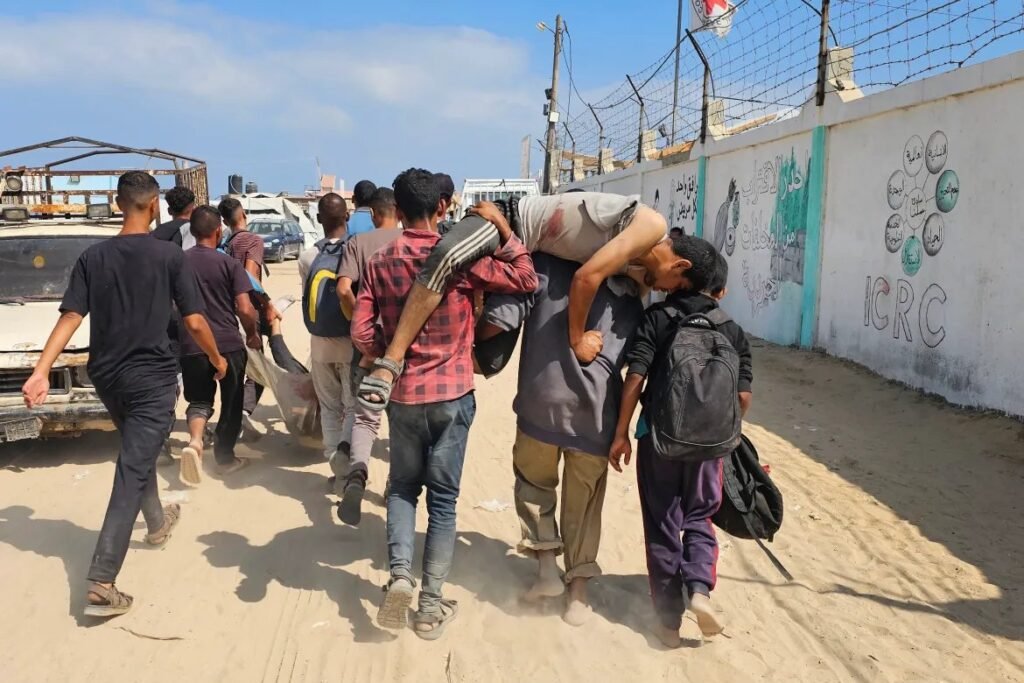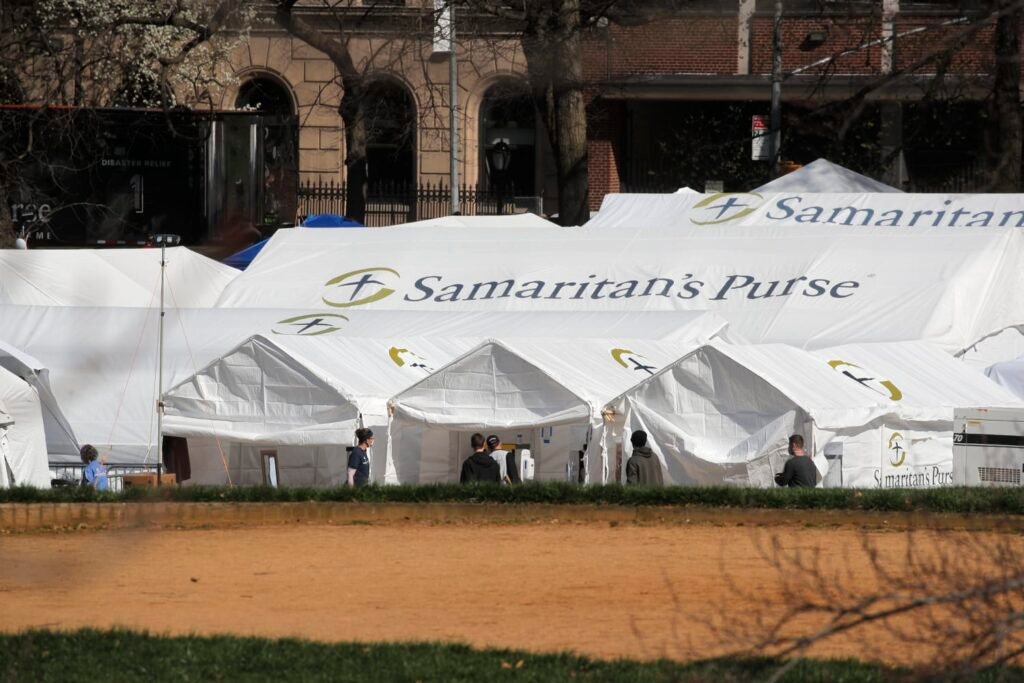
Gaza Herald_ As Gaza bleeds under the weight of Israel’s genocidal war and the collapse of its healthcare system, a new project has emerged that many fear is less about saving lives and more about consolidating foreign control. The U.S.-based evangelical organization Samaritan’s Purse has announced plans to establish a field hospital in Morag, an area under Israeli military control in southern Gaza. Far from being a neutral humanitarian step, the project highlights how even medical relief is being filtered through Israel’s approval and foreign agendas.
Details of the Project
The hospital, expected to arrive by October 15, reportedly includes 80 beds, an intensive care unit (ICU), and other departments. It will be managed by American, Canadian, and European doctors, with Palestinian staff only permitted if the Gaza Ministry of Health approves their recruitment. According to the organization, salaries, food, housing, or transport will be provided.
Foreign Oversight, Not Palestinian Sovereignty
The most troubling element is that the project was coordinated directly with Israel, with Israeli approval already secured. This raises deep concerns about sovereignty: why should the occupying power dictate a health project for Palestinians while the Palestinian health authorities are sidelined?
The organization’s president, Franklin Graham, is a staunch supporter of Israel, raising further suspicion about the motives behind the initiative. Many Palestinians view this as part of a broader effort to reshape Gaza’s future under foreign trusteeship while marginalizing local institutions.
A Ministry Under Pressure
With more than 20 hospitals destroyed or out of service and catastrophic shortages in medicines, Gaza’s Ministry of Health faces a painful dilemma: accept participation in the project and risk legitimizing foreign interference under Israeli supervision, or reject it and deepen the suffering of patients who desperately need treatment.
Humanitarian Need or Political Trojan Horse?
While Samaritan’s Purse promotes itself as a humanitarian actor, its deep ties to U.S. evangelical networks and its open political positioning make its intervention highly suspect. Instead of empowering Palestinian institutions, the project risks turning healthcare into a tool of soft power and dependency, one that conveniently bypasses Palestinian sovereignty while reinforcing Israel’s grip.
For Gaza’s wounded and sick, any additional hospital beds may seem like a lifeline. But Palestinians know too well that nothing offered under Israeli approval is free of politics. True medical relief cannot come through projects coordinated with the very power responsible for mass killing, siege, and the destruction of Gaza’s health sector. Any genuine solution must begin with ending Israel’s genocidal assault, lifting the blockade, and empowering Palestinian-led healthcare, not importing foreign projects that serve occupation interests under the banner of charity.
Key Considerations for Evaluating the Samaritan’s Purse Field Hospital in Gaza
As Gaza continues to endure Israel’s ongoing siege and military assault, the announcement of a field hospital by the U.S.-based evangelical organization Samaritan’s Purse raises critical questions beyond the immediate humanitarian relief. While presented as a lifeline for a collapsing healthcare system, the project carries broader political, legal, and social implications that cannot be ignored.
Historical and Political Context
The hospital cannot be evaluated in isolation. Gaza has long been under military occupation, subjected to repeated wars, and enduring a blockade that has devastated infrastructure and society. In the past, humanitarian aid has often been politicized, used to reinforce Israeli control over movement, resources, and access. This historical backdrop makes Palestinian caution toward externally managed projects entirely justified.
International Legal Considerations
Under the Fourth Geneva Convention, Israel, as the occupying power, bears full responsibility to protect civilians and ensure medical care. Any initiative requiring Israel’s approval or imposing foreign oversight risks violating international law and undermining the rights of Palestinians to self-determination and control over essential services.
Immediate Humanitarian Needs
Gaza’s health system is in crisis: dozens of hospitals have been destroyed, and the remaining facilities face severe shortages of equipment, medicines, and trained personnel. Palestinian healthcare professionals urgently need support, but solutions must empower local institutions rather than bypass them, preserving the integrity and autonomy of the Palestinian health sector.
Institutional Critique
Samaritan’s Purse is an evangelical Christian organization led by Franklin Graham, a vocal supporter of Israel. While its interventions are framed as humanitarian, the organization’s political alignment raises legitimate concerns. Aid filtered through such a framework risks being used as a tool of soft power, potentially compromising the neutrality and independence of Palestinian healthcare.
Impact on Palestinian Sovereignty
By channeling decisions, personnel, and resources through foreign management under Israeli approval, the hospital risks sidelining Gaza’s Ministry of Health. Palestinian authorities may find their capacity to make independent decisions constrained, transforming what should be a lifeline into a mechanism of control and oversight.
Socioeconomic and Community Implications
The hospital could further disrupt Gaza’s already fragile social and economic fabric. Dependence on foreign oversight, restrictions on local staff, and limitations on operational autonomy may exacerbate social fragmentation and economic hardship, reducing Palestinians’ ability to rebuild their communities and maintain cohesion.
Call for International Responsibility
Humanitarian aid is urgently needed in Gaza, but it must respect Palestinian sovereignty and dignity. Support should strengthen Palestinian-led institutions rather than impose external control and must reach all civilians without interference from occupying authorities. Aid initiatives should ensure accountability and prevent their use as tools of political manipulation. Only by centering Palestinian control, respecting legal rights, and prioritizing independence over foreign oversight can humanitarian interventions truly serve the people of Gaza rather than entrench occupation and external dominance.
The arrival of Samaritan’s Purse in Gaza is not simply a humanitarian gesture but another layer of political manipulation. It is disturbing that medical care for Palestinians must pass through the filter of Israeli approval and be managed by a foreign organization whose leadership openly supports the occupier. True humanitarian work respects the sovereignty and dignity of the people it serves. Anything less risks becoming an extension of the occupation itself, wrapped in the language of aid but serving the same system of domination.
Samaritan’s Purse and the Gaza Humanitarian Foundation: Humanitarian Aid or Tool of Foreign Control?
As the humanitarian crisis in Gaza deepens, the U.S.-based evangelical organization Samaritan’s Purse has partnered with the Gaza Humanitarian Foundation (GHF) to deliver aid to Palestinians. While presented as lifesaving assistance, the collaboration has raised serious questions about the politicization of relief and the undermining of Palestinian sovereignty.
Samaritan’s Purse, led by Franklin Graham, a known supporter of Israel, has deployed multiple flights carrying over 280,000 pounds of nutrient-rich food and medical aid. On the ground, GHF manages distribution and logistics, operating with U.S. backing, Israeli coordination, and funding reportedly totaling $30 million in American tax dollars. Critics argue that GHF was established to bypass traditional UN-led humanitarian operations, which Israel has often obstructed.
The partnership highlights a concerning trend: foreign organizations delivering aid under Israeli oversight. While medical supplies and first-aid stations are urgently needed, the framework of this operation sidelines the Gaza Ministry of Health and other Palestinian institutions, raising fears that relief is being used as a mechanism of control rather than purely humanitarian support.
By framing aid as charity while exerting operational control over its distribution, Samaritan’s Purse and GHF risk turning critical relief into a geopolitical instrument. This dynamic reinforces Israel’s influence over Gaza, perpetuates dependency on foreign actors, and undermines local authority at a time when Palestinians need autonomous control over their own essential services.
Humanitarian assistance must respond to immediate needs without compromising sovereignty. As Gaza faces catastrophic shortages of food, water, and medical care, the international community must ensure that relief efforts empower Palestinian institutions, respect local leadership, and reach all civilians equitably — not just through foreign-controlled programs that serve political agendas.
The arrival of Samaritan’s Purse in Gaza is not simply a humanitarian gesture but another layer of political manipulation. It is disturbing that medical care for Palestinians must pass through the filter of Israeli approval and be managed by a foreign organization whose leadership openly supports the occupier. True humanitarian work respects the sovereignty and dignity of the people it serves. Anything less risks becoming an extension of the occupation itself, wrapped in the language of aid but serving the same system of domination.