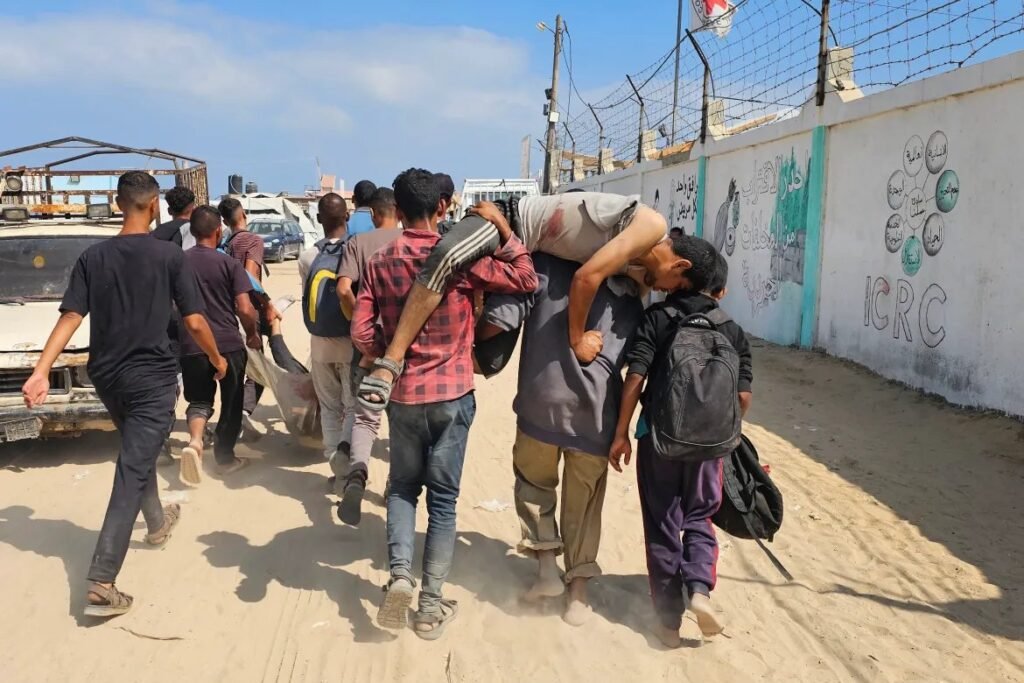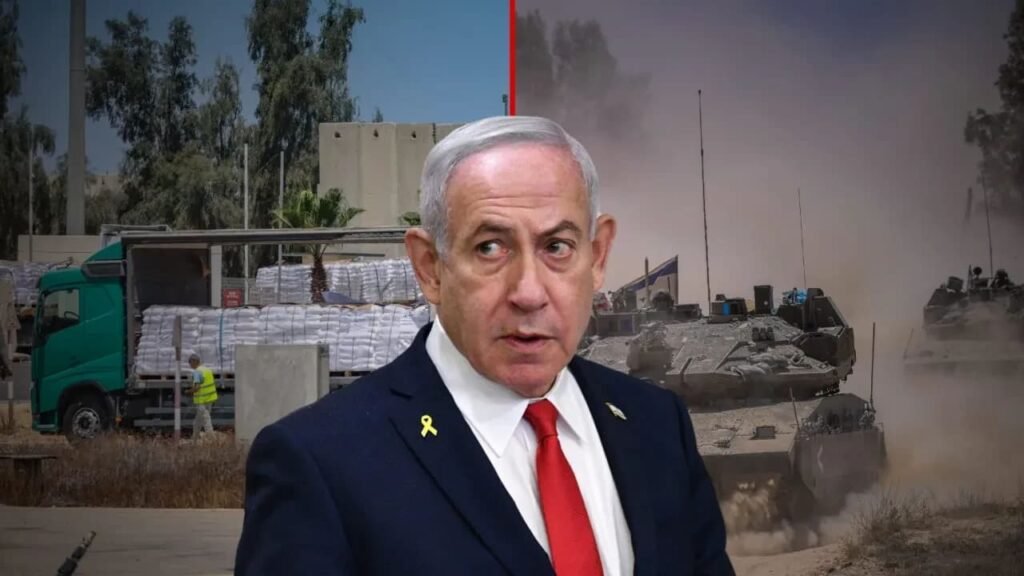
Gaza Herald_ The Trump–Netanyahu plan has been promoted as a roadmap to peace and reconstruction, yet for Palestinians, it represents nothing but the liquidation of their national cause. Far from addressing the roots of the conflict, it exploits humanitarian tragedy to impose political submission. Below are twenty reasons why this plan is unacceptable, reasons that speak not only to Gaza, but to the entirety of the Palestinian struggle.
Reducing the Palestinian cause to humanitarian aid
One of the most dangerous elements of the Trump–Netanyahu plan is its deliberate reduction of the Palestinian cause to a humanitarian crisis, as if it were simply about food, medicine, and temporary shelter. By presenting Palestine as a “humanitarian case,” the plan strips away its political depth and reframes it as a problem of poverty and dependence rather than a struggle against occupation and colonization.
This framing is not innocent. It allows the international community to see Palestinians as passive recipients of aid rather than an oppressed people demanding freedom, justice, and autonomy. Humanitarian language becomes a tool of depoliticization: instead of confronting the root causes of military occupation, land theft, settlement expansion, and siege, the plan substitutes charity for justice.
The danger here is profound. If Palestine is reduced to an “aid file,” then the rights of return, self-determination, and independence disappear from the agenda. In their place, Palestinians are offered food baskets and reconstruction projects, as if dignity can be bought with handouts. The narrative shifts from one of resistance and rights to one of dependency and relief, turning a national liberation struggle into a welfare program managed by the very powers complicit in their dispossession.
In essence, the humanitarian framing erases the occupation while making Palestinians appear as beggars rather than a people denied their land, autonomy, and future. It is a deliberate strategy to dissolve the political nature of the conflict and reduce the entire cause to the distribution of aid packages.
Marginalizing Legitimate Representation
The Trump–Netanyahu plan deliberately sidelines the PLO and national factions, weakening the recognized representatives of the Palestinian people. By bypassing the institutions that embody Palestinian legitimacy, it seeks to replace them with bodies more favorable to Israel. This not only fragments leadership but also undermines the unity and sovereignty of the Palestinian cause.
Exploiting Gaza’s catastrophe
The Trump–Netanyahu plan exploits the immense suffering in Gaza, using the devastation of war as leverage to push Palestinians into accepting a flawed political framework. Instead of confronting the root causes of occupation, siege, and systematic destruction, it treats desperation as a bargaining tool, forcing people to choose between survival and surrender.
Blackmailing rights for food and reconstruction
At its core, the plan ties basic humanitarian needs to political submission, essentially telling Palestinians that only by giving up their rights will they receive aid. Food, medicine, and reconstruction are transformed from fundamental rights into conditional rewards, turning survival into a form of blackmail and stripping dignity from the very people most in need.
Weaponizing Division
The Trump–Netanyahu plan deliberately exploits Palestinian internal divisions, turning political disagreements, factional rivalries, and social tensions into tools for weakening resistance and undermining the national project. By amplifying these fractures, it not only erodes unity among Palestinian leadership and communities but also delegitimizes the institutions and movements that have historically represented the people’s aspirations. This strategy makes it easier for Israel to advance its agenda unopposed, presenting Palestinian disunity as justification for externally imposed solutions while dismantling the collective strength needed to resist occupation and assert sovereignty.
Imposing Israel’s Vision as Reality
The plan is presented as a fait accompli, effectively forcing Palestinians to accept Israel’s unilateral objectives without meaningful input or negotiation. Rather than providing a framework for balanced and equal dialogue, it dictates outcomes that serve Israeli interests, leaving Palestinians with little agency over their own future. This approach undermines the principle of self-determination, turning political decision-making into a one-sided process that normalizes occupation while framing Palestinian acquiescence as the only viable option. By setting these predetermined terms, the plan eliminates the possibility of genuine negotiation and consolidates Israel’s control under the guise of a so-called peace initiative.
Rewarding Israeli Arrogance
The plan reinforces Israel’s unchecked power, granting additional “security guarantees” instead of curbing violations, and further deepening the imbalance between occupier and occupied. By codifying such privileges, it legitimizes Israel’s aggressive posture and expands its leverage over Palestinian lives, land, and resources, while Palestinian agency is systematically minimized.
Enforcing Surrender
Politically, the plan achieves what Israel could not secure militarily: the subjugation of Palestinians without genuine concessions in return. By presenting compliance as the only pathway to limited aid or reconstruction, it coerces Palestinians into accepting conditions that erode sovereignty, dignity, and national aspirations, transforming political negotiation into a mechanism of control.
Biased U.S. Sponsorship
Washington’s role is far from neutral. Historically shielding Israel from international accountability, the United States acts here as both architect and enforcer of a plan designed to protect and advance Israeli interests. Rather than mediating a fair resolution, the U.S. legitimizes occupation policies while sidelining Palestinian rights and claims.
Internationalizing the Occupation
The proposal for an “international administration” masks occupation as a globalized project, effectively turning the control of Palestinian land and governance into a shared international responsibility executed according to Israeli priorities. This globalizes complicity, making occupation seem like a cooperative management plan rather than a continuation of illegal control.
Whitewashing Crimes
The plan ignores decades of documented violations the siege, massacres, and deliberate destruction of homes and infrastructure as if they never occurred. By sanitizing history and absolving the occupier of accountability, it erases Palestinian suffering from the political narrative, replacing justice with selective storytelling.
Reversing Victim and Perpetrator
In a dangerous inversion of reality, Palestinians are depicted as aggressors while the occupier is framed as under threat. These manipulative narrative shifts blame onto the oppressed, distorting public perception and creating a false moral equivalence that legitimizes further oppression.
Violating International Law
The plan disregards established UN resolutions affirming the right of return, condemning settlements, and upholding the status of Jerusalem. By sidestepping international legal norms, it entrenches violations as political facts, undermining decades of Palestinian legal claims and global efforts to uphold justice.
Imposing Guardianship
Rather than restoring sovereignty, the plan places Palestinians under comprehensive supervision in politics, security, and reconstruction. This turns them into wards of external powers, stripping them of the autonomy required to govern their own affairs and perpetuating dependence on structures controlled by Israel and its allies.
Erasing Palestinian Rights
Established Palestinian rights are replaced with vague, non-binding promises. This hollow framework leaves Palestinians without enforceable claims, replacing justice and recognition with uncertainty, while Israel consolidates gains on the ground with impunity.
Sacrificing the West Bank and Jerusalem
The plan effectively sacrifices the West Bank and Jerusalem, legitimizing settlement expansion and annexation under the guise of political progress. By sidelining these territories’ importance, it erases Palestinian claims and entrenches Israeli territorial ambitions as a fait accompli.
Targeting the National Project
This strategy goes beyond Hamas, aiming to dismantle the Palestinian national project itself. Identity, unity, and sovereignty are all under attack, with the plan designed to weaken the collective memory, political cohesion, and institutional frameworks that have sustained Palestinian aspirations.
Demonizing Palestinian Identity
Palestinians are portrayed as extremists in need of “reprogramming” culturally and politically. This narrative denies their right to self-determination, undermining their identity and dignity while framing resistance to occupation as a problem to be corrected rather than a legitimate struggle.
Criminalizing Resistance
The plan delegitimizes any form of Palestinian resistance, stripping the people of the universally recognized right to defend themselves against occupation. By framing legitimate struggle as criminal, it seeks to neutralize the most effective forms of political and social agency available to Palestinians.
Transferring Responsibility for Destruction
Finally, the plan absolves Israel of responsibility for the widespread destruction it has caused. Instead, it shifts the financial and logistical burden of reconstruction onto the international community, effectively rewarding the occupier while compelling third parties to rebuild what was intentionally destroyed.
It is essential to understand that the target is not one movement or one faction, but the Palestinian people as a whole: their narrative, history, land, culture, sovereignty, and rights.
Yes, Gaza’s humanitarian crisis is catastrophic and heartbreaking. But what is being proposed is infinitely more dangerous: the systematic erasure of the Palestinian cause under the guise of aid and reconstruction.
The correct and principled position is clear: this plan cannot be accepted, not in part, not with conditions, not even with a “yes, but.” It must be rejected outright, even if the rest of the world embraces it.