Gaza Herald _In Gaza, women are carrying the unbearable burden of survival amid relentless bombardment, famine, and displacement. With homes destroyed, loved ones killed, and necessities stripped away, they are left to shield their children, maintain families, and keep communities alive under conditions designed to erase life itself. Their daily struggle is a testament to resilience, yet it also exposes the world’s failure to protect civilians in one of the most densely populated regions on Earth.
Living Among Ruins
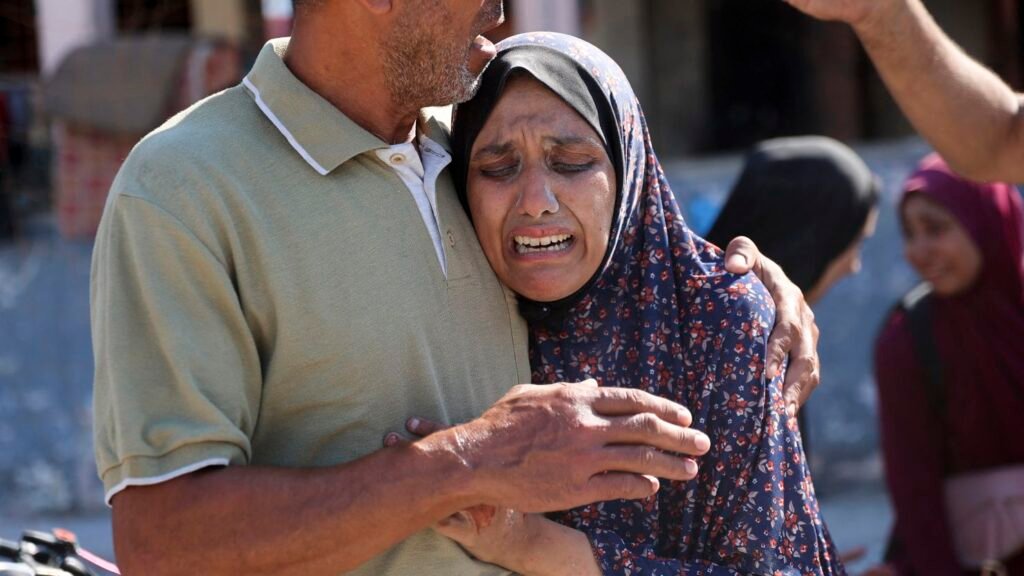
Lamees lost her husband and family last October in Israeli airstrikes. Her home reduced to rubble, she now shelters her children under a torn tent, battling rain, hunger, and grief. “No family. No house. No mother. Nothing remains. I am broken,” she says.
In southern Gaza’s Barcelona Camp, Niveen Adel mourns her daughters, Aya, 23, and Malak, 15, both killed when schools sheltering them were bombed. Her husband was buried under another destroyed school. “I can’t bear schools anymore. I suffocate when I enter one,” Niveen confides.
Widowed and displaced more than ten times, she struggles to feed her surviving children. “I have no money, not even a bag of flour. People say women are strong, that they can do everything. But I can’t. I can’t be mother, father, and head of the household all at once.”
Starvation, Hunger, and the Loss of Dignity
Famine was declared in Gaza City on 22 August 2025, a first for the Middle East, leaving nearly a quarter of a million women and girls starving, while over half a million-face extreme hunger. Mothers risk their lives for bread, water, and flour, often queuing for hours in unsafe conditions.
Sanitary supplies are scarce, forcing nearly 700,000 women and girls of reproductive age to manage menstruation without privacy or hygiene. Daily survival has become a struggle stripped of dignity.
No Safe Spaces
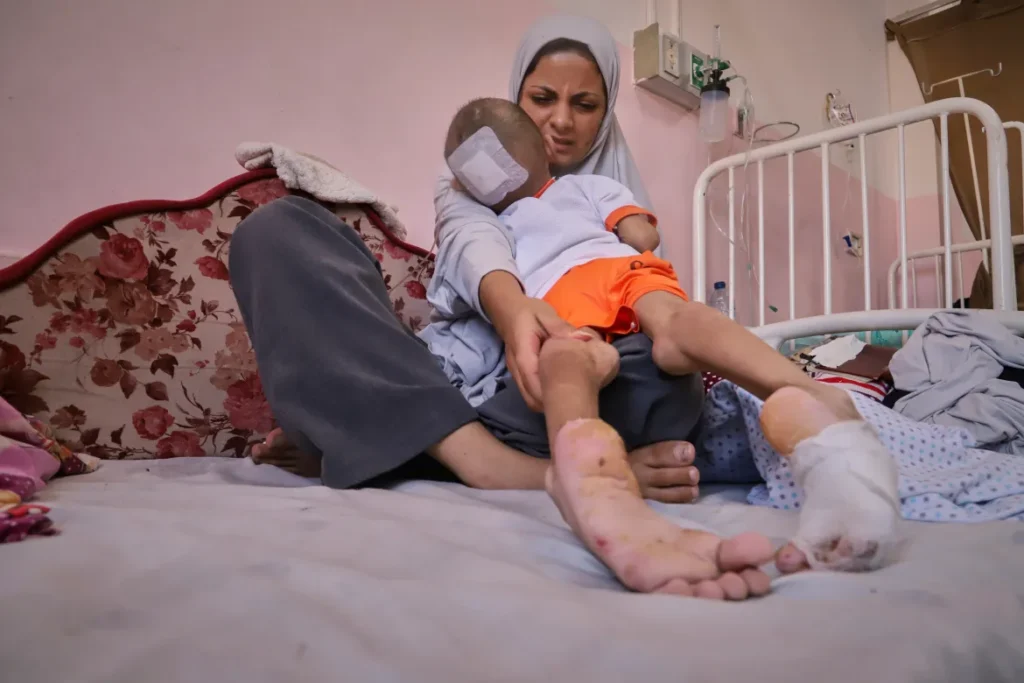
Women have become prime victims of violence. Last year, 7 in 10 women dying in conflict globally were killed in Gaza. Life expectancy has dropped by 30 years. Homes, schools, mosques, hospitals, and UN shelters have been struck. “My little one left without saying goodbye,” whispers Niveen, recalling her daughters’ deaths.
Since October 2023, over 28,000 women and girls have been killed and 78,518 injured. More than 1 million women and girls have been displaced, often multiple times, facing impossible rental costs or resorting to makeshift tents. “Life became unbearable,” says Lamees, recounting displacement from Beit Lahia to Rafah.
Bearing Communities on Their Shoulders
Even amid despair, women continue to hold Gaza together. They cook communal meals, comfort neighbors, care for the sick and elderly, teach children in tents, and provide first aid. More than 58,600 households are now headed by women, many of whom carry invisible scars of trauma.
UN Women notes that at least 89% of women-led organizations have suffered severe damage since October 2023. Recently, AISHA, a leading women’s organization, was hit by an Israeli airstrike, killing three, including a staff member, a child, and a pregnant woman, and leaving its premises in ruins.
“My little girl looks at me and says: ‘Mom, let’s go see Dad.’ And I cry endlessly,” says Lamees.
A Call for Action
Women in Gaza are the backbone of survival in a city under siege, yet their resilience is met with continued attacks and denial of basic human needs. The international community must urgently provide unrestricted humanitarian aid, ensure protection for women and girls, secure the release of hostages, and push for an immediate ceasefire. Without urgent action, these women and their children will continue to bear the unrelenting weight of a war waged against life itself.