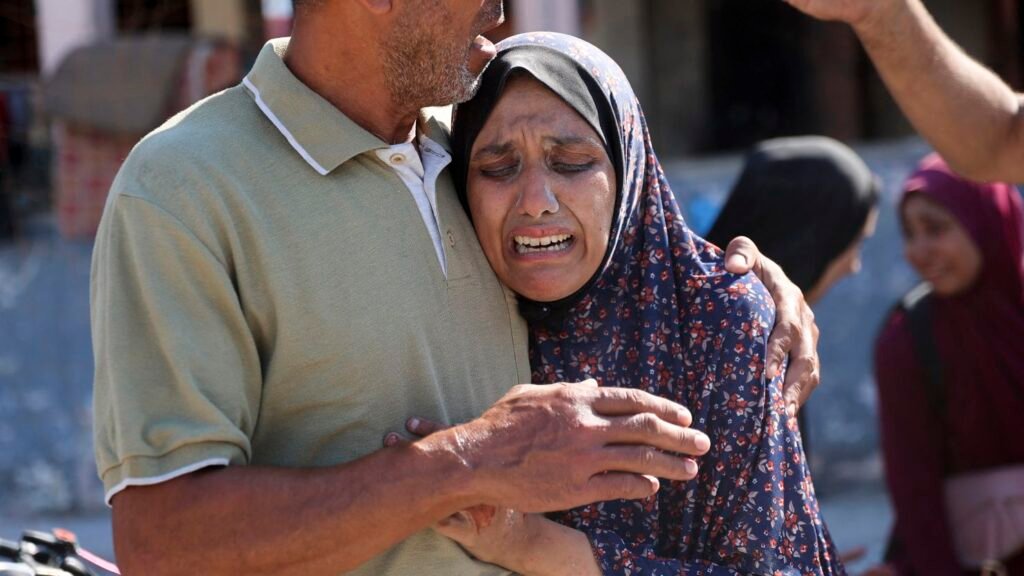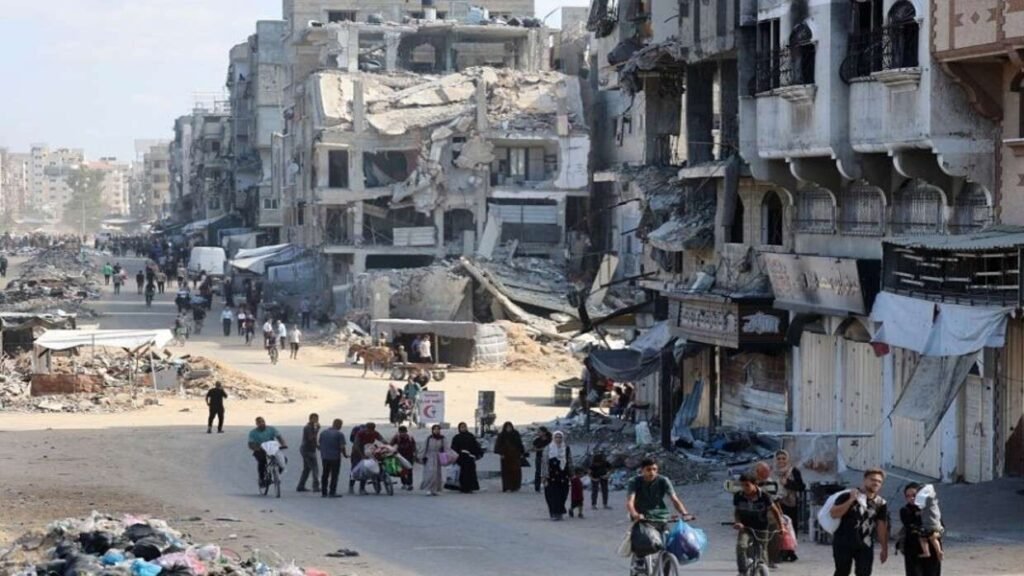
Gaza Herald –Under the shadow of relentless bombardment, thousands of Palestinian families remain stranded in Gaza City, unable to flee despite Israeli warnings of an assault with “unprecedented force.” For many, the journey south is not just dangerous, it is impossible. With soaring transport costs, destroyed infrastructure, and constant shelling, Gaza’s largest urban center has become a trap.
Khaled al-Majdalawi, a displaced resident from western Gaza City, told Gaza Herald his family has been trying for days to find transport south. “We finally found a way to leave early this morning. We packed our belongings and waited for hours, but no one came. The driver stopped answering us,” the 32-year-old said, describing “intense and continuous” bombardment that made every hour unbearable.
Others have attempted the journey on foot. Nivin Ahmed, 50, fled with seven relatives toward Deir al-Balah on Thursday. “We walked more than 15 kilometers,” she said. “We were crawling from exhaustion. My youngest son cried from fatigue. We took turns dragging a small cart with some of our belongings.”
For some, even walking is not an option. Mona Abdel Karim, 36, said she had been stranded with her family on al-Rashid Road for two nights, waiting for a driver. “I feel like I’m about to explode,” she said. “We can’t walk on foot — my husband’s parents are elderly and sick, and the children are too weak to walk.”
Others have nowhere left to run. Toufic Abu Mouawad, who had been sheltering in a camp for the displaced, described a night of terror. “The situation is really bad. All night long, tanks were firing shells. I want to flee with the boys, the girls, the children. This is the situation we are living in. It is very tragic. We call on Arab countries and people of conscience to stand with us.”
Despite Israel’s orders to evacuate southward, for countless families the road remains closed, not by physical barriers alone, but by poverty, exhaustion, and despair. Gaza Herald has documented case after case of families caught in limbo, unable to escape even as bombs fall around them. For many, survival now means waiting under fire, hoping the world will not look away.