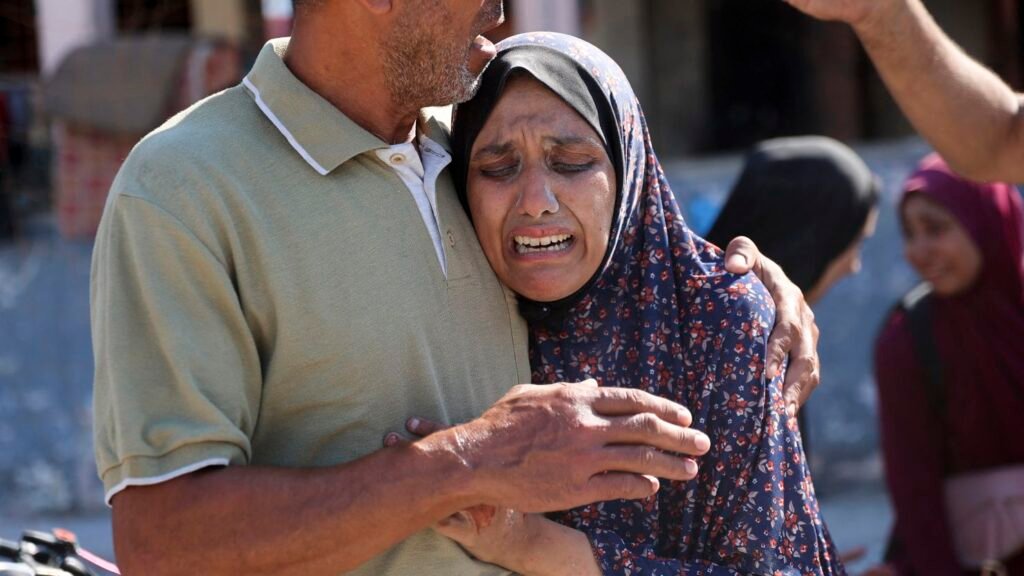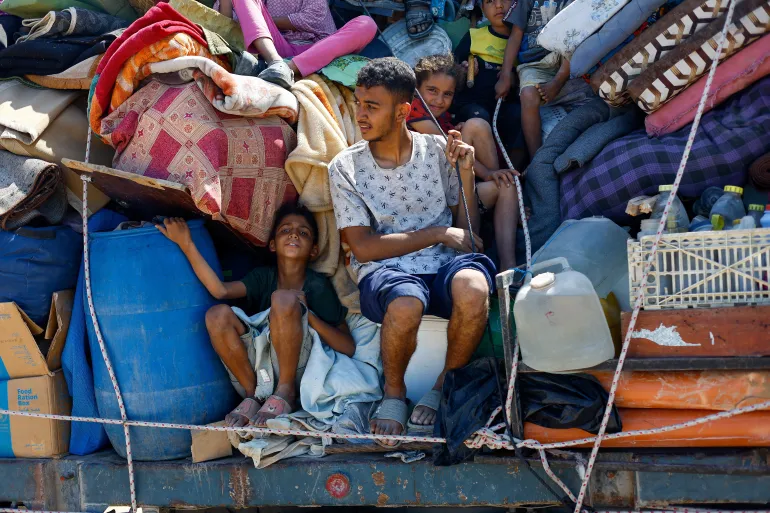
Gaza Herald – The Palestinian Civil Defense has announced that nearly 450,000 people, almost half of Gaza City’s population, have been forcibly displaced since Israel launched its intensified military operation in the area in early August.
According to rescue workers and humanitarian agencies on the ground, the city has witnessed a large-scale exodus as relentless bombing, shelling, and incursions have made civilian life impossible.
“This is a catastrophic humanitarian situation. There’s no safe zone in Gaza,” a spokesperson for the Civil Defense said. “Most people are fleeing without knowing where they’re going, and they don’t know if they’ll ever be able to return.”
As waves of displaced families move toward the central and southern parts of the besieged Strip, conditions in shelters have deteriorated drastically. Overcrowded schools, tents, and makeshift camps are struggling to absorb new arrivals. Clean water is scarce, sanitation systems have collapsed, and the spread of diseases is rapidly accelerating.
“The humanitarian situation has completely collapsed,” a local aid worker told reporters. “People are crammed into tiny spaces with no access to clean water, medicine, or food. We are running out of time.”
‘Final Displacement’ Fears
Many families now describe their current displacement as the “final one.” Having fled multiple times since the war began in October 2023, residents express growing despair about the possibility of ever returning home.
“This is different. There’s a deep sense of finality,” said one father of four, whose home in Gaza City was reduced to rubble last week. “I don’t think we’ll see our neighborhood again.”
International humanitarian organizations, including the UN, have repeatedly warned that Israeli military operations are forcing mass displacement on an unprecedented scale. The UN has called for an immediate ceasefire and unfettered humanitarian access, but Israel continues its offensive, claiming security concerns as justification.
Meanwhile, Israel’s blockade on humanitarian aid entering Gaza has further compounded the crisis, leaving essential supplies like fuel, baby formula, and antibiotics stuck at border crossings. Aid convoys are either turned away or bombed en route.
Mounting Global Pressure
While international condemnation of the siege grows louder, political efforts to stop the war remain stalled. Over 80% of Gaza’s population has now been displaced at least once since October. Thousands have been killed or injured, and infrastructure, including hospitals, water plants, and schools, lies in ruins.
Civil defense teams continue to work under impossible conditions, with limited equipment and personnel. Many of their own staff have been killed in airstrikes, and survivors often have to dig through rubble with bare hands.
“Gaza is not just under attack, it’s being dismantled,” one aid official told Gaza Herald. “We are watching an entire society being displaced, starved, and erased.”