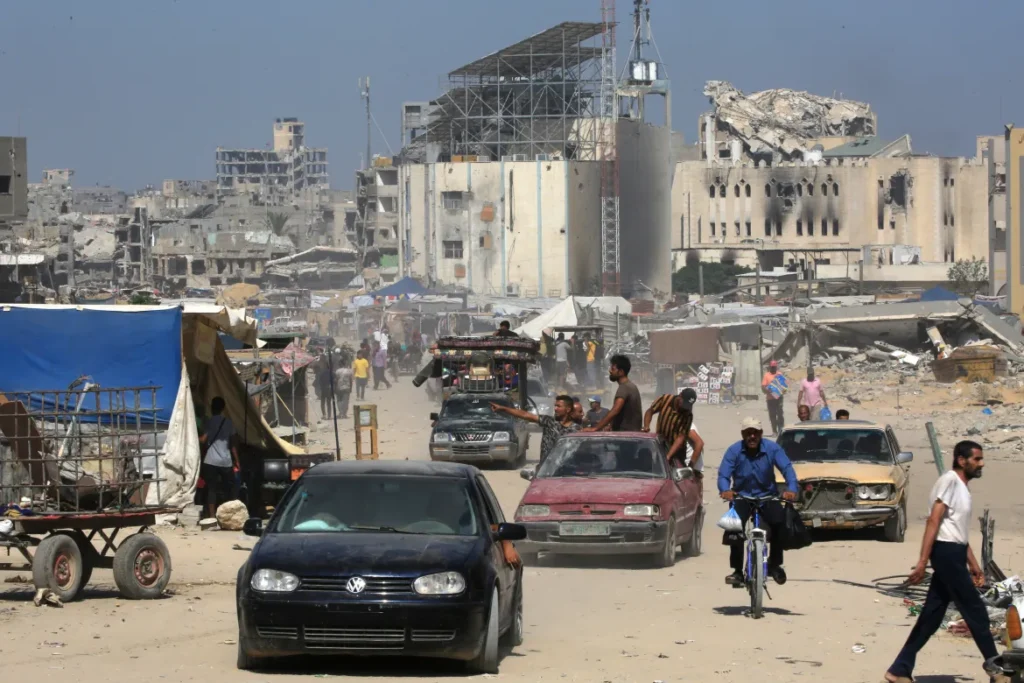
GazaHerald –The streets of Gaza City are once again filled with families on the move. Carrying bags, tents, and what little they can salvage, men, women, and children are streaming south along the Al-Rashid Coastal Road.
Vehicles are crammed to capacity, donkey carts creak under the weight of frightened families, and many walk on foot. Faces are marked by fear, exhaustion, and despair. This is the latest mass exodus, forced by the Israeli occupation army’s expanding ground operation and unrelenting bombardment.
On Saturday, Israel announced an escalation of what it calls “Operation Gideon’s Carts 2,” ordering immediate evacuations “without inspection” and designating a so-called “humanitarian zone” in Al-Mawasi, Khan Younis. Yet even this supposed safe area has come under Israeli fire. Families leaving Gaza City describe the flight south not as a search for safety, but as an escape from certain death.
The army has vowed to intensify strikes on multi-story residential buildings in Gaza City, claiming they serve as Hamas command centers. In reality, most of these towers shelter displaced civilians.
According to Gaza’s Government Media Office, the city is home to nearly 915,000 people and more than 51,000 residential buildings. Targeting them threatens to uproot hundreds of thousands more, creating an even greater humanitarian catastrophe.
The United Nations voiced alarm at the scale of forced displacement. “We are concerned by the announcement that more high-rise buildings will be targeted soon,” said UN spokesperson Stéphane Dujarric. He stressed that nearly all Gazans have already been displaced multiple times, famine has been confirmed, and shelters are dangerously overcrowded.
Aid workers report that many families cannot even afford to flee, with transportation to the south costing up to $1,000. Between Wednesday and Thursday alone, nearly 3,000 people were recorded moving south.
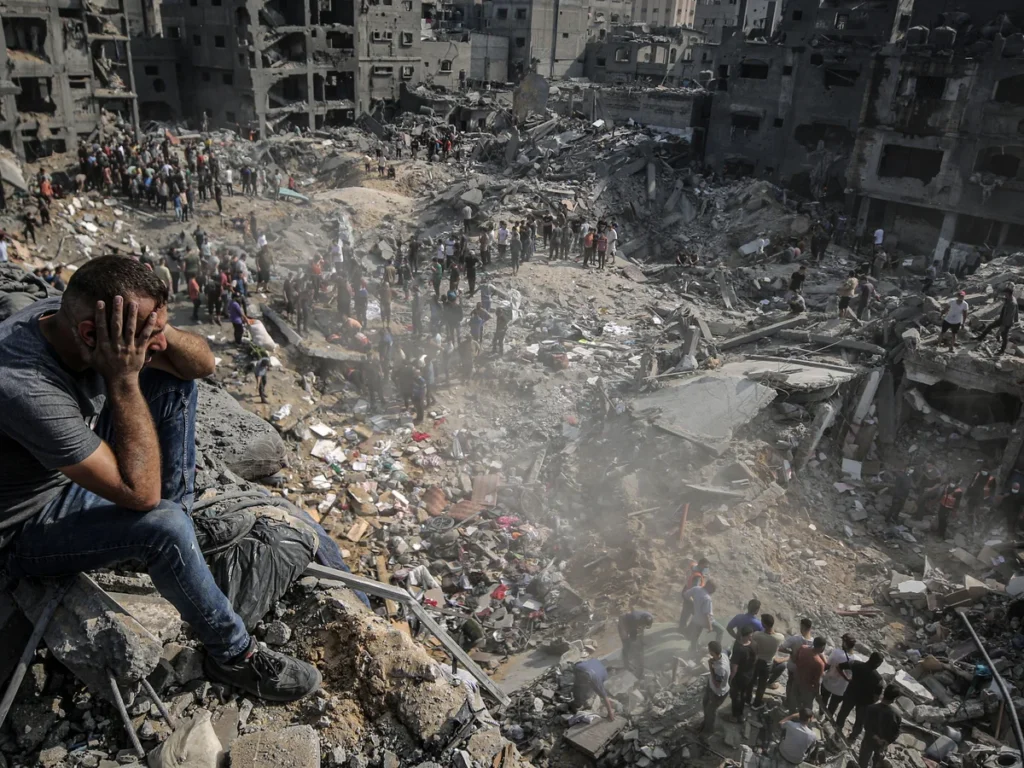
For weeks, Israeli occupation forces have been systematically leveling entire neighborhoods in Gaza City and Jabaliya, reducing blocks to rubble in preparation for full occupation. International condemnation has mounted, with humanitarian organizations warning of a new, bloodier phase of displacement targeting the city’s nearly one million residents.
The tragedy lies not only in the exodus itself but also in its futility. Nowhere in Gaza is safe. Even areas declared “humanitarian zones” are under bombardment. Families who flee leave everything behind, only to find themselves exposed to hunger, disease, and further shelling. Others choose to stay, unwilling to abandon their homes despite the danger, clinging to a sense of rootedness in a city being emptied by force.