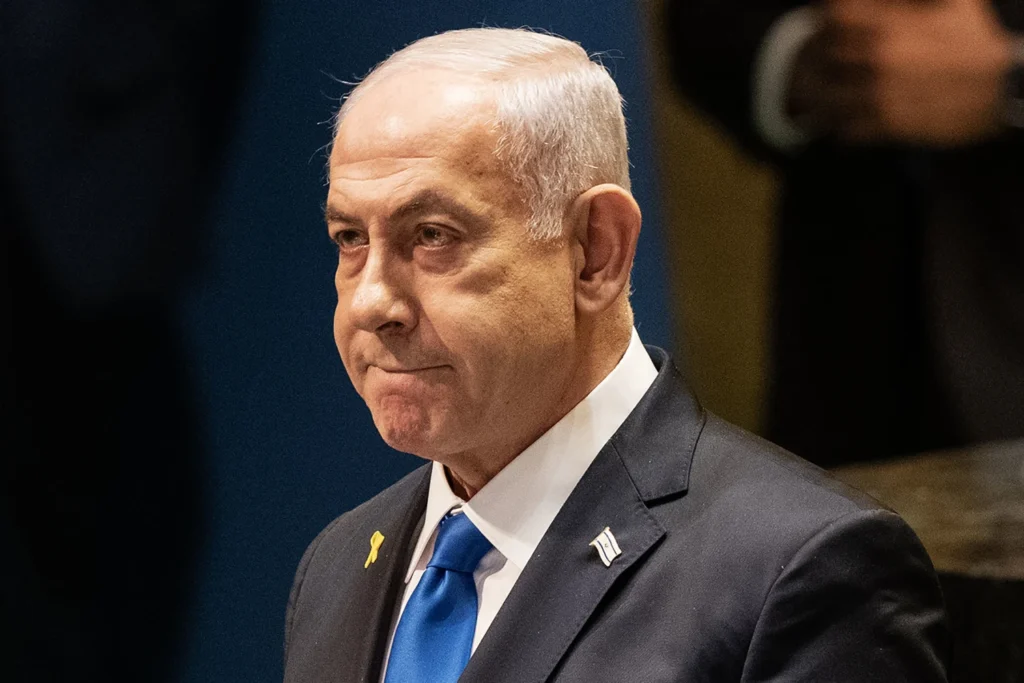
GazaeHerald – A new investigative report by Israel’s Channel 13 has revealed that Prime Minister Benjamin Netanyahu repeatedly obstructed ceasefire agreements with Hamas during the nearly two-year war on Gaza, even when the Palestinian group accepted proposed terms.
According to HaMakor, Channel 13’s flagship investigative program, senior American and Israeli officials confirmed that Israel blocked ceasefire deals on at least seven occasions, prolonging the war and leaving both Israeli captives and Palestinian civilians to suffer the consequences.
The report paints a picture of a government where decisions were driven less by humanitarian or security concerns than by the political calculations of Netanyahu and his far-right allies, including Finance Minister Bezalel Smotrich and National Security Minister Itamar Ben Gvir.
“No Effort to Bring Them Home”
From the earliest days of the war in October 2023, officials said opportunities were missed. US State Department spokesperson Matthew Miller recalled that Hamas had signaled readiness to release “some hostages,” but Washington could not get the Israeli leadership to respond seriously.
Former War Cabinet member Gadi Eisenkot admitted that the government initially made no effort to prioritize the captives’ return. “In the war’s goals, there is not a single word about the captives,” he told HaMakor. He said even the first limited ceasefire in November 2023 came only after Netanyahu and Defense Minister Yoav Gallant raised multiple obstacles.
“We could have brought back seriously wounded and elderly people alive, who unfortunately were later murdered or killed,” Eisenkot added.
Gallant himself told the program that he had instructed the military not to negotiate with Hamas directly, declaring that he wanted the group “put under the water so they won’t be able to breathe.”
The Rafah Turning Point
By early 2024, officials said Netanyahu began misleading the Israeli media about progress in talks, even though no genuine agreement existed. Negotiations in Paris stalled over Hamas’s demand that displaced Palestinians be allowed to return to northern Gaza, a demand Israel rejected outright.
In April 2024, the Biden administration pushed for a six-week ceasefire that would have halted an invasion of Rafah, but Netanyahu’s insistence on attacking the city complicated the deal. “You can imagine how much harder it made it to get a deal over the line,” Miller explained. Hamas ultimately withdrew, and Israel launched its Rafah invasion in May, causing talks to collapse.
HaMakor reported that every negotiation was “tailor-made to suit the prime minister’s political interests.” Even when Netanyahu tentatively approved a far-reaching proposal in May 2024, one that would have ended the war, secured the captives’ release, and reinstated the Palestinian Authority in Gaza, he quickly withdrew his support.
US officials described months of frustration. “We saw the government of Israel at times trying to sabotage an approach to get to a ceasefire,” Miller said. “They were always looking for ways to add conditions or make the terms more difficult.”
Ceasefires Gained, Then Lost
In January 2025, Israel and Hamas reached a two-phase agreement, though negotiators said Netanyahu’s government refused flexibility on key prisoner-release terms. Gallant admitted the January deal was nearly identical to one offered months earlier: “The same agreement, only unfortunately with fewer hostages.”
But by March, Israel had unilaterally ended the ceasefire. According to Miller, the Trump administration declined to pressure Netanyahu to honor the terms. Netanyahu later told former US Secretary of State Antony Blinken, “We are going to be fighting this war for decades to come. That’s the way it’s been; that’s the way it’s going to be.”
The revelations have fueled public anger in Israel, particularly among families of captives who accuse Netanyahu of deliberately torpedoing deals.
“Netanyahu has decided to seal the fate of 20 captives and 100 soldiers in Gaza City,” said Nimrod Cohen, brother of one captive soldier, during a protest in Tel Aviv this week.
Einav Zangauker, mother of another captive, accused the prime minister of deception: “Just like in the last agreement that the Israeli government blew up before it reached Stage B, this time too Netanyahu calculated his political considerations and decided to blow it up.”
The Channel 13 investigation suggests that Israel’s prolonged war was not simply a military campaign but also a political project, with ceasefire opportunities repeatedly sacrificed to Netanyahu’s survival strategy.