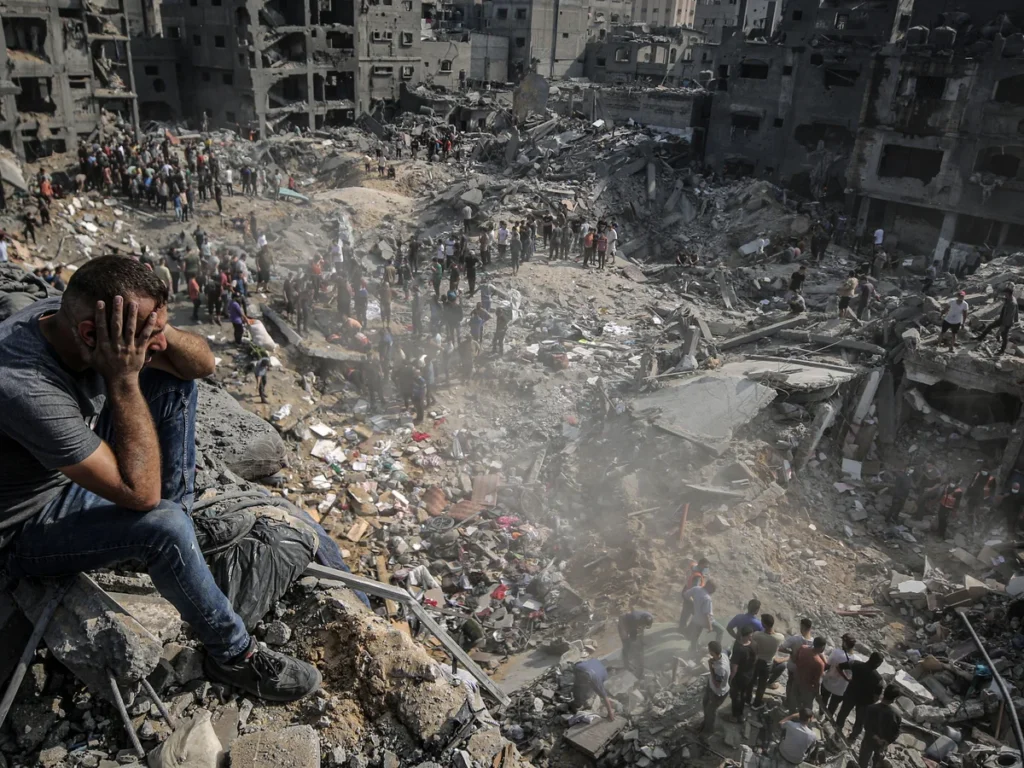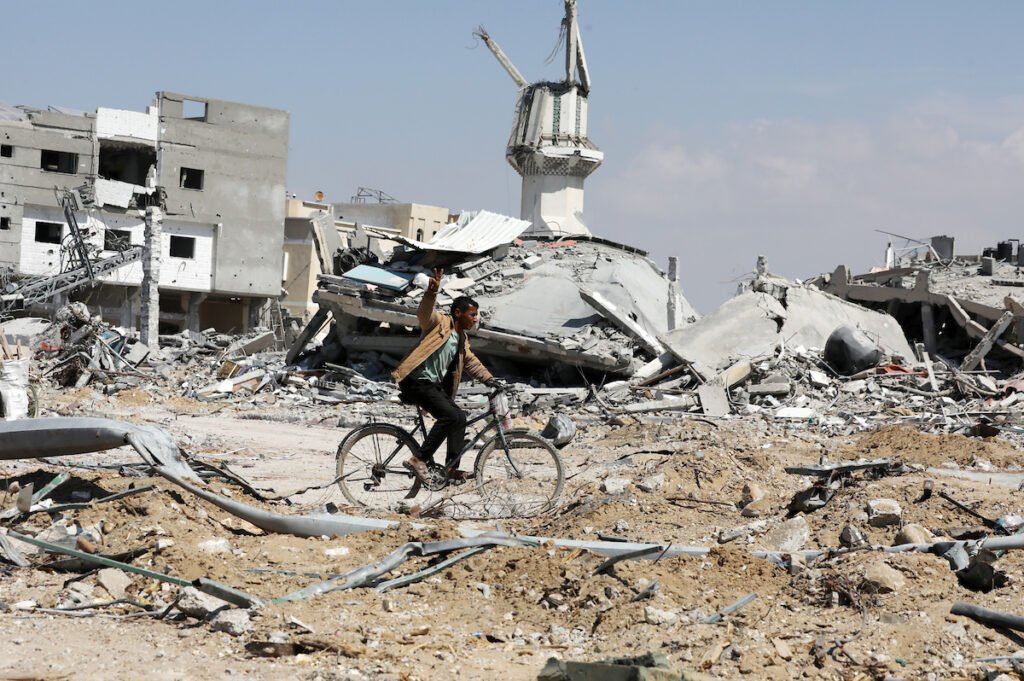
Gaza Herlad- The limited aid reaching Gaza is nowhere near sufficient to meet the basic needs of its people. The Gaza Humanitarian Foundation (GHF) is distributing only a few essentials, including flour, rice, and oil, leaving families without proper nourishment or support.
As the humanitarian catastrophe in Gaza deepens, the world continues to watch in silence while Palestinians are forced to risk their lives for a bag of flour or a bottle of oil. What is unfolding is not a natural disaster, it is the result of a deliberate policy of blockade, siege, and starvation. Israel’s control over aid access has turned basic survival into a deadly gamble, and despite repeated international warnings, the flow of humanitarian assistance remains dangerously inadequate.
Despite the scarcity, thousands of Palestinians gather at these distribution points, often returning home empty-handed if they make it back at all. Each attempt to receive aid comes with the risk of being shot or killed. Earlier today in Rafah, Israeli forces opened fire at a GHF distribution site, killing at least two Palestinians and injuring dozens.
Humanitarian crisis extends
The crisis extends beyond food: there is no shelter, no clean water, and no medicine. With aid trucks largely blocked from entering Gaza, hope fades by the day. What little is allowed barely scratches the surface of a deep and growing humanitarian catastrophe.
It is worth recalling that two months ago, Jens Laerke, spokesperson for the United Nations Office for the Coordination of Humanitarian Affairs (OCHA), warned that the humanitarian aid reaching Gaza was “extremely insufficient”. Speaking at a press briefing in Geneva, Laerke stressed the urgent need to open more crossings into Gaza and emphasized that the ongoing blockade allows only a minimal trickle of aid to enter the territory.
Laerke also expressed concern that recent donor-driven narratives may distract from Gaza’s immediate humanitarian priorities, namely, ensuring sustained access to aid, establishing safe conditions for distribution, and expediting the approval of life-saving supplies. He pointed out that even when aid trucks manage to enter Gaza, humanitarian workers are often unable to reach them due to unsafe routes designated by Israeli authorities.
“The aid currently entering Gaza is far from enough,” Laerke said, underscoring that selective permissions by Israel are not meeting the scale of the crisis. “We need more crossings, and we need all forms of aid, not just the ones Israel chooses to allow in,” he added.