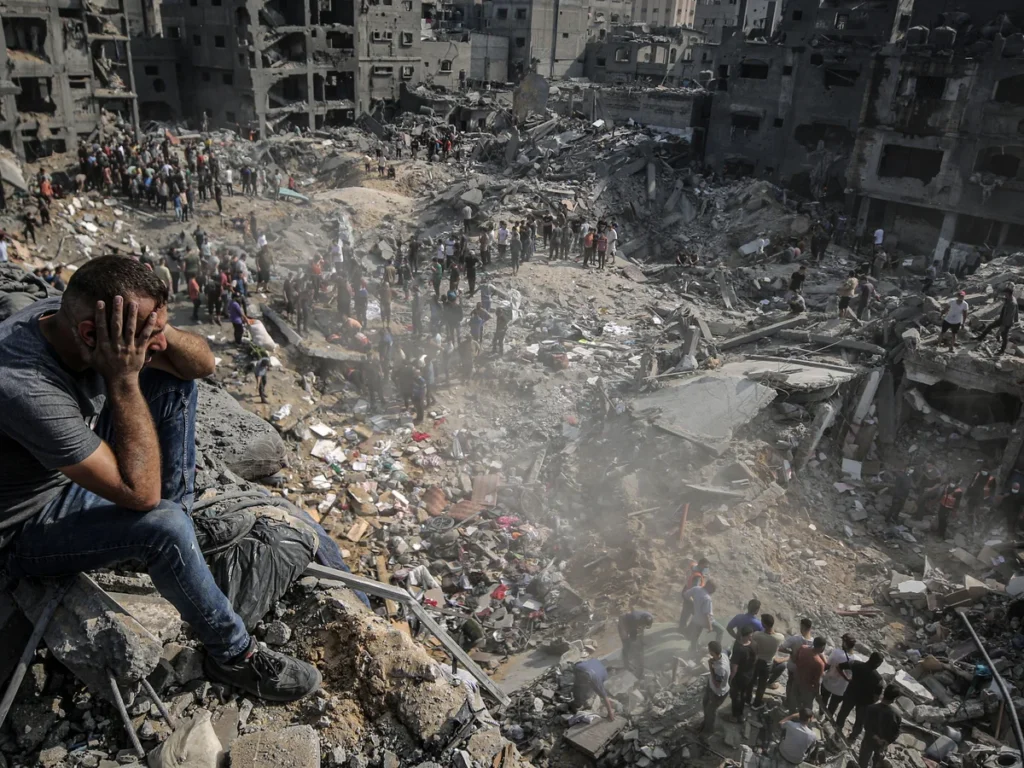
GAZA- Every morning, long before the sun reaches its brutal peak, Mohammed Mahani begins his daily journey through the wreckage of Gaza. He pushes a small cart across crumbling roads and shifting sand, past the ruins of homes and schools. What he seeks isn’t safety or shelter; it’s water.
For the 45-year-old father, displaced from the Shuja’iya neighborhood and now living in a tent camp west of Gaza City, survival has taken on a new, more desperate meaning. Having endured months of relentless Israeli bombardment and displacement, Mahani now faces a quieter but equally deadly threat: thirst.
“Despite the extreme exhaustion that affects me and my children during the journey of pulling heavy water gallons, which is compounded by the rubble, unpaved roads, and sand dunes, there is no alternative,” he said.
“Water is cut off on many days, putting my family in a state of constant need.”
Mahani’s story is a window into Gaza’s worsening humanitarian catastrophe. As temperatures rise and water shortages stretch over days, sometimes over a week, more than two million Palestinians, already crushed by war and siege, now struggle to meet one of the most basic human needs.
Even when water trucks arrive, the scarcity and inflated prices make access impossible for many. “We face a major crisis in providing water for drinking and cooking due to the scarcity of trucks that distribute water for free,” Mahani explained. “I’m forced to buy water at high prices, despite the financial collapse and the lack of any income.”
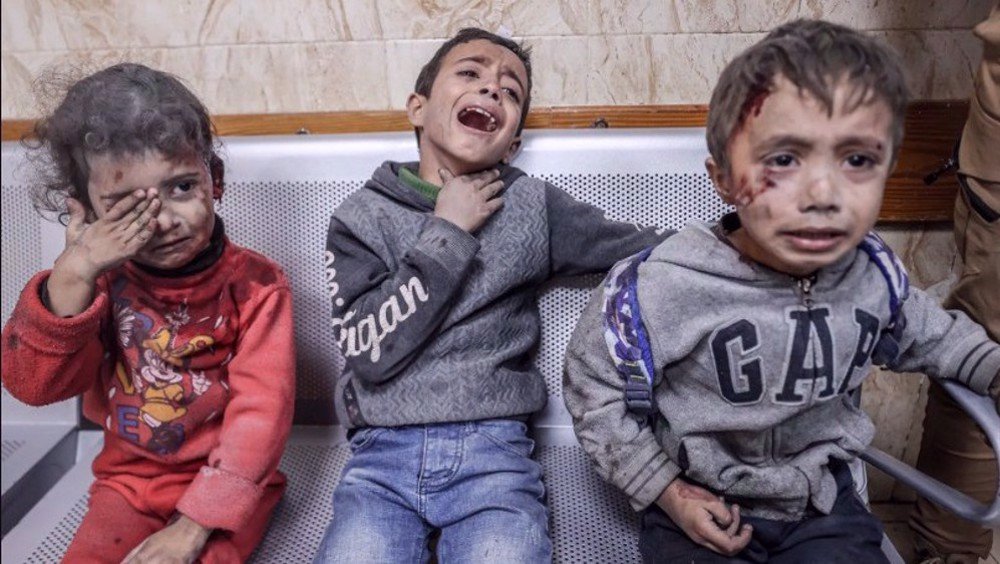
Across Gaza, displaced families are trapped in a daily cycle of deprivation. In overcrowded tent camps and school shelters, water scarcity touches every part of life, from cooking and hygiene to health and dignity.
Mahmoud al-Sayed, 44, leaves his tent near al-Katiba Square at 7 a.m. each day to search for water for his family of five. Some days he comes back at noon with nothing.
“High temperatures, thick smoke from burning wood, and dust-laden winds make the need for water even more urgent,” he said. “We can’t bathe. We can’t wash clothes. Skin infections are spreading because of the filth, garbage, and sewage.”
At a former classroom turned shelter, Um Khaled Safi sits outside with her children. “We can’t find a water source, not even to wash our faces,” she said. “Even when water reaches the school, the taps are so crowded I can only get a little. It’s never enough for cooking, washing, or cleaning.” She added, “The drinking water crisis is just one of many daily struggles. We’re being choked by this blockade.”
The broader picture is even more alarming. According to Pedro Arujo Agudo, UN Special Rapporteur on the right to safe drinking water and sanitation, some 2.1 million Palestinians in Gaza are suffering from severe water scarcity.
“Nearly 70% of Gaza’s water infrastructure has been destroyed,” he said. “Israel, the occupying power, has systematically destroyed water infrastructure and blocked access to clean sources.”
“This is a silent but deadly bomb,” he warned. “Most people in Gaza either have no access to water or receive contaminated supplies that pose grave health risks.”
For Mohammed Mahani, these warnings are not abstract. They are lived realities. His water gallons are never full, his arms never rested, and his children never truly quenched.
“We are alive,” he said quietly, “but we are dying every day.”